I am Malaysian, and proudly so. I admit this wasn’t always the case, but after our most recent elections but a week ago, in which we ousted a corrupt government in the most peaceful, democratic way possible, I’ve found a new sense of patriotism I’ve never felt before!
Having grown up in Malaysia, Malaysian culture is the one that I’m undoubtedly the most familiar with. As a food writer though, I have a perpetual itch for exploring other cultures that I know little about, all in the pursuit of weird and interesting flavours and dishes. Perhaps I’ve overextended at times, butchering babka recipes and making silly Japanese-inspired dishes. Call it cultural misappropriation if you want to, but these are exactly the kind of unbridled explorations that to me, makes food and cooking so endlessly interesting! So I’m not about to stop anytime soon.
What I find especially engaging though, more than exploring any single culture, is when two (or more) cultures collide and come together in unexpected ways, whether it’s through random acts of kindness or civilised diplomacy (sadly a seemingly rare occurrence in our world today), interracial babies (they are the cutest), or best of all, through cross-cultural foods.
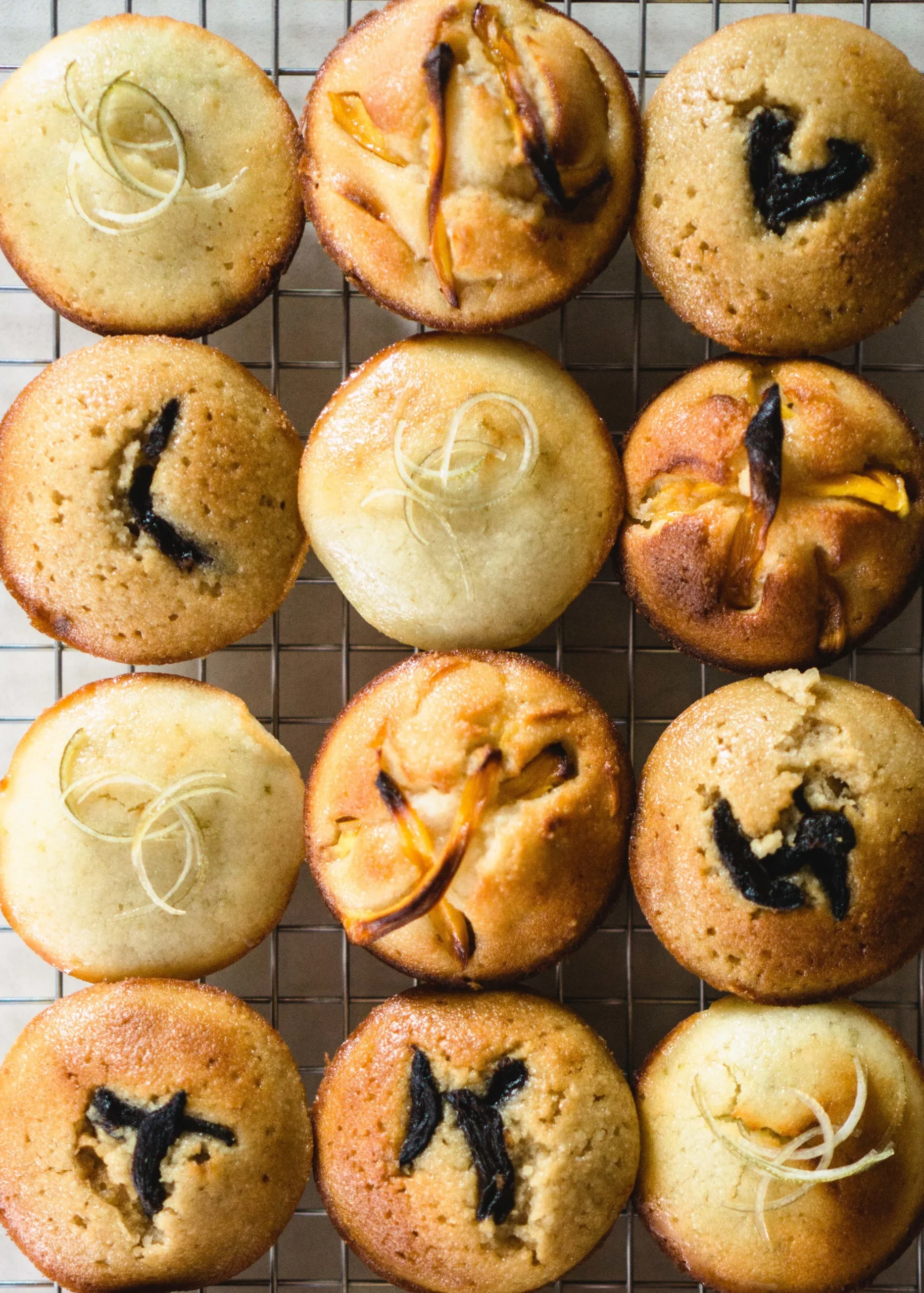
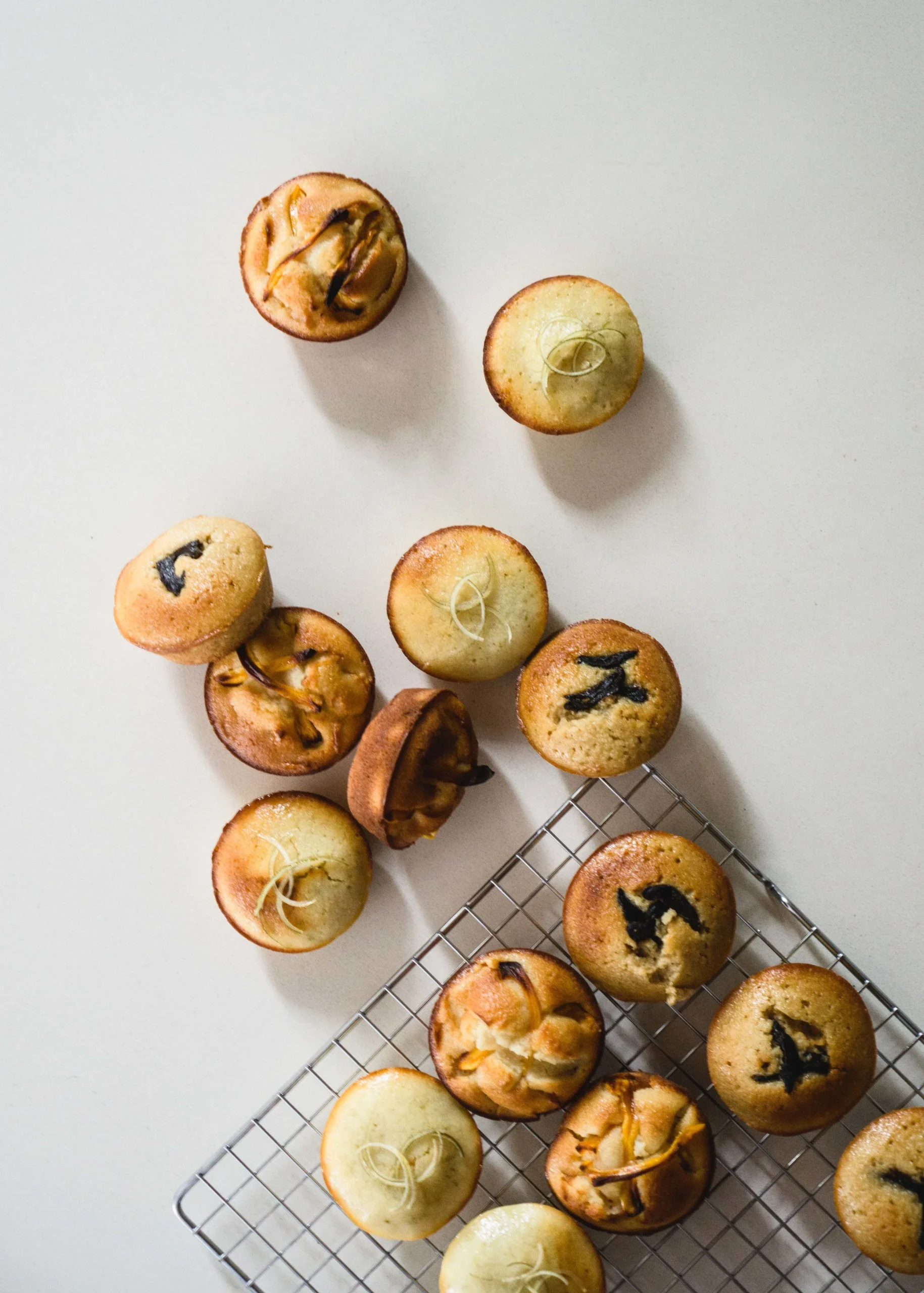
So in yet another instance of a boundary-breaking, possibly heretical dish, may I present to you my French-Korean food baby – black garlic financiers!
Black garlic is admittedly a recent fad food. In the past decade, it has gone from relative obscurity to appearing in highfalutin restaurant menus in the form of fancy purees and foams, all to way to really simple, home-cook-friendly dishes like Posie Harwood’s chocolate chip cookies.
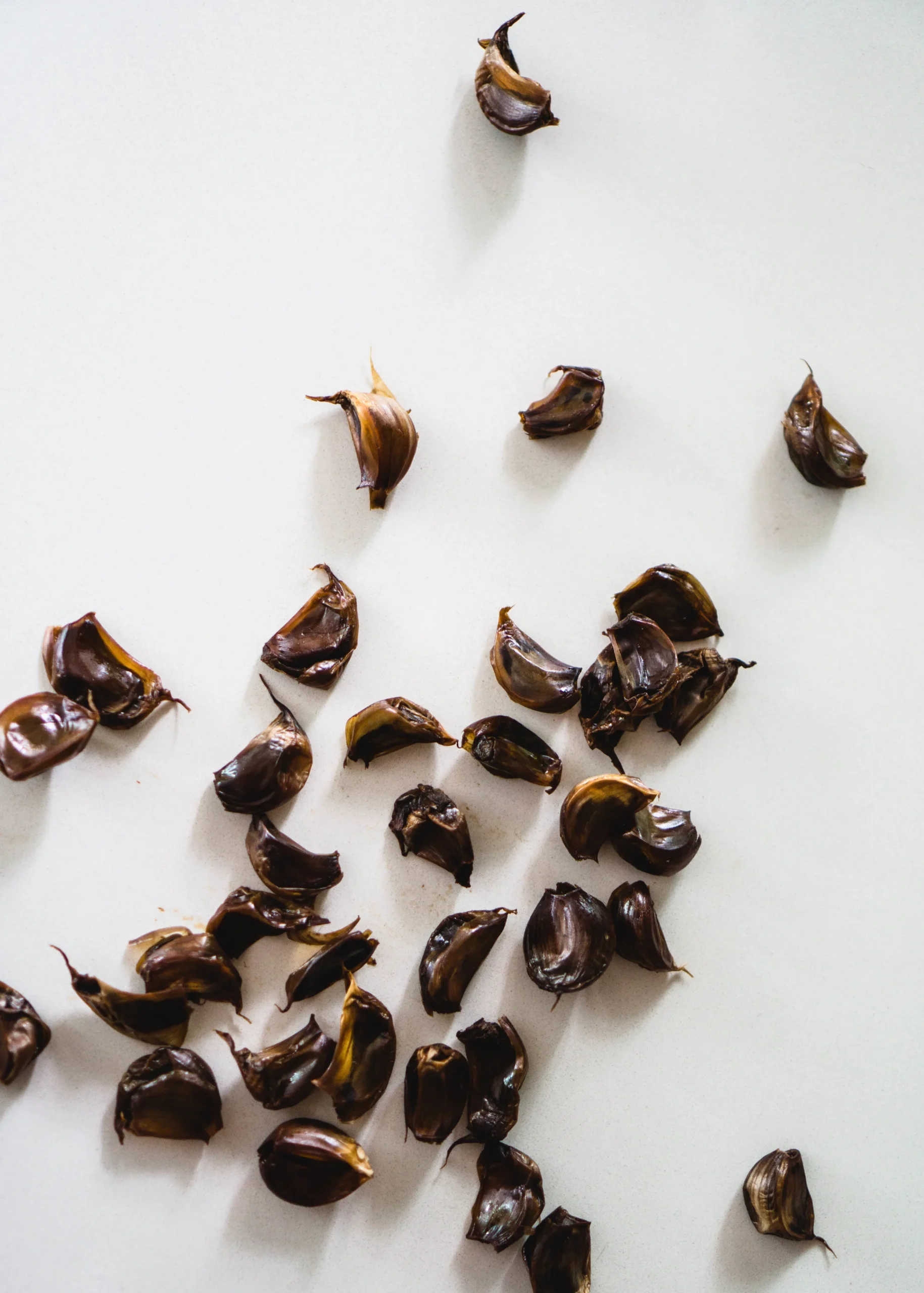
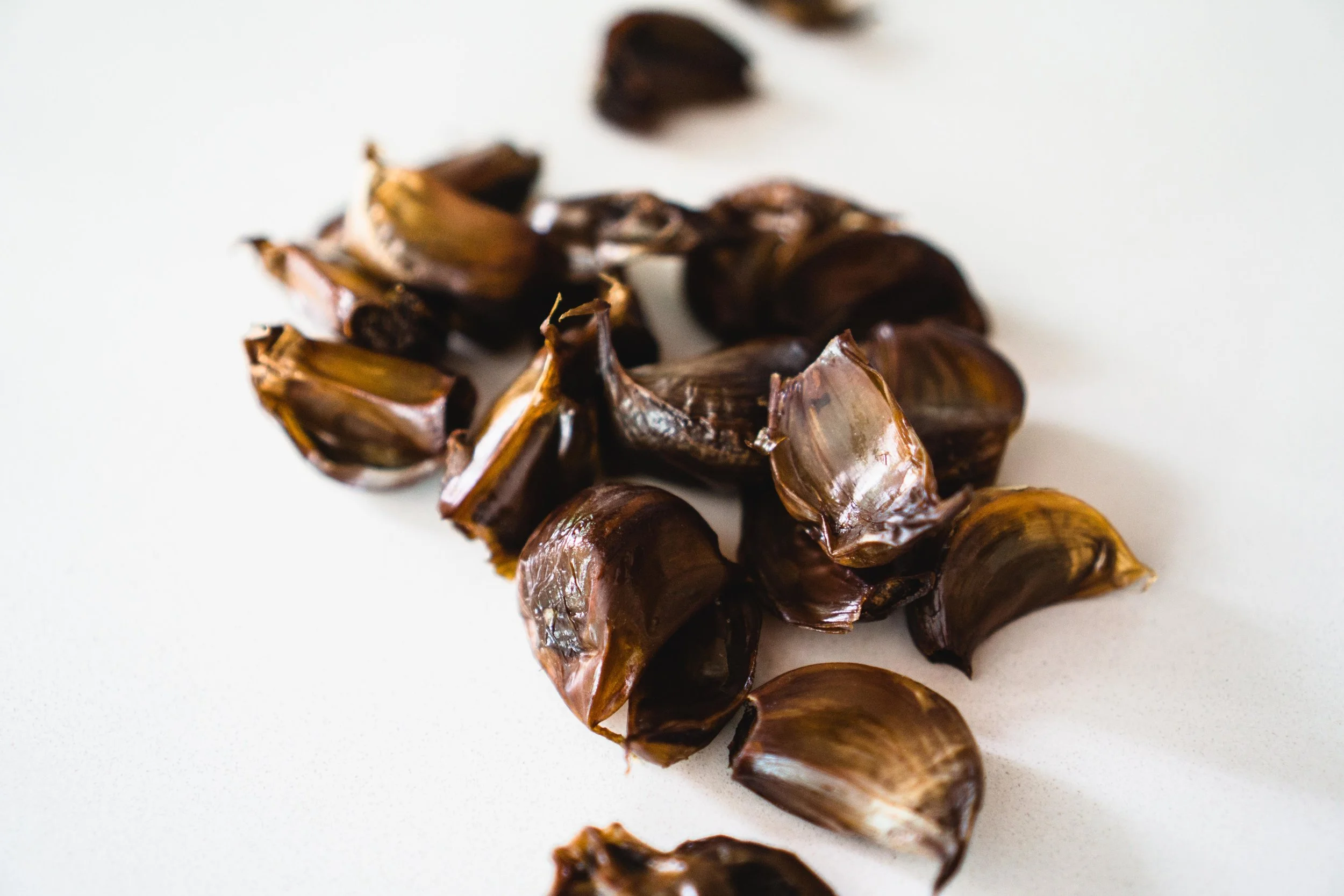
Black garlic in itself is a wacky ingredient. It’s funky in all the ways fermented foods are, but it doesn’t actually undergo any fermentation at all. To make it, it is kept at a steady temperature (60°C) in a humid environment for 2-3 weeks (sometimes up to a month), allowing it to turn from pale garlicky yellow to clay brown, to an elegant shade of ebony. The change in colour is due to the Maillard reaction, which is when amino acids react with sugars to give certain foods a browned, complex taste. (Think roasted coffee beans and seared steaks.) In blackening garlic, the pungent raw garlic flavour gives way to a deep, earthy flavour that is reminiscent of balsamic vinegar and caramelised onions, only funkier.
Though the exact origin of black garlic remains uncertain, the two main origin stories point to Korea. The first details a British farmer who, wanting to preserve his 900,000 bulbs of garlic harvest, chanced upon a 4000-year-old Korean method for curing garlic. The other is propagated by Korean inventor Scott Kim, who claimed to have himself developed the product in 2004. He then went on to set up Black Garlic Inc., which was at one point the largest producer of black garlic in the US.
These theorised origins are further supported by the black garlic industry in Korea, which has seen increased production of pots and gadgets specifically designed for making black garlic. But if parting with a few hundred dollars for what is essentially a heated pot isn’t your thing, for plebs like me, there’s also a Korean method of making black garlic using a rice cooker or dehydrator (though your electricity bill will likely see a spike, as you’ll need to leave your rice cooker / dehydrator on for a couple of weeks). If you’re still keen on making your own black garlic at home though, try this recipe from Shinshine! I’ve personally never made black garlic myself, but was fortunate enough to get some from my neighbour. (Thanks Auntie Anita!)
Now as much as I love Asian ingredients, I’m next to hopeless at cooking up truly authentic Asian dishes. But since I’m technically trained in French cooking, I thought to marry the flavour of black garlic with a classy French pastry I learnt to make in culinary school – financiers! They’re super moist, almond-y cakes that I’ve had the pleasure of fattening up myself on when I lived in Paris two years ago.
The combination of black garlic and buttery, nutty financiers worked really well together, but it was less of an inspired pairing on my part, but more of the fact that financiers are extremely accommodating of any flavours. I based my recipe off David Lebowitz’s brown butter financiers (a solid recipe on its own), but tweaked it very slightly to get it to the right texture and consistency to work alongside the black garlic. In fact, I daresay the financier recipe below is versatile enough to work with any flavour thrown at it. I made some with jackfruit and lime as a test and they turned out real nice! Though I’m clearly partial to my cross-cultural financiers, black garlic or not, they are pretty .
So go make sum.
(Still terrible at closing articles.)




1 thought on “Black Garlic Financiers”
Thank you for shariing