Ingredients
Yields: 6
Pumpkin Nian Gao
- 450 g pumpkin
- 120 g caster sugar
- ½ tsp salt
- 300 g tapioca flour
- 340 ml water
- 130 ml coconut milk
To top
- 100 g freshly grated coconut
- ¼ teaspoon salt
- 80 g gula melaka - in powder form, or you can grate a block of gula melaka too
Method
- Peel and discard the skin of the pumpkin. Then, chop it up into 1-inch chunks, and steam over high heat for 15 minutes. Let the pumpkin cool down slightly, until warm to touch, then place the pumpkin, caster sugar, salt, tapioca flour, water, and coconut milk into a blender, and blend until it turns into a smooth puree.
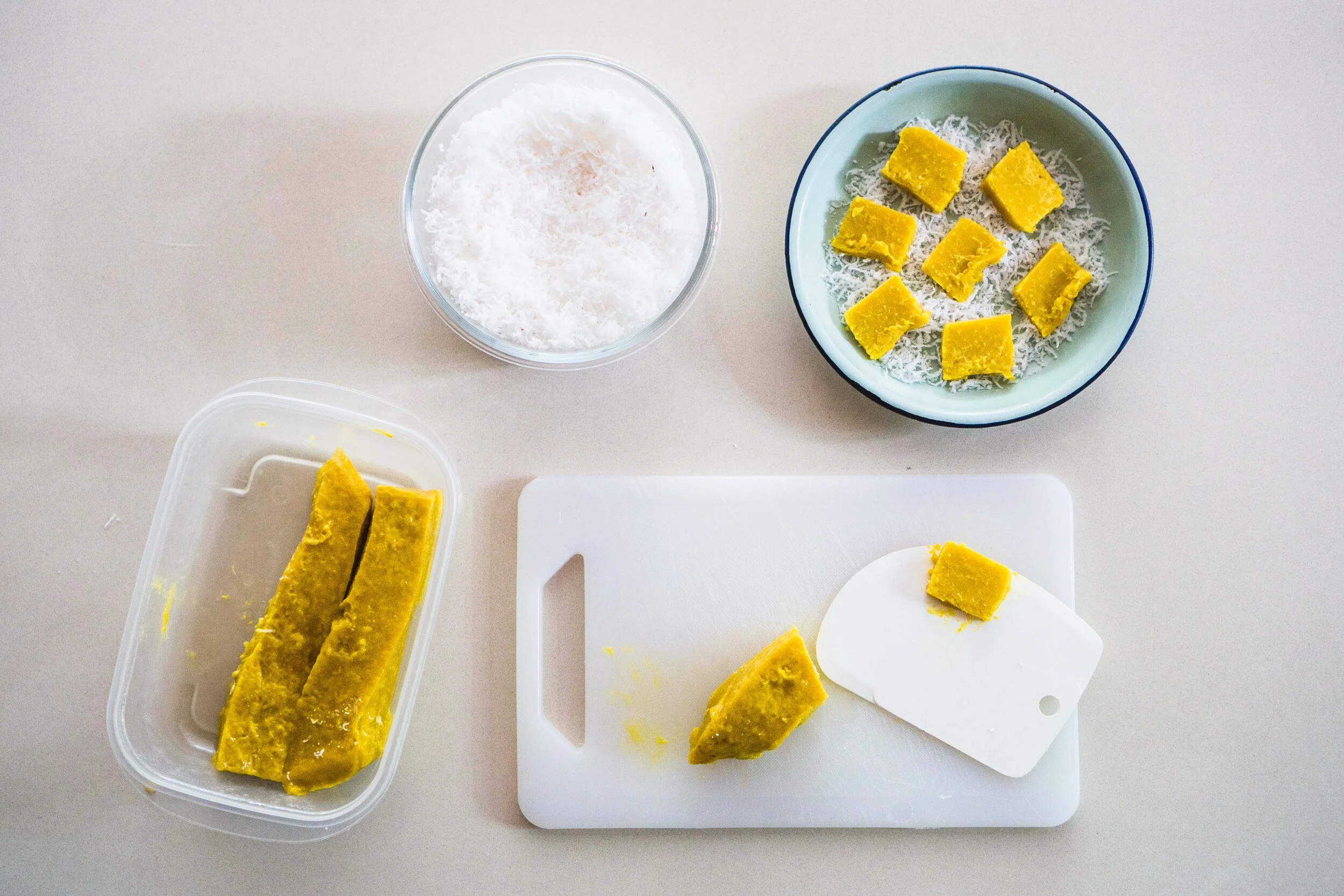
- Pour this into a deep, 8” x 8” baking tray—or a rectangular one of a similar volume—and steam on high heat for 45-50 minutes. Then, remove it from the steamer, and let it cool to room temperature. This keeps well in the refrigerator, up to a week.
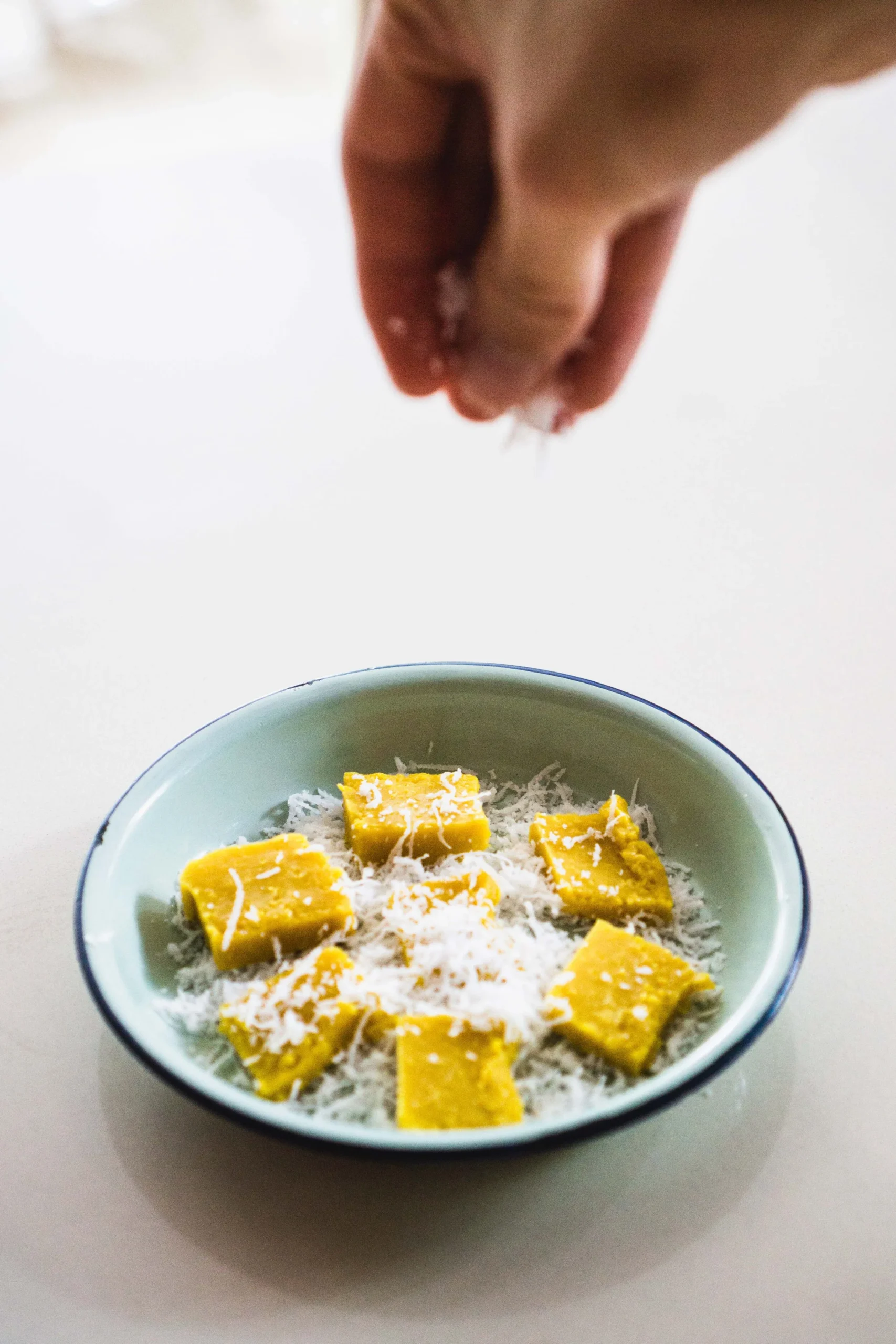
- When you’re ready to eat, place the freshly grated coconut and salt in a bowl, and toss until well mixed. Then, cut the pumpkin nian gao into thin, 1/4-inch thick slices—it’s extremely sticky when hot, so if you’re having it fresh on the day, it’s best to wait until it has cooled completely—and toss it through the coconut until the nian gaos are well-coated. Steam this over low heat for 5 minutes, just to bring it up to temperature.
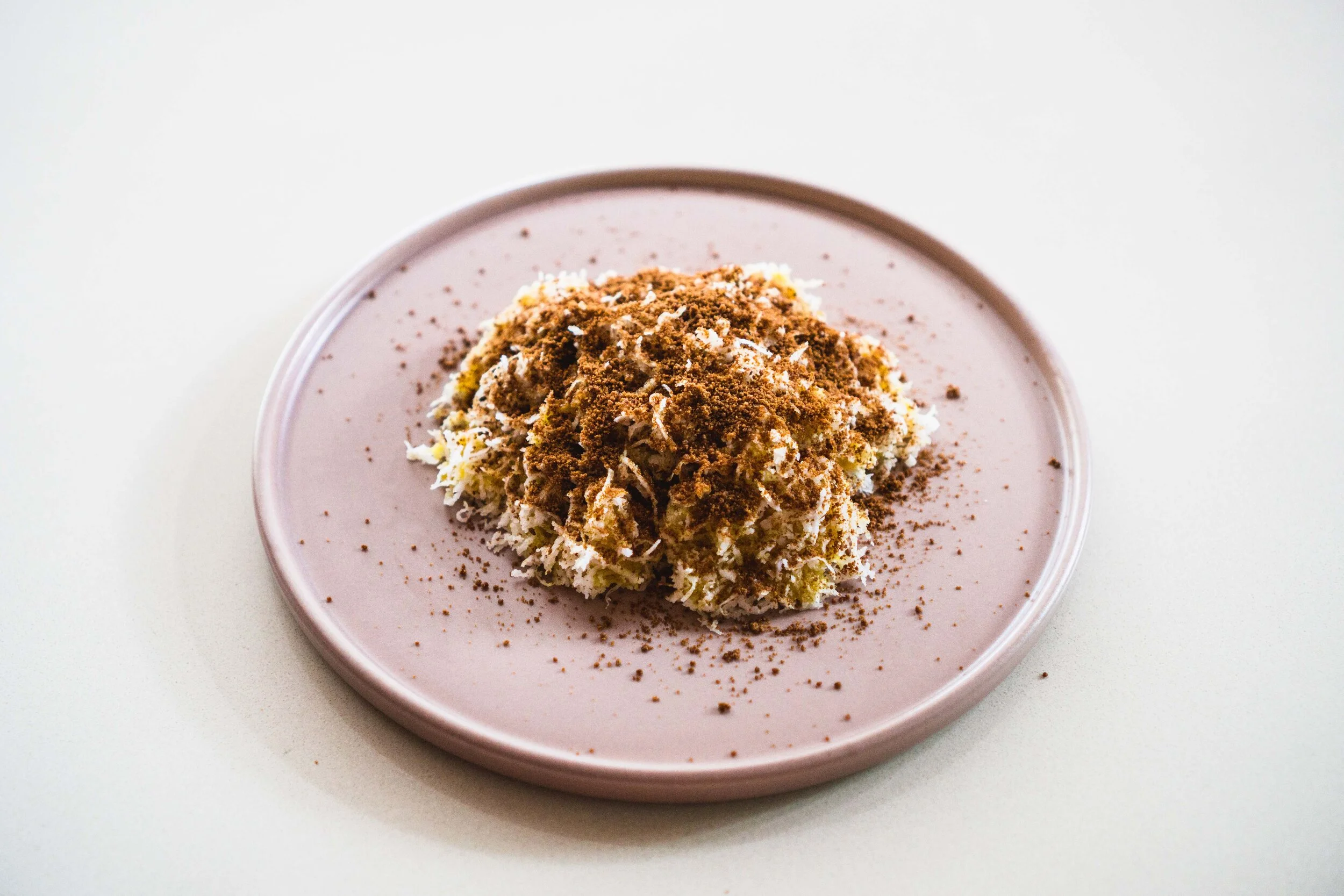
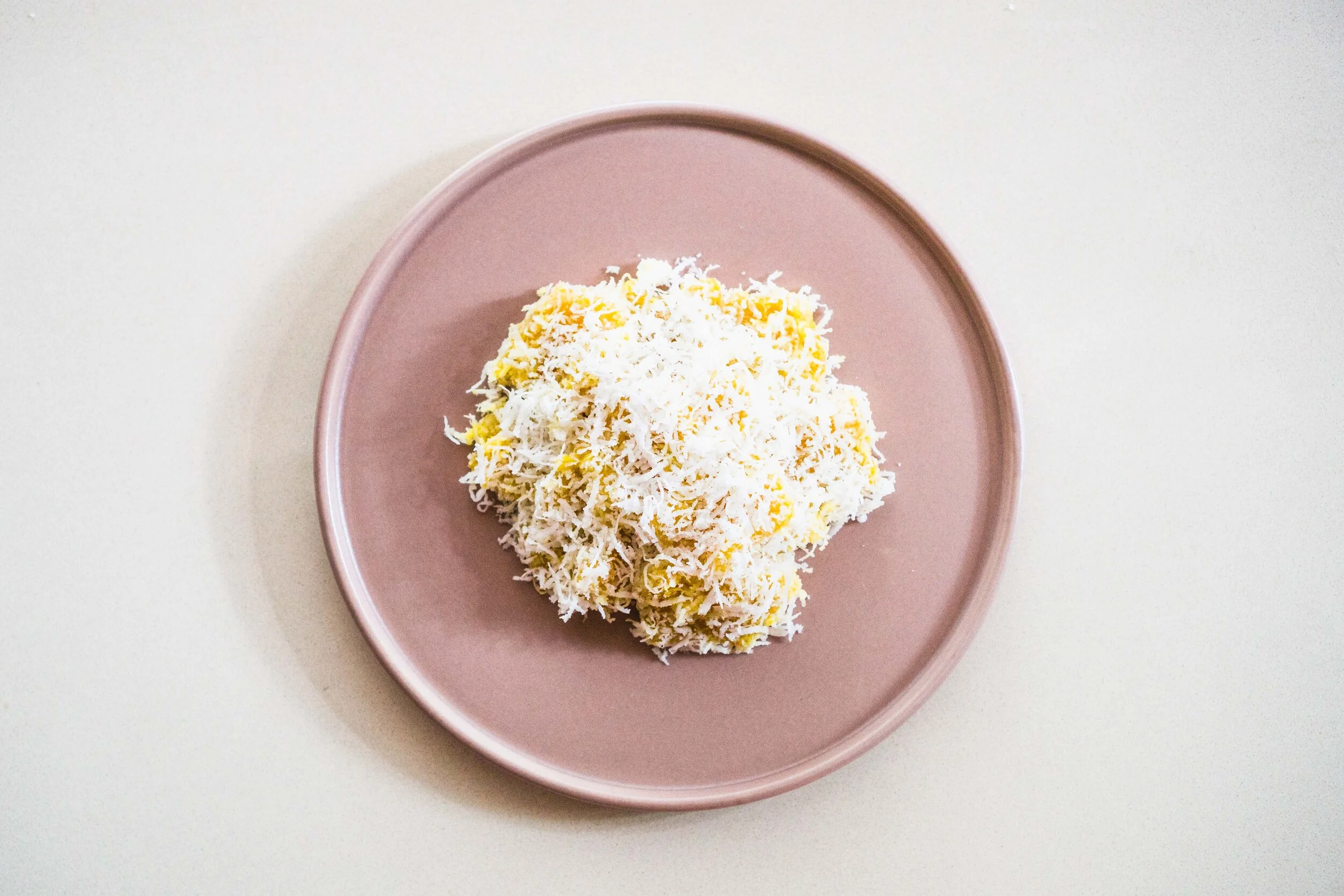
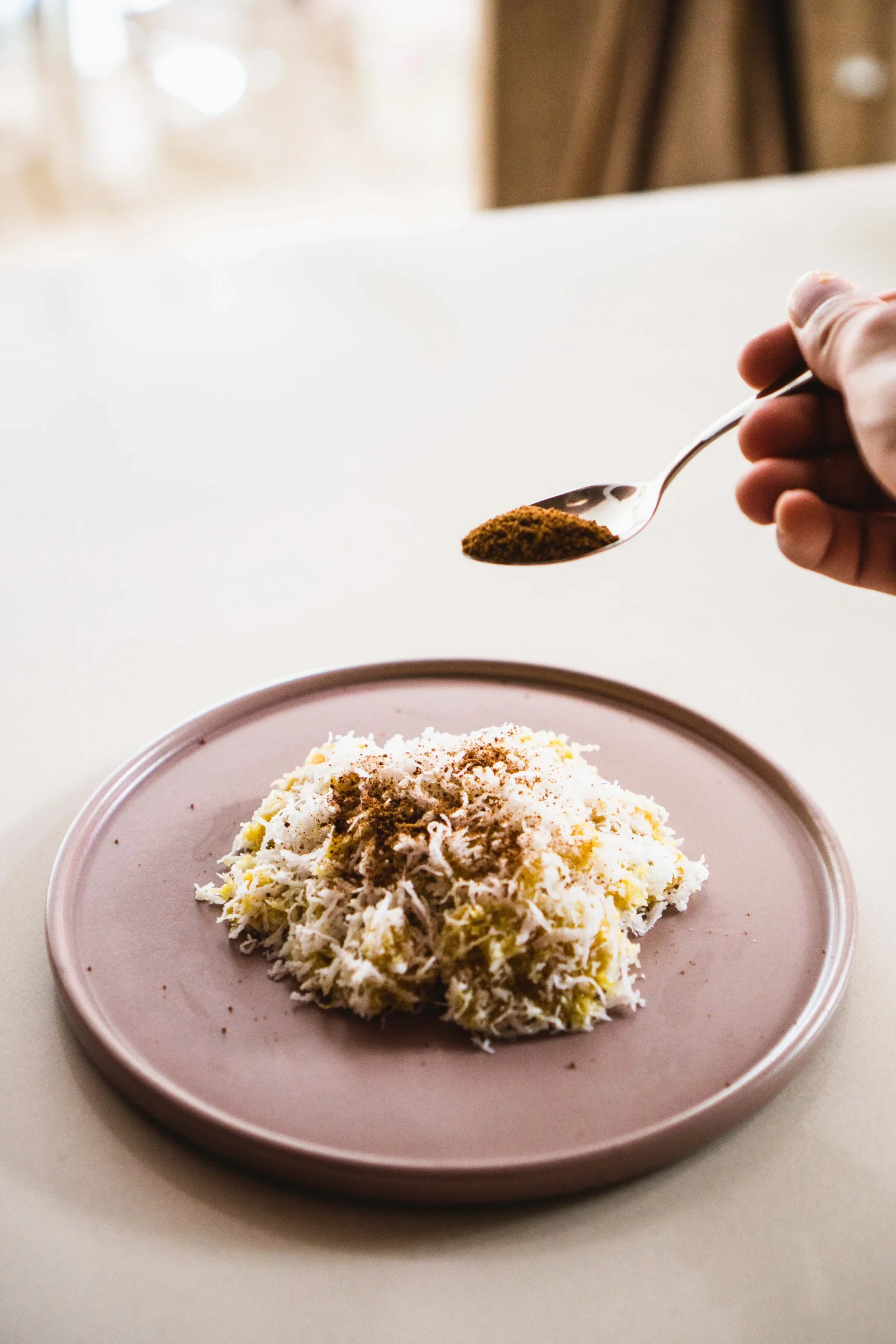
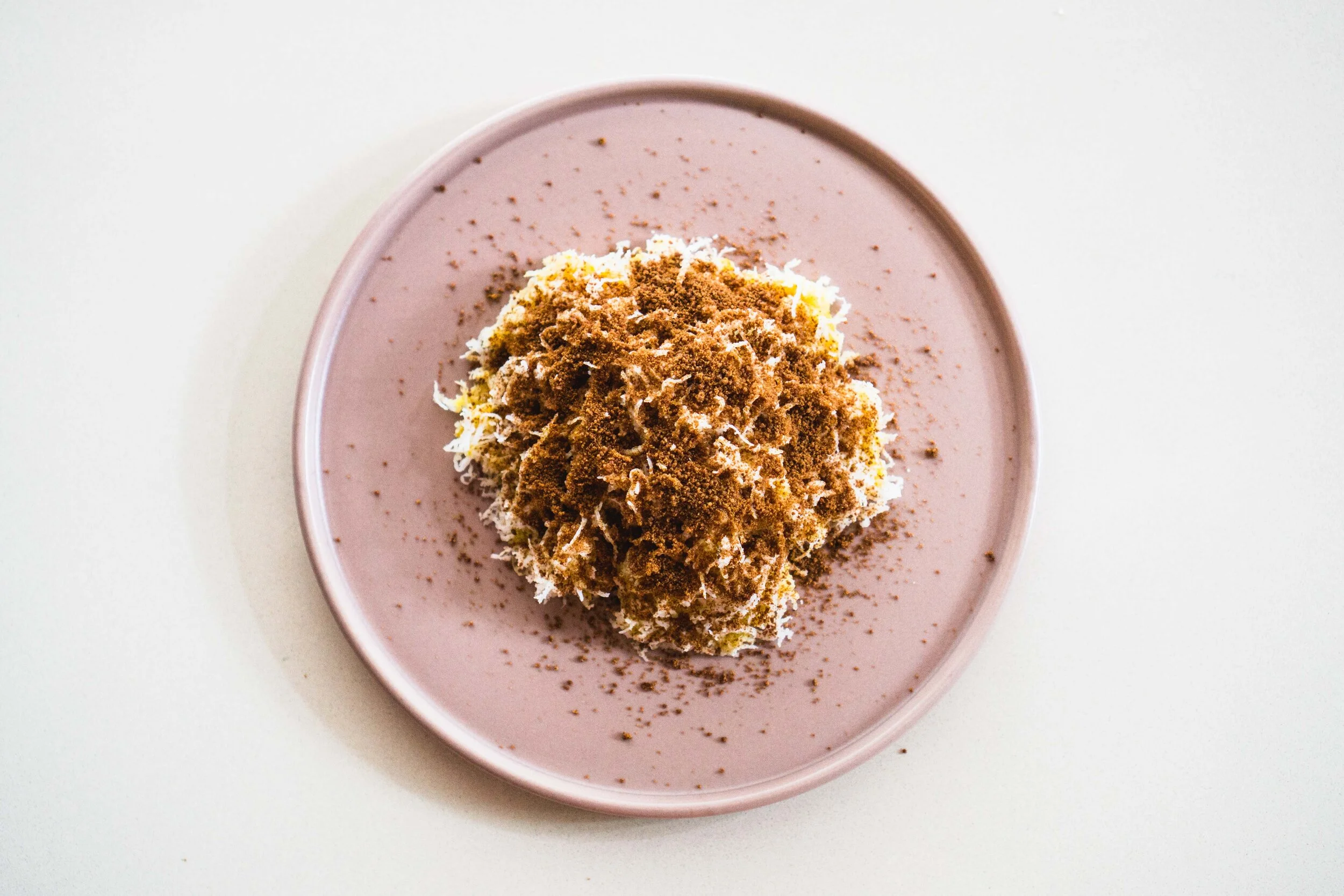
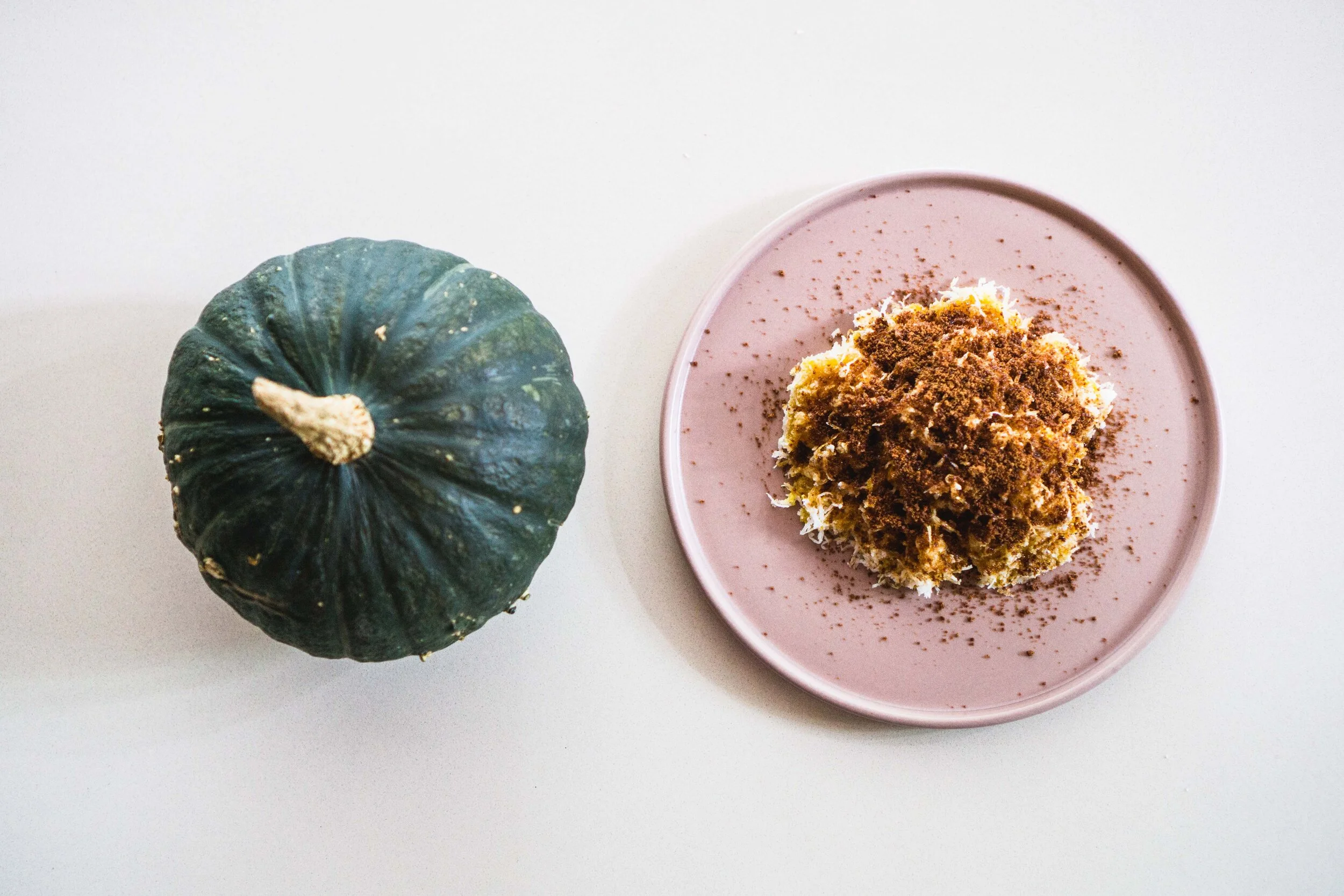
- To serve, place the coconut-covered pumpkin nian gao onto a plate or bowl, sprinkle a blizzard of grated coconut on top, and dust it with a generous amount of gula melaka. Indulge.