
Ingredients
Yields: 4
- 3 chicken legs - thighs and drumstick joined, deboned
Marinade
- 45 ml light soy sauce
- 15 g caster sugar
- 4 g five spice powder
- 10 g table salt
Spice mix
- 15 g red chilli flakes
- 6 g cumin seeds
- 3 g Sichuan peppercorns
- 3 g white peppercorns
To fry
- canola oil - or any other neutral oil, for frying
- 100 g sweet potato starch - or potato starch
- 3 g salt
- 10-20 curry leaves
Method
Marinate chicken
- Combine the light soy sauce, sugar, five spice powder, and salt in a bowl, and whisk to combine. Rub the marinade all over the deboned chicken legs. Store the chicken in a container, and refrigerate for at least 2 hours, or up 12 hours overnight.
Make spice mix
- Place the chilli flakes, cumin seeds, Sichuan peppercorns and white peppercorns in a pan set over high heat, then toss it around until you see the slightest wisps of smoke from the pan. Take if off the heat and let the spices cool down. Then, blend the spices in a spice blender or food processor until fine. Reserve this spice mix for later, or whenever you’re cooking the chicken.
Prepare to fry
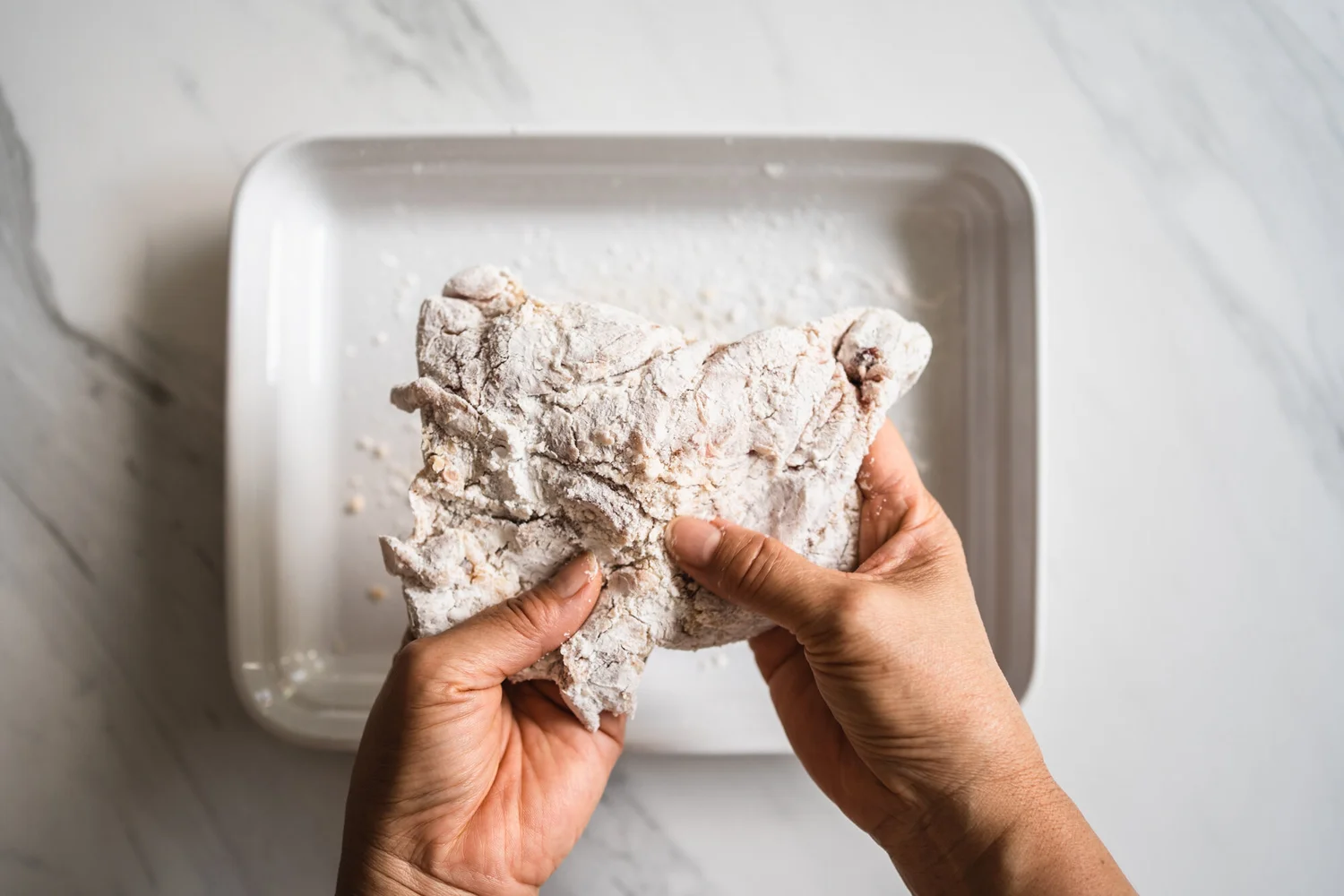
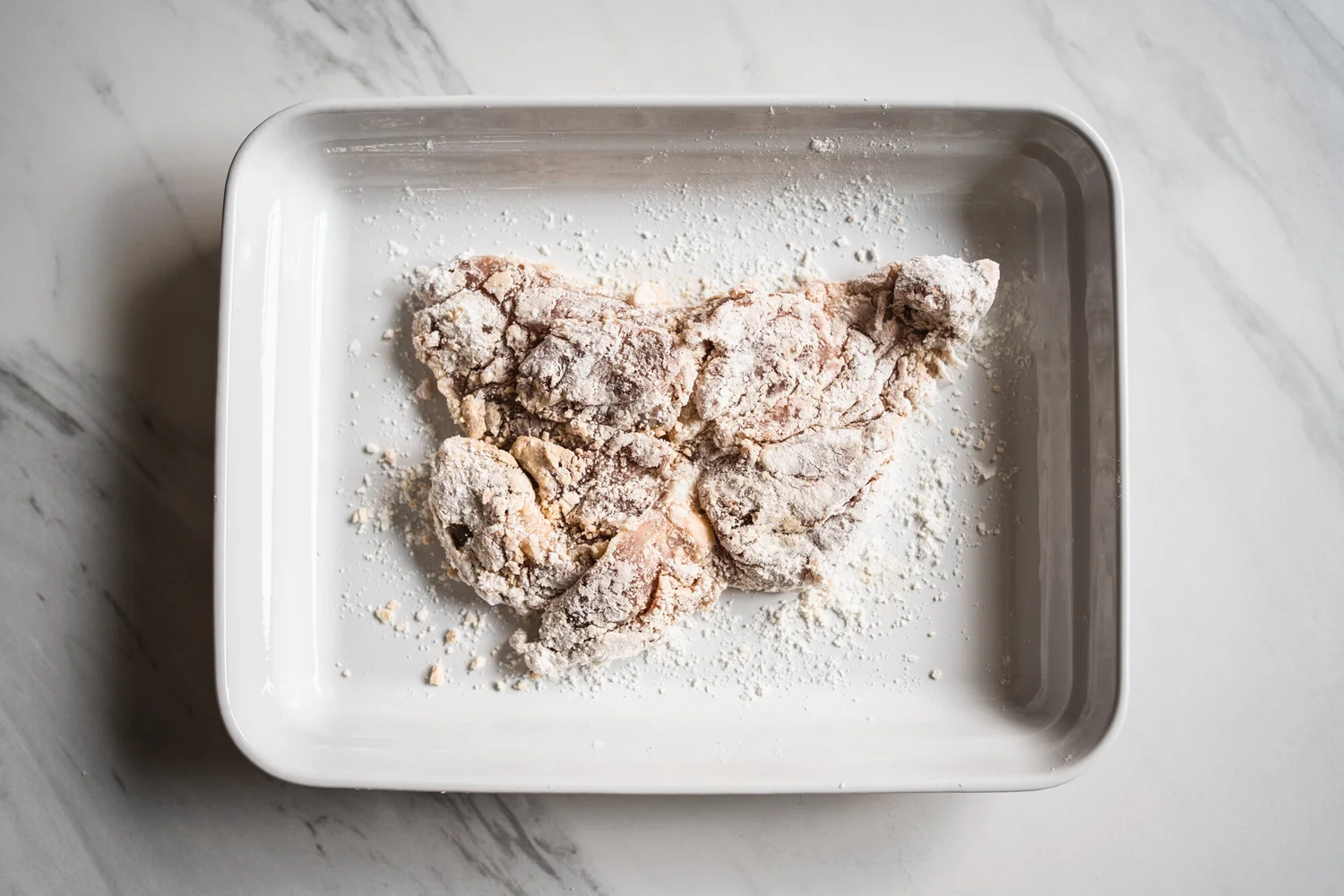
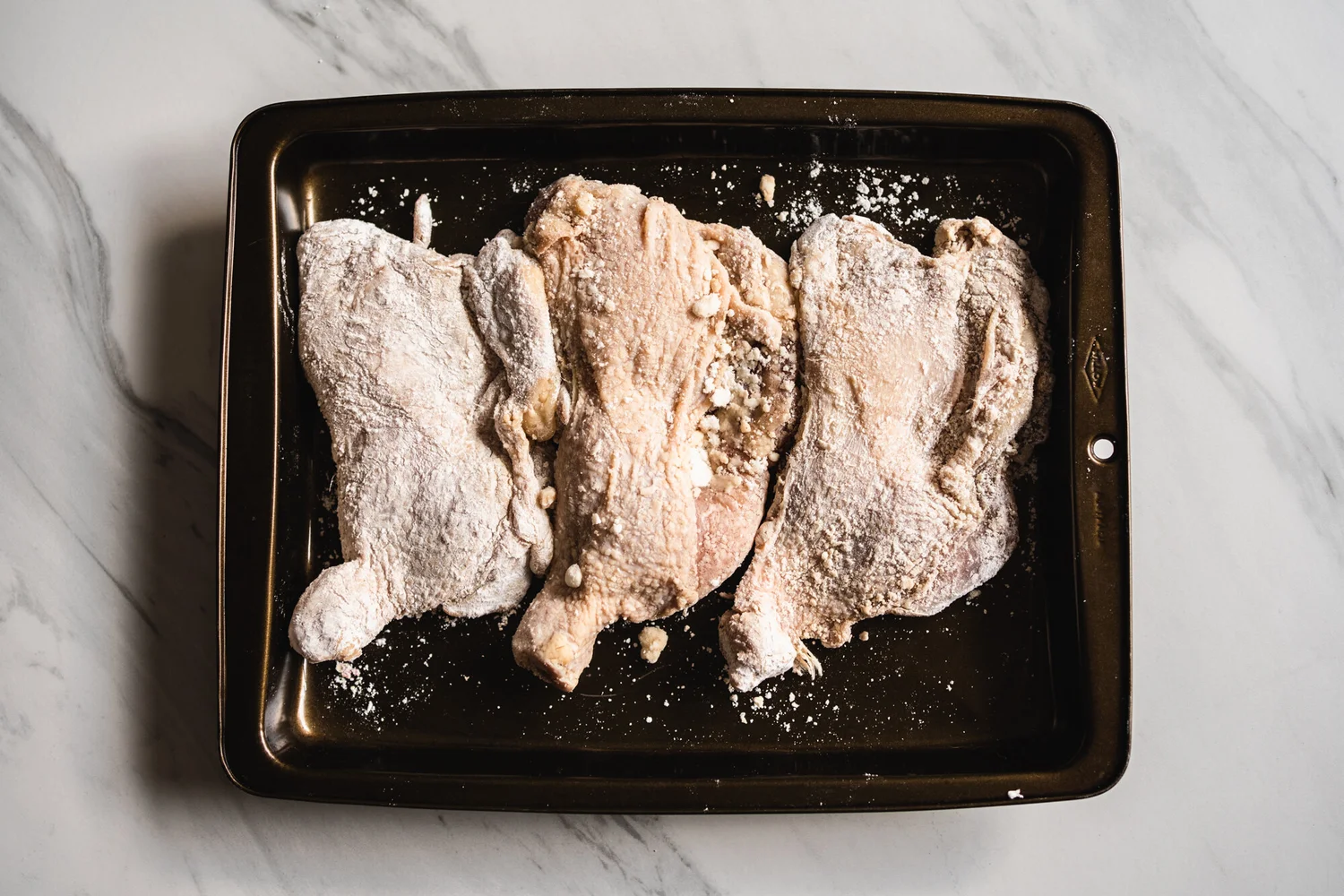
- Pour the oil in a deep-fryer or a pot wide enough to fit the chicken leg. (Alternatively, you can do a shallow fry in a deep pan or skillet too, with at least 2-inches of oil.) Either way, heat the oil up to 160°C (325°F). (If you don’t have a thermometer, place a wooden chopstick into the oil. You’re at a good temperature once you see little bubbles boil up around the chopstick.) In a tray, combine the sweet potato starch with the salt, and give it a stir to even distribute the salt. Then, take out the chicken from the marinade and dredge it through the sweet potato starch. Use your hands to rub the dredge into the nooks and crannies of the chicken. You’re good once you start to see little uneven beads of starch form on the meaty side of the chicken; these will turn into the crackliest bits!)
Fry chicken
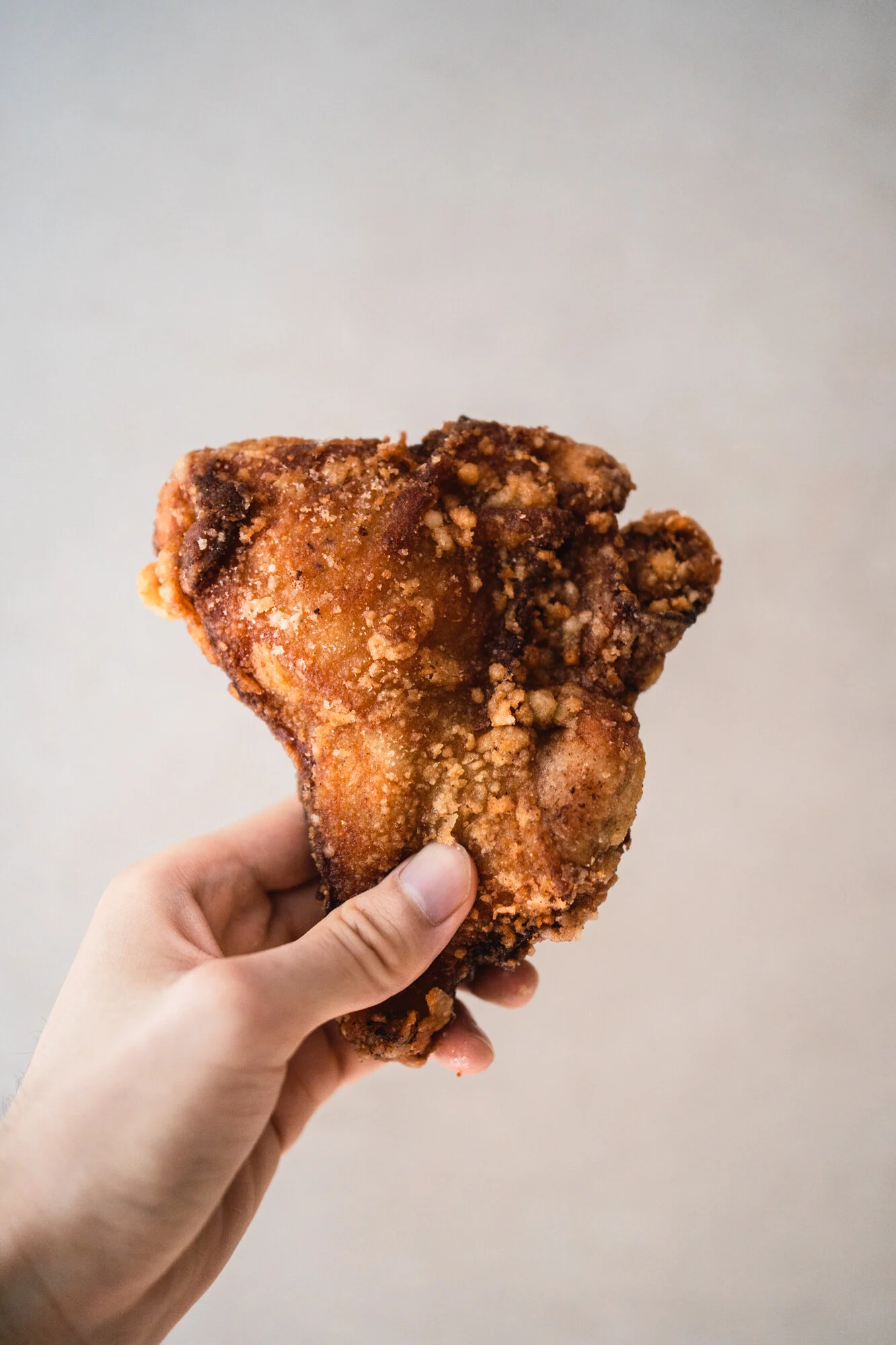
- Gentle lay the chicken into the oil, skin-side up, and let it cook until golden brown. In a deep-fryer or pot, I would suggest letting it fry for 2-3 minutes, before flipping it over to cooking for another 2-3 minutes. (If you’re doing a shallow-fry in a skillet, do a 2-3 minute fry on the meat side, before flipping it over and frying for 3-5 minutes, making sure to check that the bottom side doesn’t burn.) When golden brown, remove the chicken from the oil and lay on a wire rack to let any excess oil drip off. Unless you have a really big pot or skillet, it’s best to cook the chicken one at a time.
Fry curry leaves (optional)
- Drop the curry leaves into the same oil you cooked the chicken—careful, it’ll sputter!—and let it fry for 10-15 seconds until crispy. Fish out the crispy curry leaves with a sieve.
Serve, and eat!
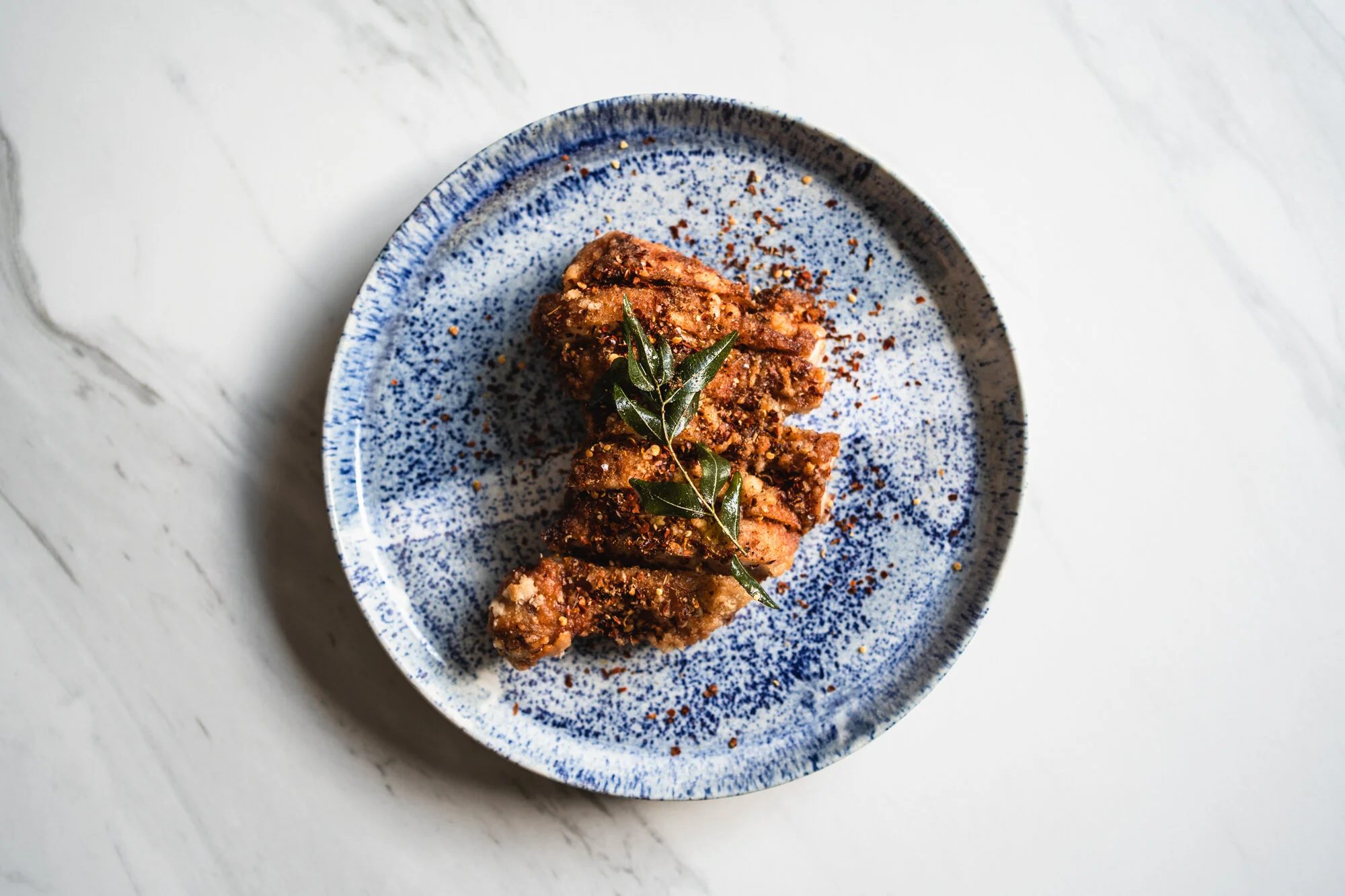
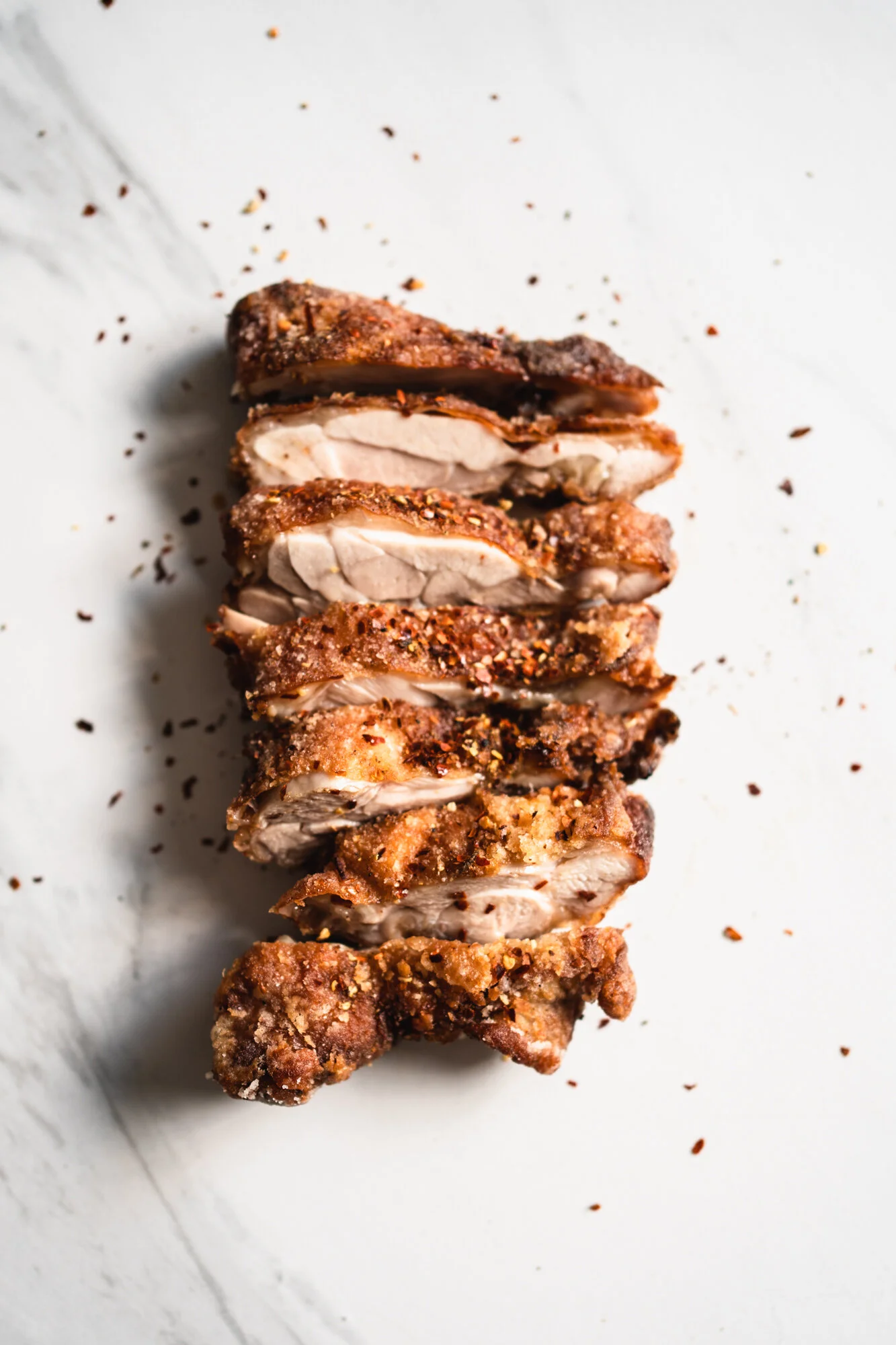
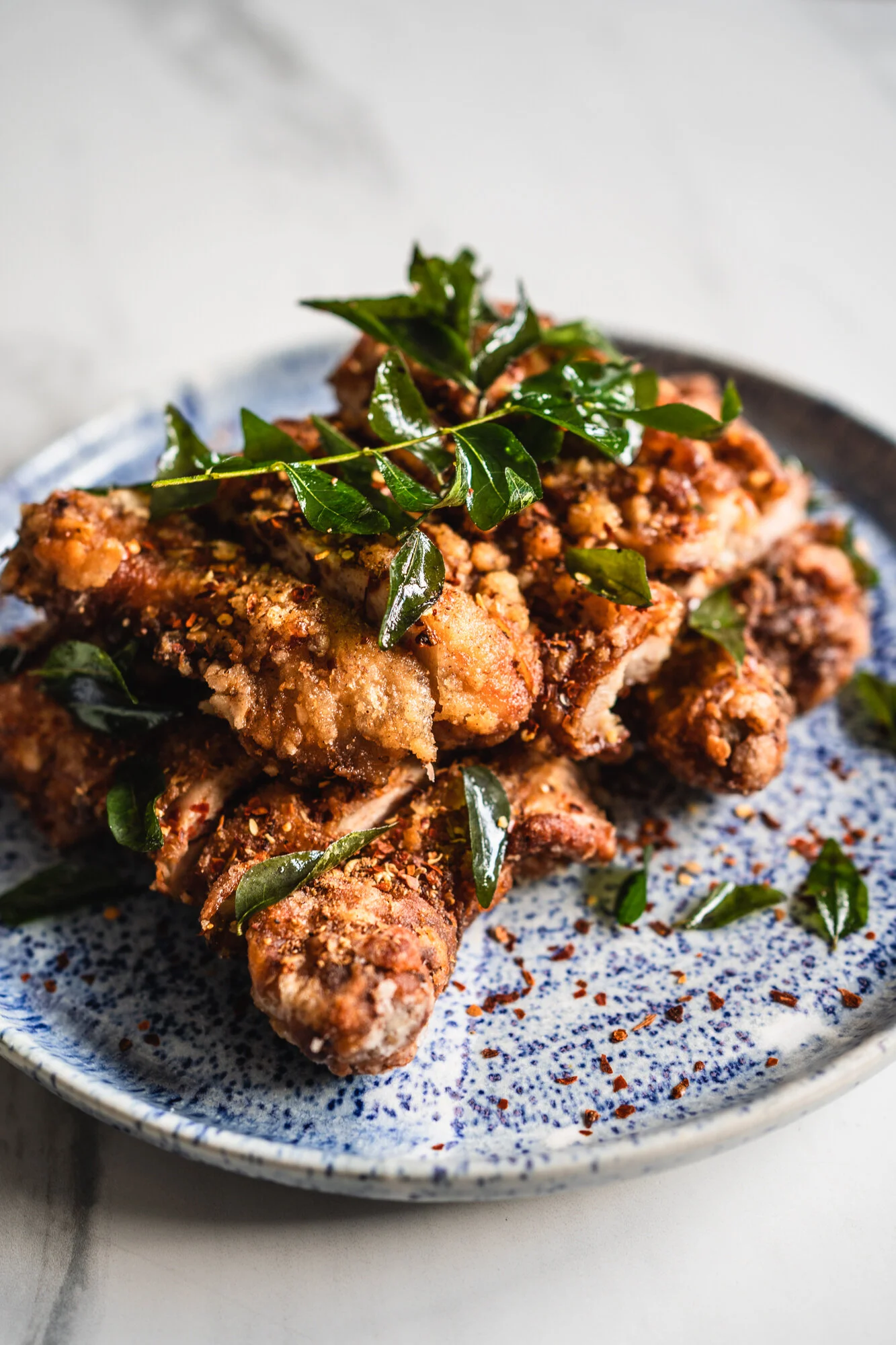
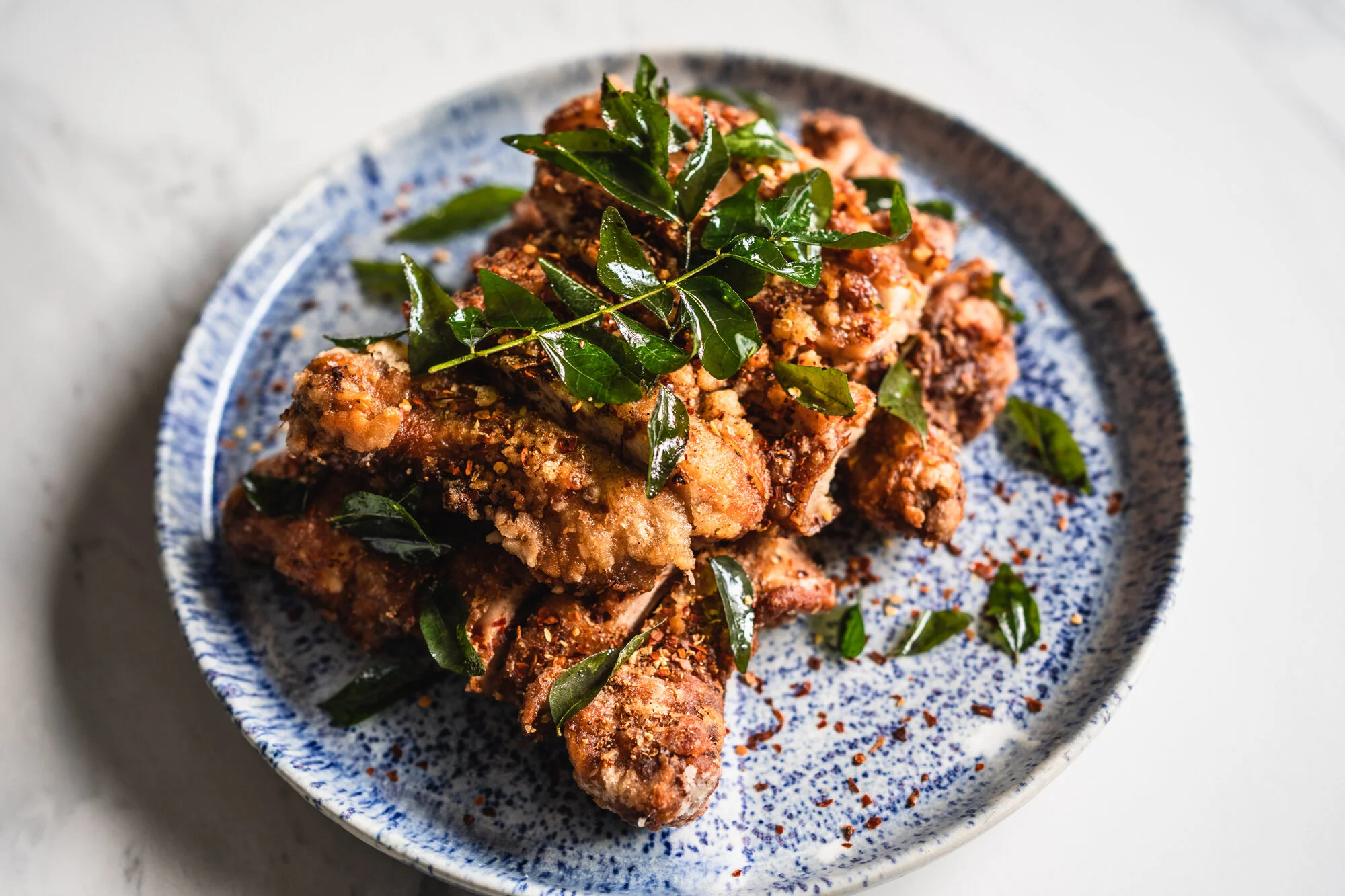
- Let the chicken rest for 2 minutes, then sprinkle the spice mix over the chicken skin. Slice it up into pieces, and garnish with the fried curry leaves. Eat!


1 thought on “Spiced Taiwanese Fried Chicken”
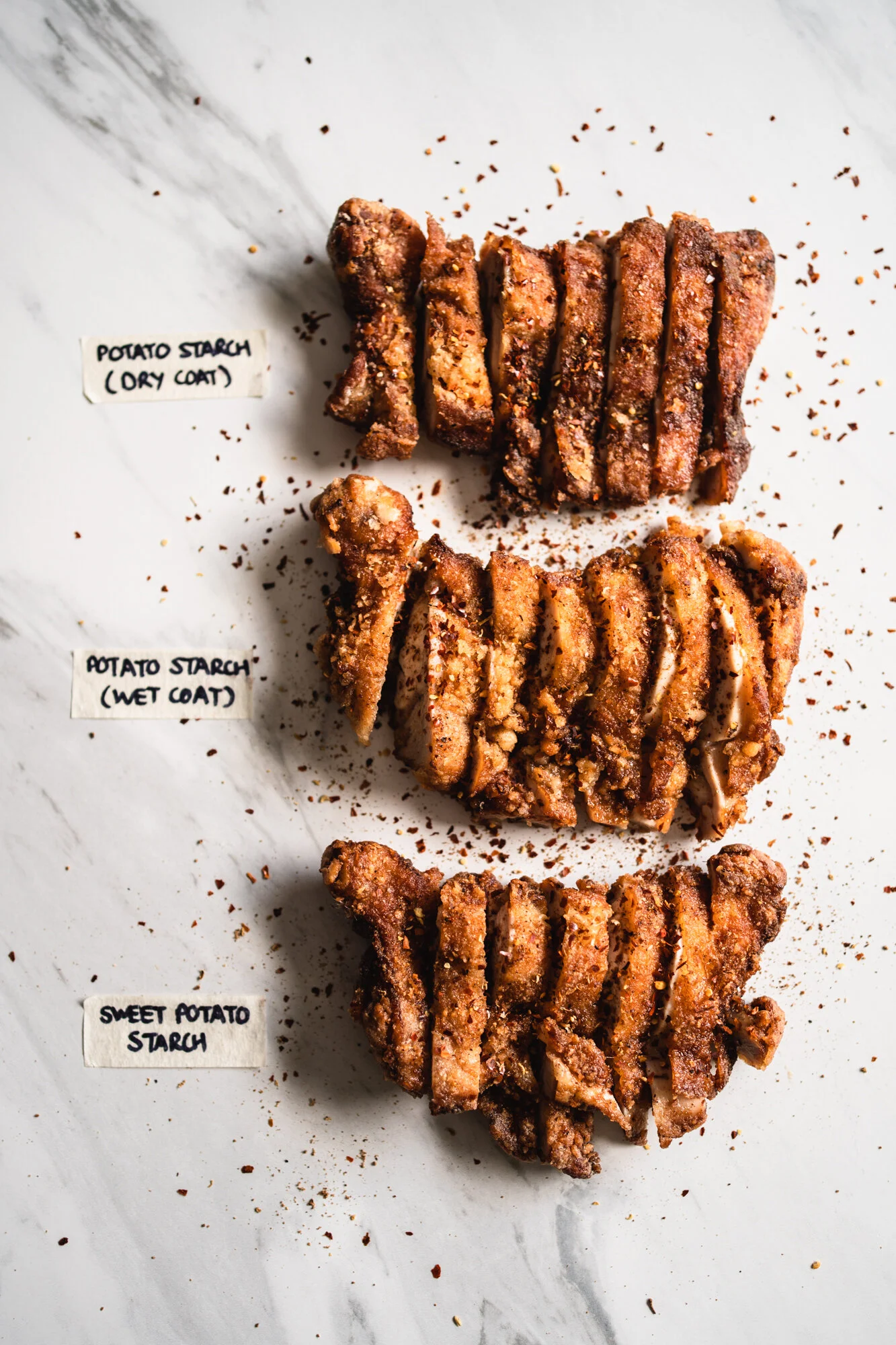
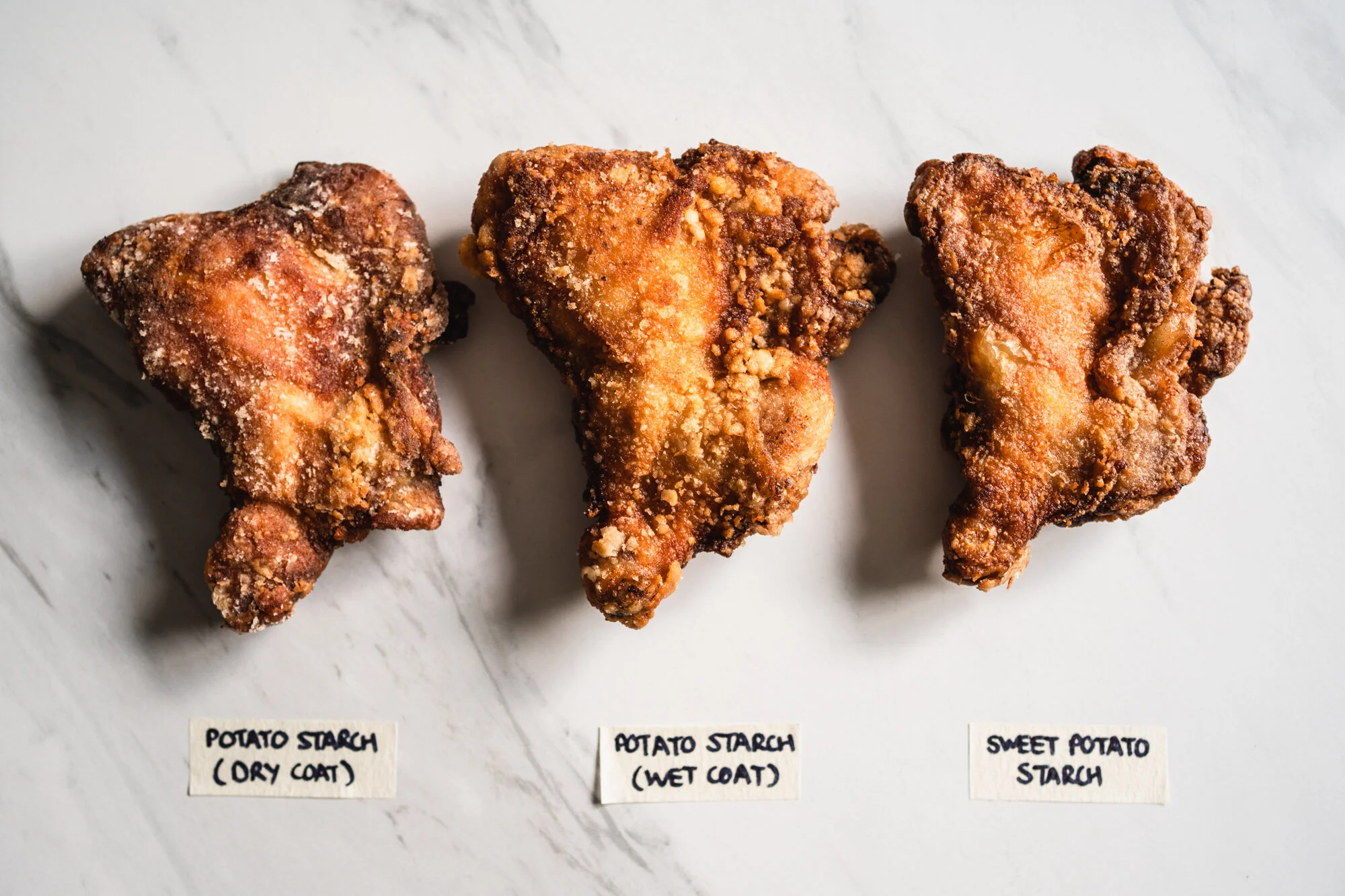
good stuff, like the cross comparison analysis. what did you add to the potato starch to make a wet batter? I suppose both the sweet potato starch, your favourite, is also dry coated? I’m guessing the wet potato starch batter didn’t do well because after the liquid fries off, it leaves behind fewer potato starch for the crunch. But I also guess you add more than just water to the potato starch batter because when I tried 1:1 starch:water ratio, I made a non-newtonian fluid which is weird haha