
Getting a doctor to prescribe you a soft food diet used to sound like a dream to me. I mean, who in their right mind would complain about being required to eat ice cream and yogurt all day, right?
Well, last week I got all 4 of my wisdom teeth removed and was put on an ice cream diet. It hurt like a b*, but I was quietly consoled by the fact that I get to have all the ice cream I want as an excuse. Contrary to what I imagined though, after going through a whole tub of greek yogurt and bowls of Kapiti fig and honey ice cream for breakfast for days on end (yup I really let my boujee self go), I was miserable. I couldn’t open my mouth much, let alone chew. So everything I ate had to either instantly dissolve or just slip down my throat immediately. Oh, and coupled with the fever and (hopefully not permanent) nerve damage that came after the surgery, the last week has been quite the torturous ordeal.
Like a child weaning off breast milk and purees though, I’m slowly introducing more not-so-soft food into my diet as the days progress. 5 days post-surgery, I got my first taste of semi-solid food – in the form of plain, cooked rice in a pool of watery tea-broth – and I remember being more excited to eat that than when I had MyBurgerLab’s Nasi Lemak Burger for the first time! Mmm, watered-down ochazuke never tasted so good! The texture of the bits of rice in the savoury tea, mushy and bland as it was, was close to revelatory! It made me realise how important of a role texture plays in the food we eat. Because sure, ice cream and yogurt might taste really good individually, but with the same food texture coating your mouth 3 meals a day, it becomes a real drag. So it’s not just always about the taste y’all!
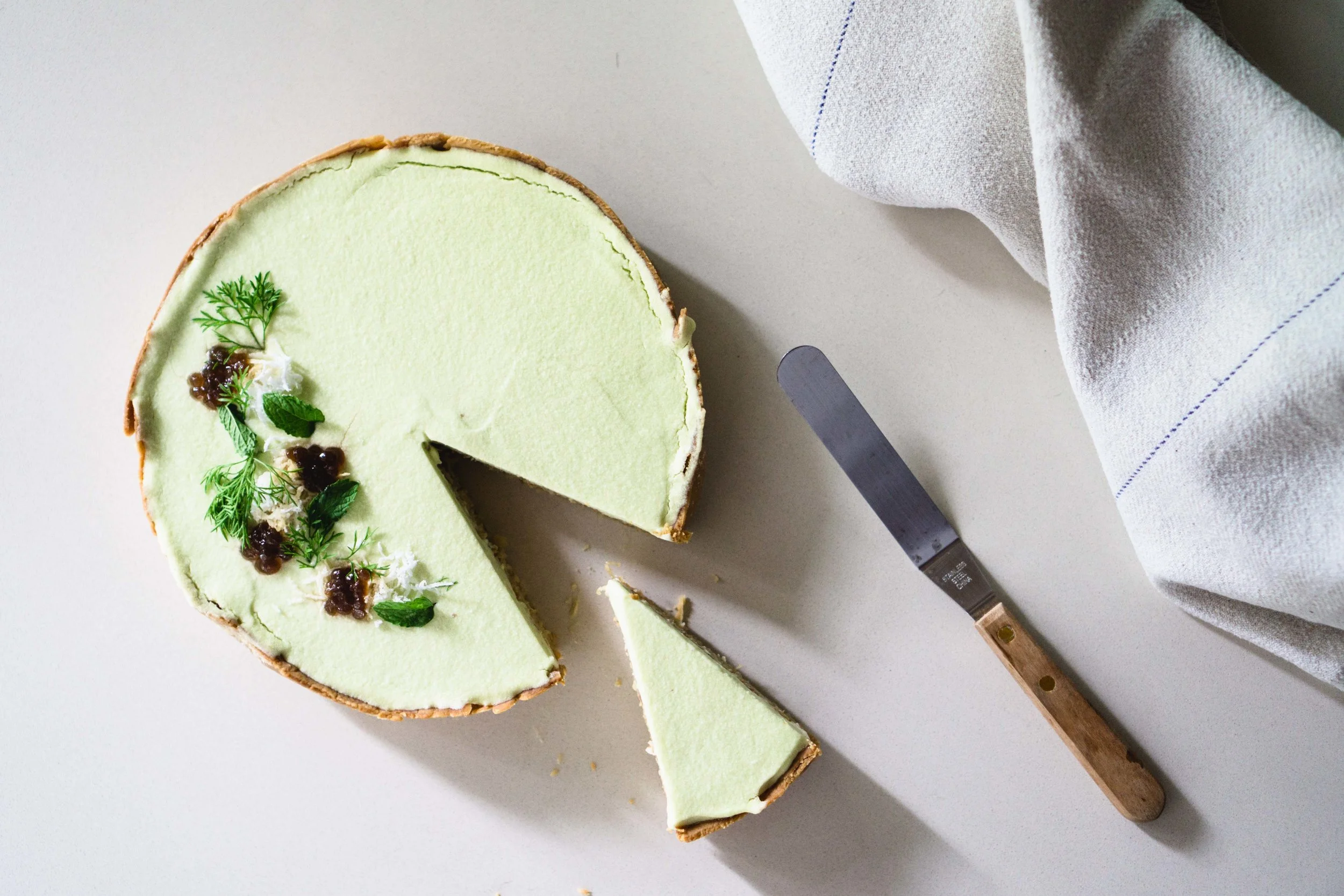
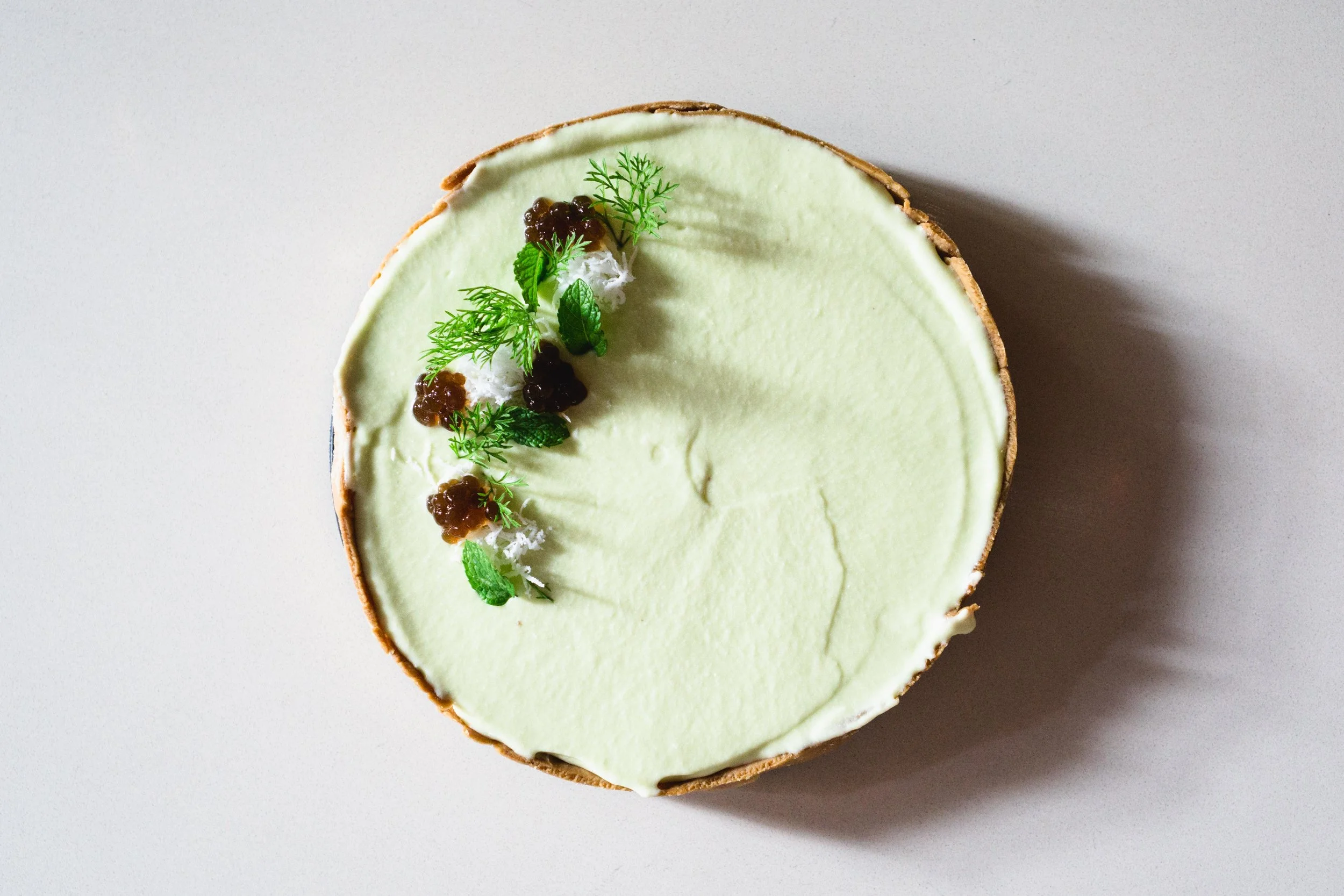
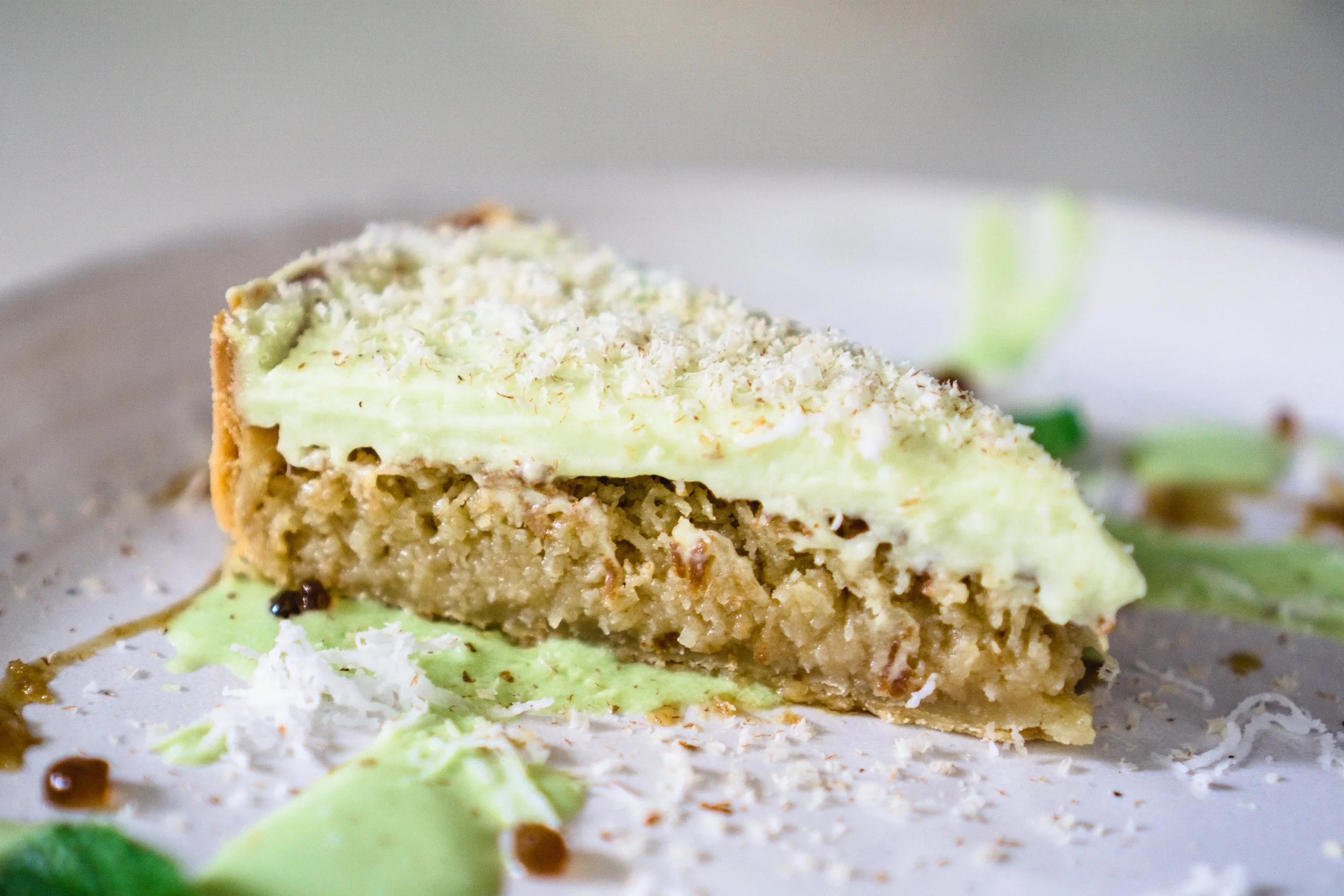
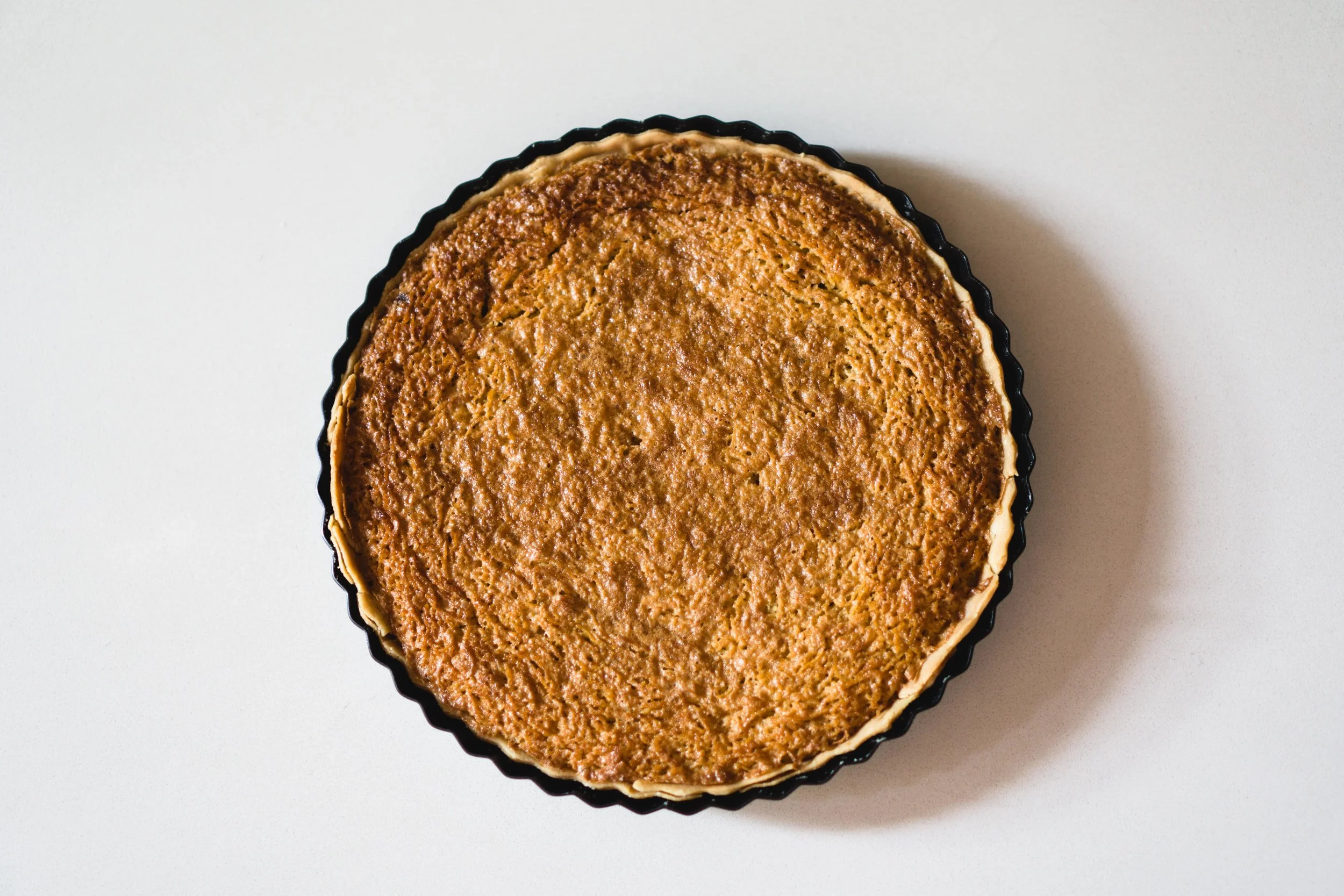
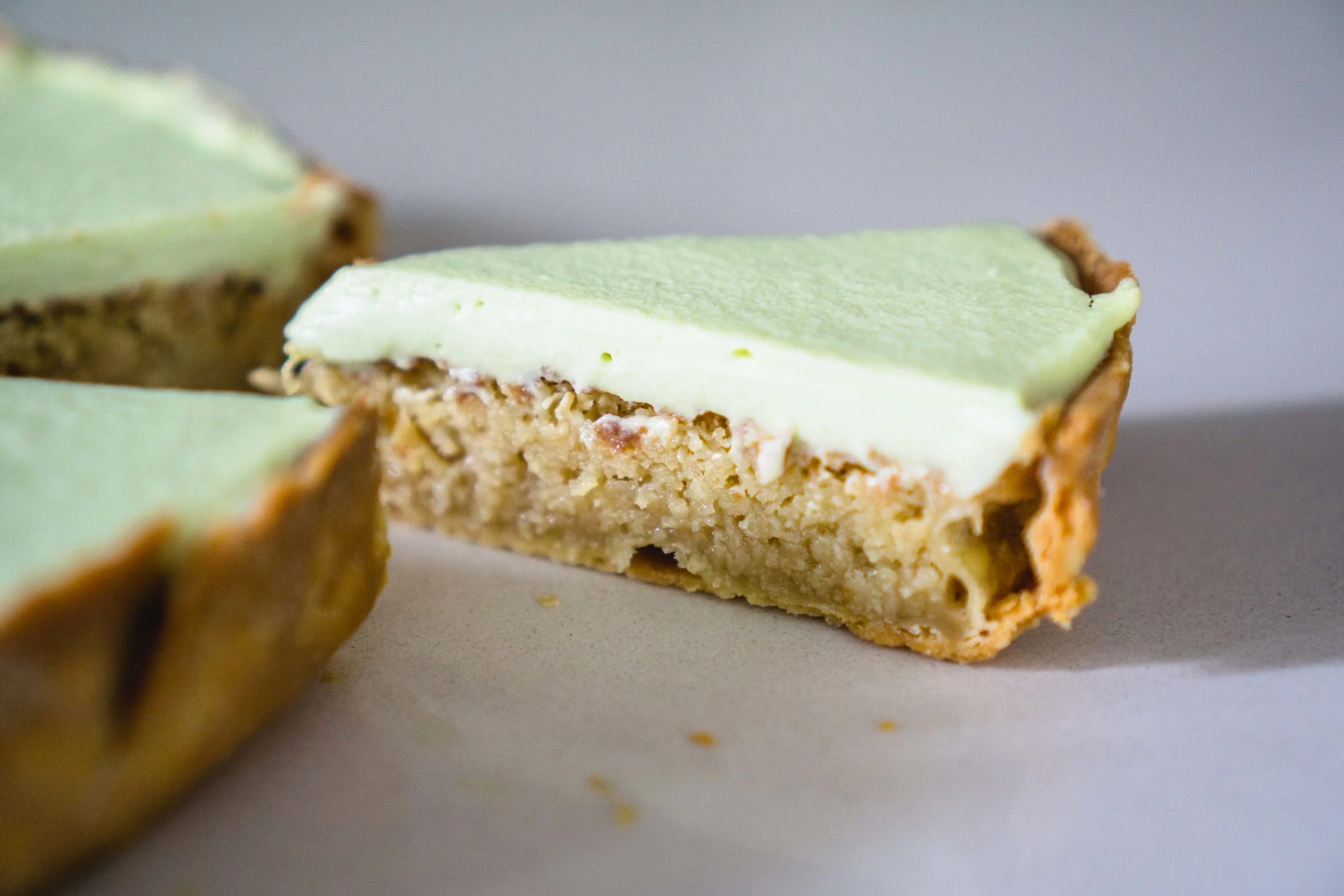
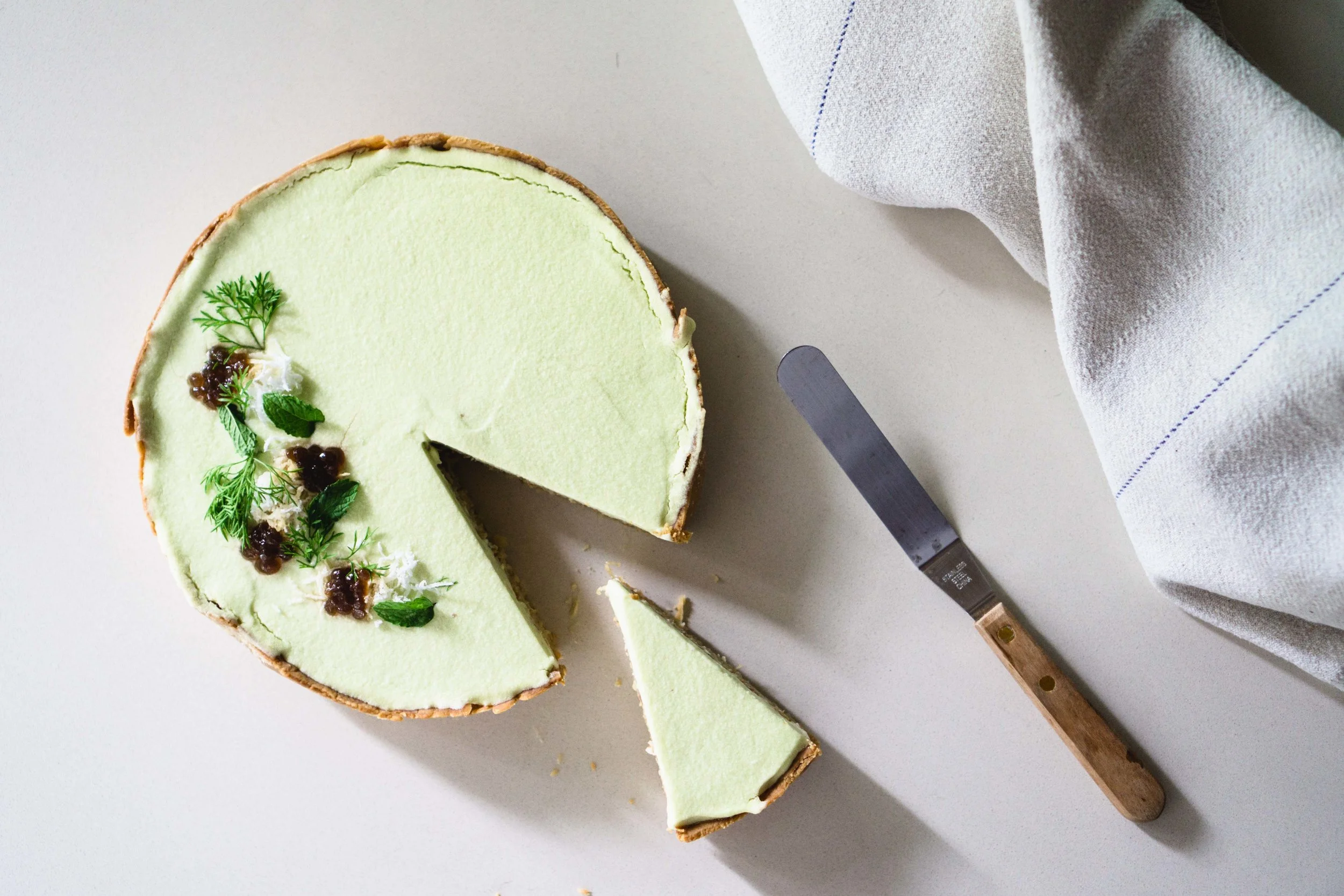
So after that revelation, to hasten my recovery back to solid foods, I made a tart. It’s made of three of the most familiar, comforting flavours to me (and probably to any Malaysian for that matter) – coconut, gula melaka, and pandan. But more importantly, it has three distinct textures to it – a crunching but yielding shortcrust base, a moist layer of coconut flake custard, topped with supple, melt-in-your-mouth pandan cream.
The tart itself is based off a traditional French coconut pie/tart, commonly made of a desiccated coconut custard-mix baked in a tart shell. But instead of using dried, packaged desiccated coconut, I used freshly grated coconut flakes and santan (coconut milk) I got from the market, and gave the tart a whole lot more body with the classic Malaysian dessert combination of pandan and gula melaka (here in the form of the cream and ‘caviar’).
The verdict? It’s pretty dang good! Not owing to any genius on my part of course, but rather to the Malaysian ancestors who discovered the Holy Trinity of Malaysian desserts – coconut milk, pandan, and gula melaka. Also, I know the photos of the tart doesn’t look particularly appetising (not least because I am terrible at finessing and doing dainty garnishes), but I think it tastes marvelous all the same. That aromatic, almost-gooey coconut custard layer and that herbaceous pandan cream, bound together by the fragrance of the gula melaka throughout – ethereal. Most of all though, the tart definitely stimulates the textural part of the palate. So I’d say if anything, this tart makes for a great transition food for babies weaning off soft foods and purees, and for adults post-teeth-surgery. 😉
5 thoughts on “Coconut Pandan Tart”
Hello! Hoping to resurrect these comments and get a response! 😉 I’m curious what your ratio was for the pandan liquid (water to leaves). I have store-bought pandan paste, but I don’t like the color it imparts, and it just doesn’t have as fresh a flavor. Thanks for your help!
What’s the right tart shell size you used for above filling ratio.
I used an 18cm tart shell, or 7 inches in diameter.
That sure is a lot of sugar, 150g+100g+50g = 300g sugar. Not to mention the dodgy quality of the “all-purpose flour”. Would be interesting to see if you can substitute parts of the sugar with something healthier like erythritol (perhaps keep the gula melaka part) and bump up the quality of the flour (like something with a higher protein+nutrition content).
Mmm that’s a good point! I totally get you, I’ve had so much freshly-milled flour in the US (Blue Hill had a grain miller) and there is definitely a huge difference! Sadly in Malaysia it’s super tough to find good flour at an affordable price though. Do let me know if you know where I can source some! But also I think it’s important for recipe ingredients to be accessible, no? So a bit of a struggle there, haha.
And I hear you on the sugar too. I generally try to cut down on the sugar in my recipes. (Our Asian palate has a generally lower sugar tolerance, plus I always find the American recipes WAAAY too sweet anyway.) But feel free to cut it down more to your liking!