In the past half year of food writing and blogging, I’ve learnt that there are a couple of words that are undesirable, maybe even taboo, when it comes to describing food.
Now I’m pretty much still an amateur in the food writing world, so I definitely still find myself defaulting to these words when writing, especially when I’m feeling particularly uninspired. Increasingly though, I’ve found it easier to avoid using them. (Well, except the last one.) So that’s progress, I suppose!
So to any budding food writers out there, but mostly as a reminder to myself, here are a few of my least favourite food words.
Delicious
I know, what kind of food writer doesn’t like food that is delicious, amiright? But lemme explain. After one too many times of using the word ‘delicious’, I realised that, like the words ‘tasty’ and ‘unctuous’, describing food as delicious doesn’t do it justice at all at all. ‘Delicious’ doesn’t paint a great picture, it doesn’t tell a story, and it doesn’t tantalise the tastebuds in the slightest.
Taking a page out of the book ‘Will Write For Food’, just compare the phrase “That apple pie was delicious.” versus this excerpt by food writers Jane and Michael Stern – “The crust is as crunchy as a butter cookie, so brittle that it cracks audibly when you press it with your fork; grains of cinnamon sugar bounce off the surface as it shatters. The bottom crust is softer than the top, but browned and still breakable. Where the top and bottom meet, there’s a knotty cord of dough that becomes impregnated with enough fruit filling to make it chewy. Inside is a dense apple pack of firm Ida Red crescents bound in syrupy juice.”
So much more descriptive and enticing, no?
This even works for negative comments, where so much more savagery and sass can seep through the page when compared to a mere “That was not delicious”. Just read this quote by food critic Jonathan Gold – “It doesn’t taste like much, this bull penis, pretty much just cartilage and char, but the spectacle is as emasculating as a Jonas Brothers CD.” Boom.
Oriental
Hmm this is a controversial one. Obama signed a bill prohibiting its use in federal documents, meaning it’s politically incorrect to label someone, or something, as oriental. (Well, in America at least.) To me though, I’ve personally never felt offended by the term. To be fair, the people whom I’ve heard use the term did not use it out of contempt, so I’ve never had any reason to feel offended. So not to be heretical here, but I’m with Chrissy Teigen on this one.
Authentic
Here’s another contentious one. What is authenticity really? It’s a term that has been well-debated, but I’ll try explaining it in nasi lemak terms.
Nasi lemak is the national dish of Malaysia, so most nasi lemaks in Malaysia would without much doubt be considered ‘authentic’. But then if say, a Malaysian opens up a nasi lemak store in the US, is that authentic then? Probably so. What if it wasn’t a Malaysian opening up shop, but a person who’s never been to Malaysia, much less tasted authentic nasi lemak, but ends up making one that tastes pretty authentic, based on a recipe he followed? Is that authentic? Truthfully, in this day and age, it’s more likely for him/her to be called out for some form of cultural appropriation, no?
Let’s go one level deeper. What if the Malaysian store owner from before makes some tweaks to his original nasi lemak recipe? Perhaps using fish sauce instead of belacan (shrimp paste), or canned coconut milk instead of fresh santan like we do in Malaysia? Does it render the nasi lemak inauthentic? What if, to appeal to the foreign customers, he serves it with a crispy rendang instead of just a regular rendang? That’s sure to get some flak, no? So where do we draw the line between authenticity and fakery, really? Even in Malaysia, we have places that serve nasi lemak with lobster, nasi lemak burgers, even nasi lemak ice cream. So are all these really considered authentic, just because of the location in which they’re served?
I’ve no straight answers for these really, they’re more food for thought. But personally, the authenticity of food in the traditional sense (in terms of its origin or methodology) doesn’t matter as much as the authenticity of the person cooking it. Like honestly if one just cooks good food with heart and soul, I think that beats sticking to authenticity for authenticity’s sake any day of the week.
Moist
As the least favourite word in polls by The New Yorker and Buzzfeed, moist has been the well-known ‘Undesirable No.1’, and not just in the realm of food writing. Perhaps it’s the wet, mouthy sounds the word brings out, or maybe it’s just the bodily-fluid-y connotations that it suggests, but of all the words on this short list, moist is the only one that is hated purely based on the way it sounds.
Personally, I have nothing against the word. I mean, I definitely prefer having moist cakes over chalky ones, moist chicken over dry ones, and moist steaks over overcooked ones. So squirm all you like, but this won’t be the last time you’ll see this word being used on the blog.
– – –
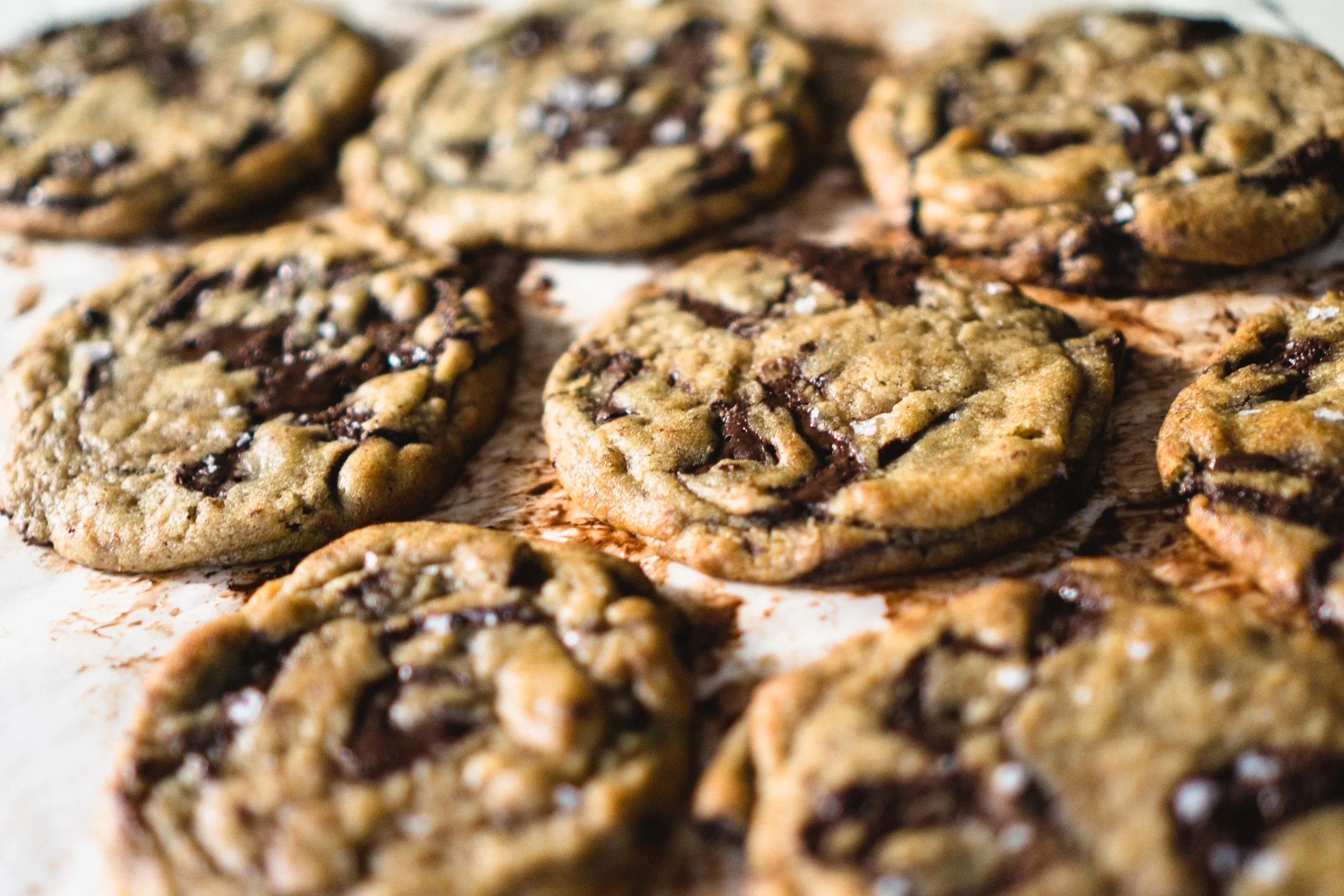
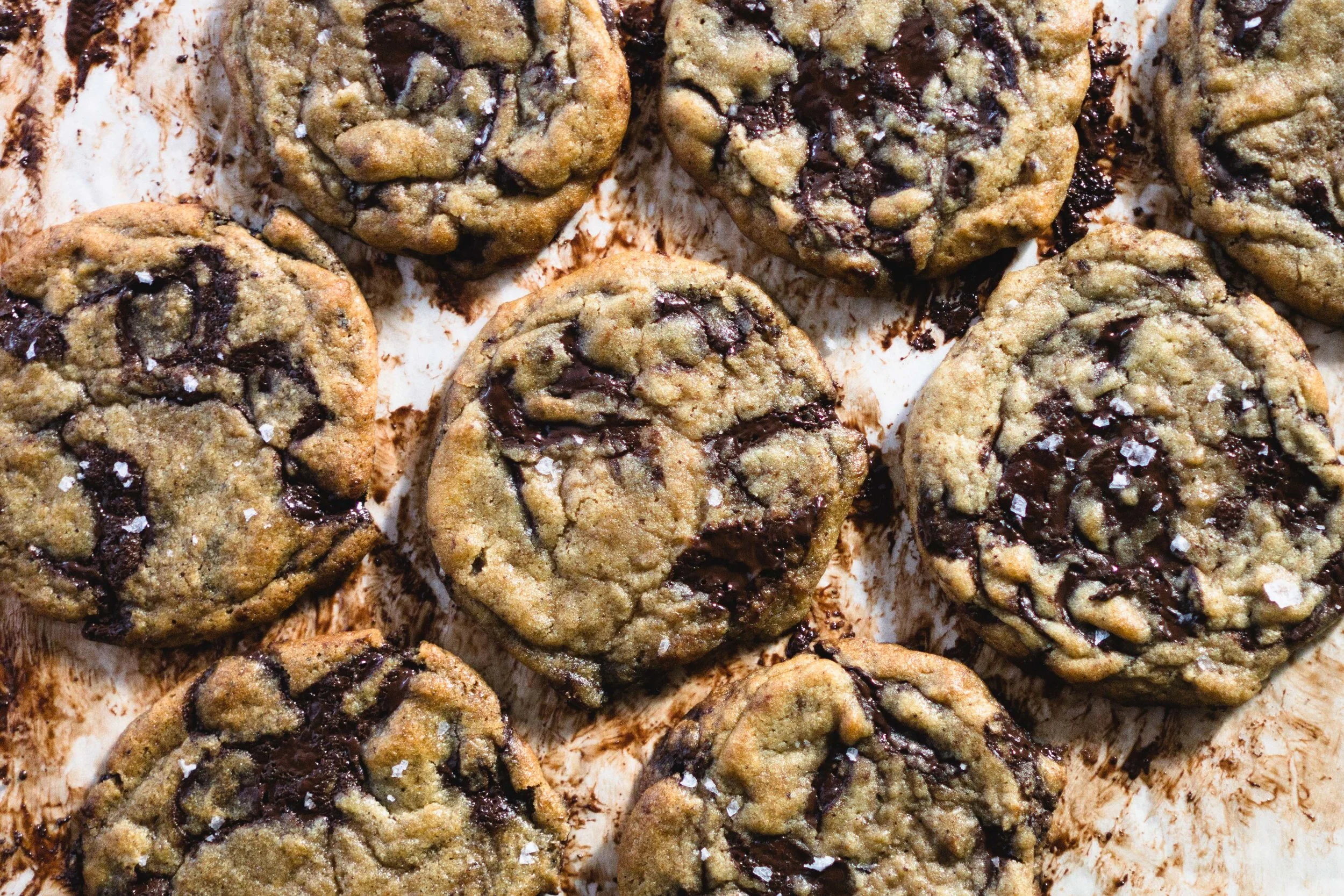
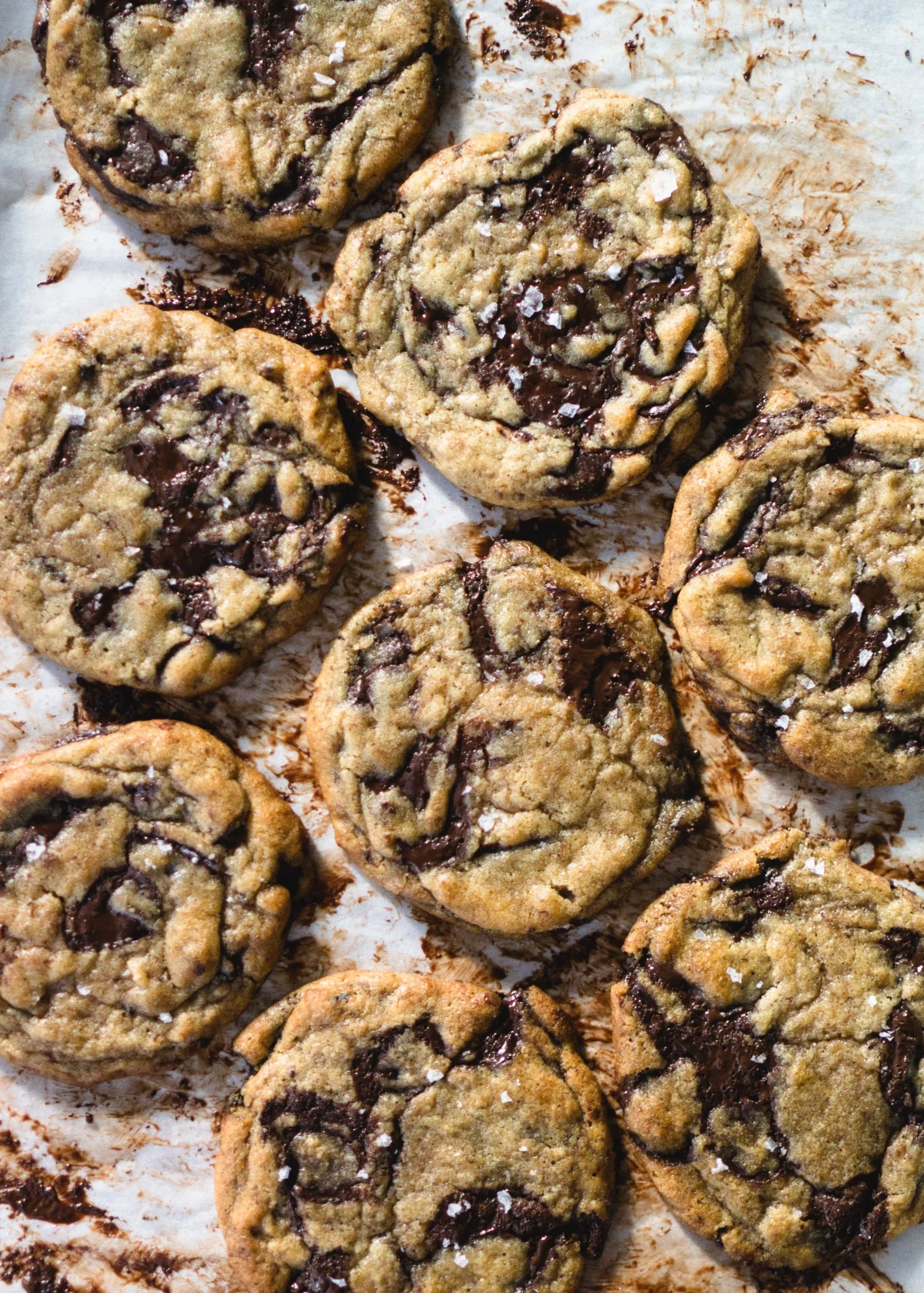
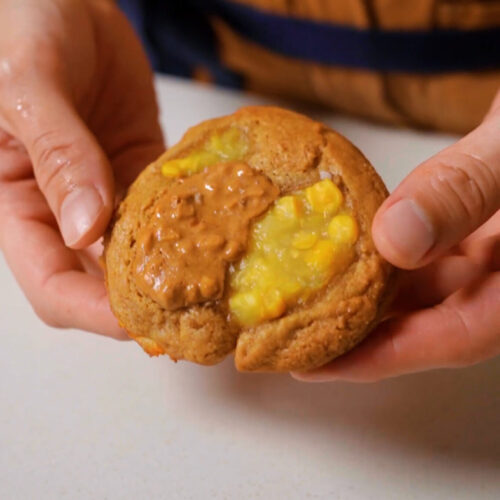
I’m sure there are still plenty of taboo food words and food writing rules out there that I’m breaking on the daily. I’ll eventually get to grips with them all and hopefully improve my writing in the process, but that’ll come with time and practice. For now, since no post on this blog would be complete without a recipe, here’s a deliciously moist, brazenly inauthentic recipe for a chocolate chip cookie, made exotically oriental with the addition of black garlic. 😉
Inspired by recipes from Sarah Kieffer, Posie Harwood and Thalia Ho
9 thoughts on “Black Garlic Chocolate Chip Cookies”
How many grams of the black garlic? I bought the container of single clove black garlic at costco, so 20 cloves seems like a lot!
Yes I would like to know this as well!
I made these and they are delicious but for some reason they are much flatter than what is pictured. I wonder if I did something wrong. They taste simply divine tho.
I noticed in the photo what looks like sea salt sprinkled on the top of the cookie. Is that correct? if so, do you sprinkle the sea salt before you put the cookies in the oven? After they come out? When you bang the pan? Can’t wait to try these!
Yes! I sprinkle the sea salt on after baking, right as they come out.
Damn it…as an amateur food writer myself I now pronounced myself as your biggest fan
Oh gosh thank you so so much!
Just discovered your page, and I’m loving it. It’s cracking me up as well as enlightening. Can’t wait to try out some of the recipes listed. Keep up the good work.
Thank you so so much. Haha I’m glad to be of entertainment! And do let me know which recipes you try out!