
Ingredients
Makes: 9inch round
Lemon & poppy seed bundt (adapted from Sarabeth’s Good Morning Cookbook)
- 420 g all-purpose flour
- 5 g baking soda
- 3 g salt
- 175 g plain yogurt
- 75 g whole milk
- Zest of 3 lemons
- 1 lemon - juiced (you’ll use the rest of the juice in the soaking syrup)
- 200 g unsalted butter - chilled and cut into small pieces
- 380 g caster sugar
- 5 eggs
- 50 g poppy seeds
Lemon soaking syrup
- 100 g lemon juice
- 100 g caster sugar
Blue pea flower glaze
- 30 blue pea flowers - stalk removed
- 150 g water
- 150 g icing sugar
- 15 g milk
- 20 blue pea flowers - optional, for garnishing
Purple lemon curd (optional)
- 2 lemons - juiced and zest
- 150 g sugar
- 4 eggs
- 30 g unsalted butter - softened at room temperature
Method
Bundt cake
- First let’s prep the dry and wet ingredients. In a bowl, mix together the flour, baking soda and salt. And in a separate bowl, whisk together the yogurt, milk, lemon zest and juice. Then, place the cubed butter in a stand mixer fitted with a paddle attached, and beat it on high for 1 minute until smooth. Then, add in the caster sugar and continue beating for around 5 minutes, until it turns light and fluffy. Next, add in the eggs one at a time, and beat for another minute until it is well combined. Then, turn down the mixer to low, and add in a third of the flour mixture, mix it for 10-15 seconds, then add in 1/3 of the yogurt mix, and mix again. Repeat this two more times until the flour and yogurt are all incorporated in. Finally, add in the poppy seeds and mix it for a final 30 seconds until they are well-distributed.
- Heat your oven to 180°C, and grease your bundt pan with a teaspoon of oil or butter. Pour the cake batter into the bundt pan, and using a spoon or spatula, smooth the surface of the batter. Bake for 50-60 minutes, or until a cake tester comes out clean.
Soaking syrup
- As the cake is baking, place the lemon juice and sugar in a pan and bring it to a boil. Simmer until all the sugar has dissolved. When the cake is done, let it cool for 10 minutes before flipping it out of the mould, then brush it all over with the soaking syrup. (You might not use all of the syrup, but I like my cakes super moist so I forced all of it in, heh.)
Glaze
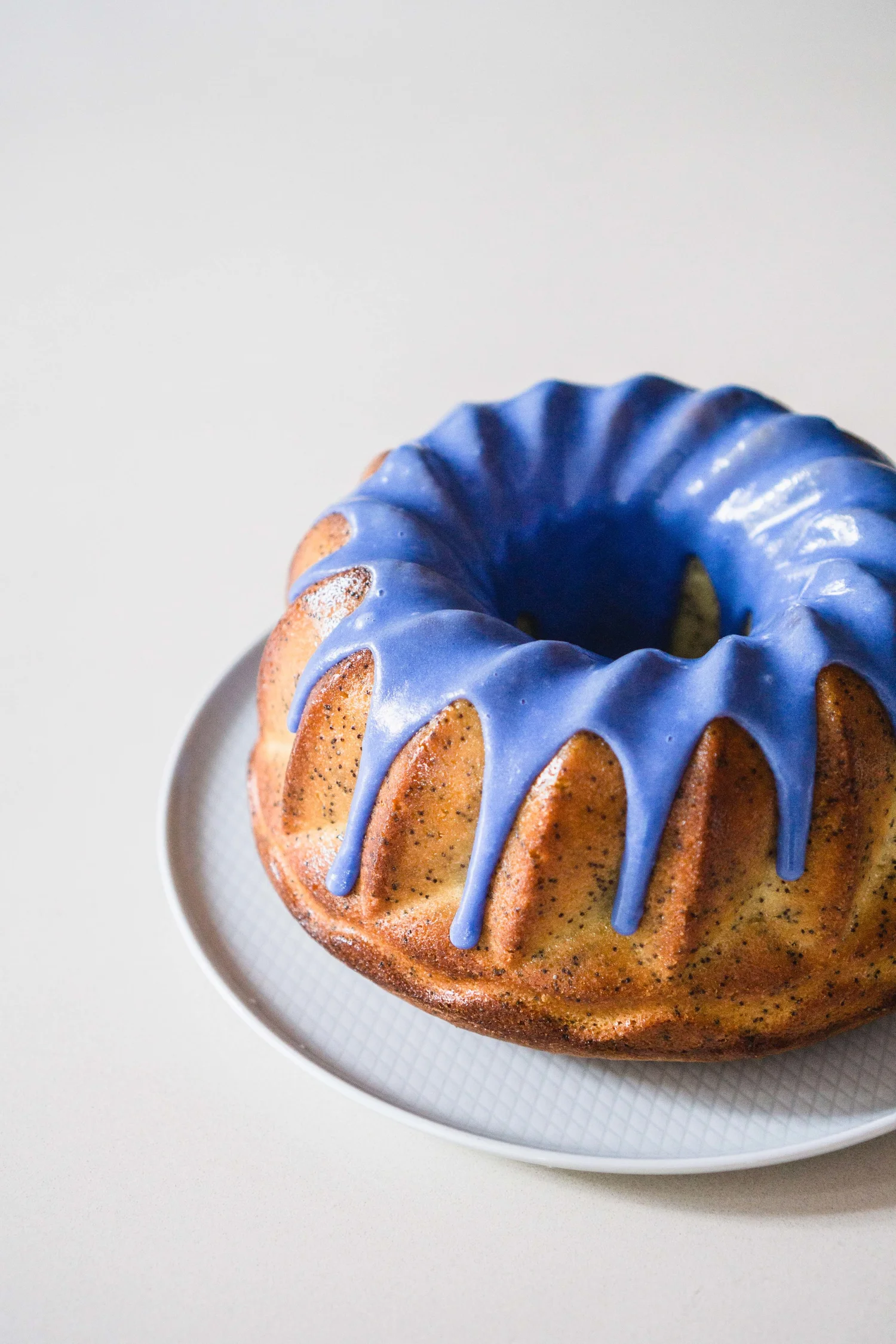
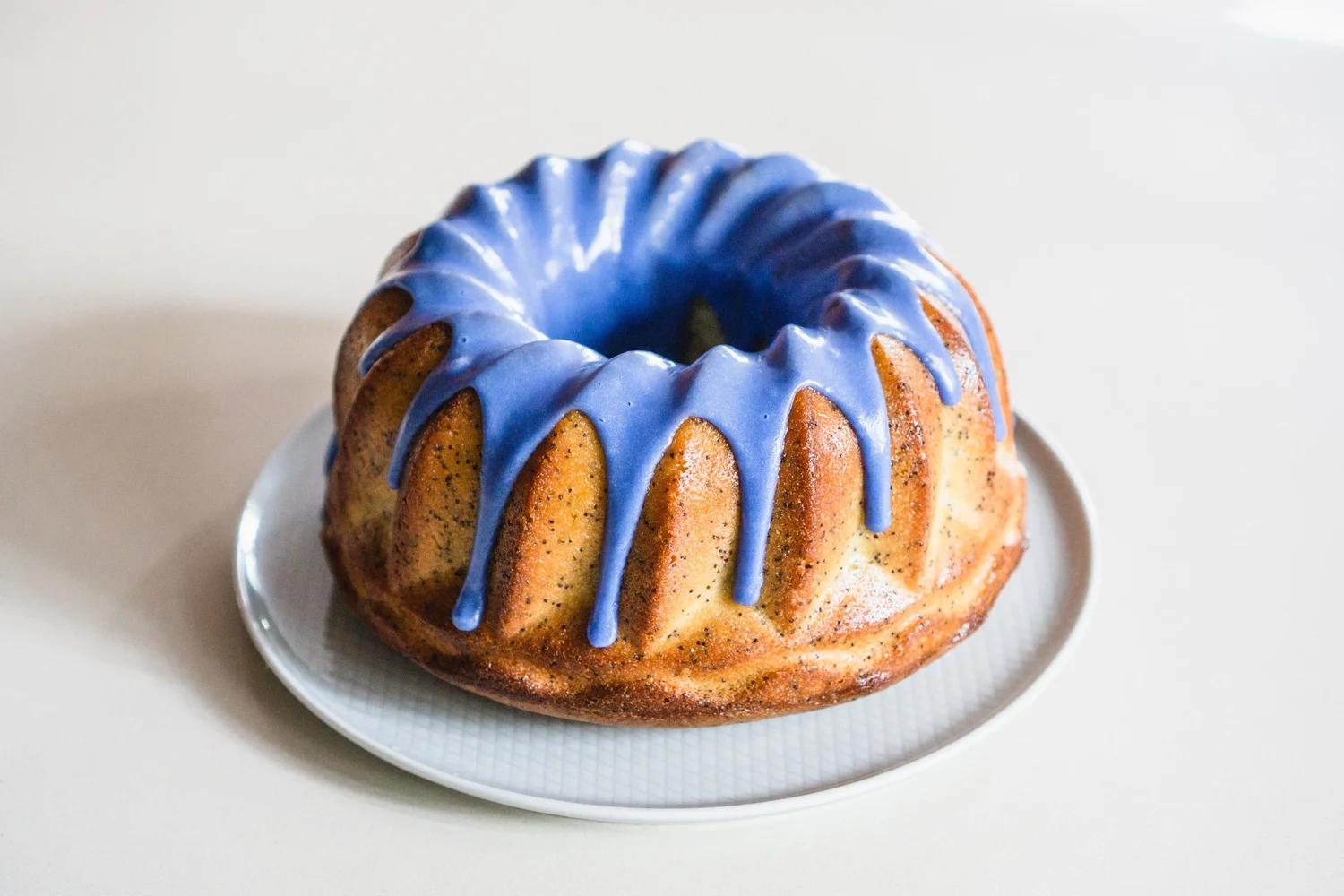
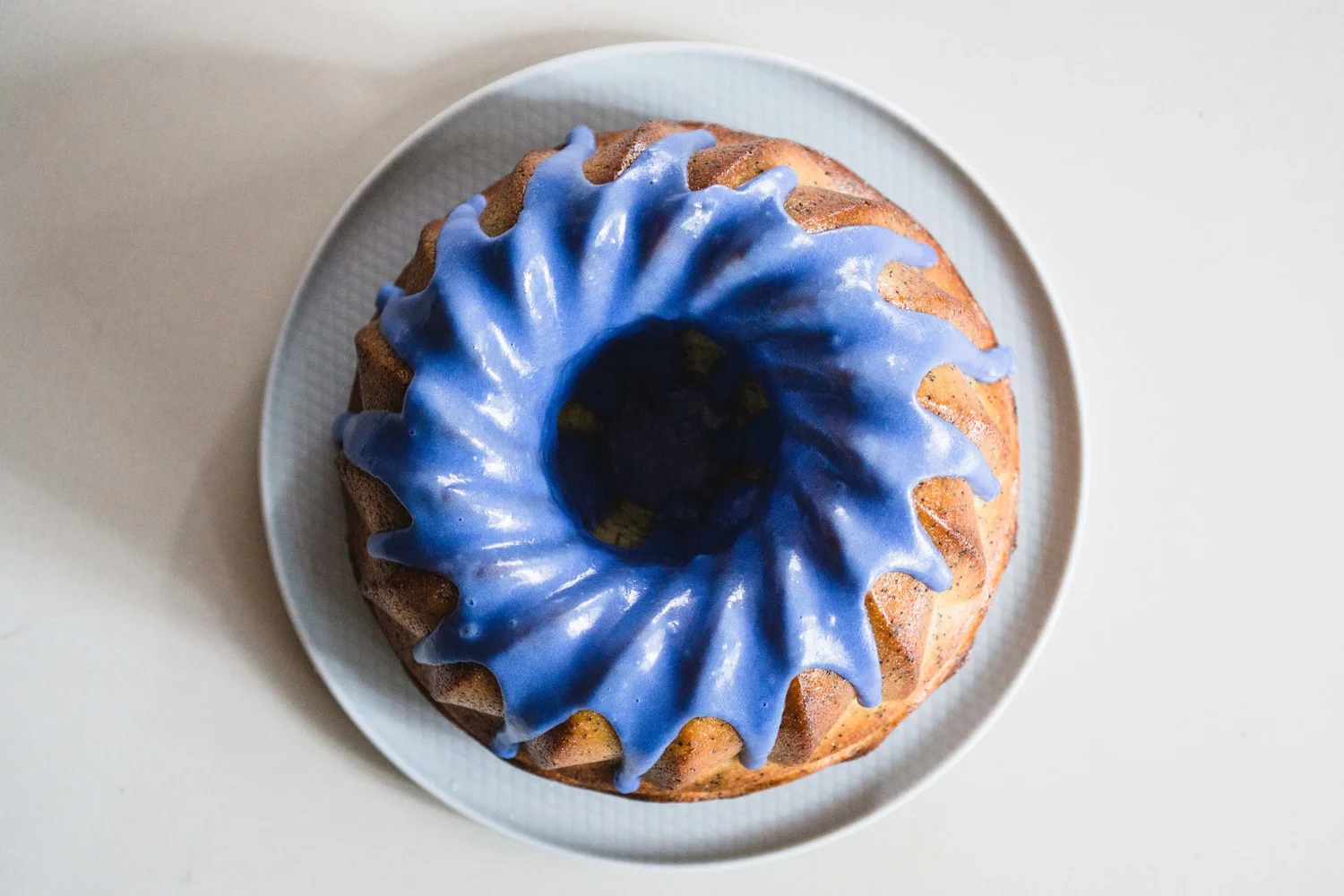
- To make the glaze, combine the blue pea flowers and water in a small pot, and bring to a boil. Let it simmer for 5 minutes until most of the colour has leeched out of the flowers. Strain the liquid and discard the flowers. In a separate bowl, mix the icing sugar and milk, and a tablespoon of the blue colouring. Depending on the intensity of the colour you prefer, you can add more blue colouring and/or icing sugar to adjust. But what you’re looking for is a pretty thick glaze, one that takes 2-3 seconds to droop off your spoon or spatula when lifted. (You’ll have some leftover blue colouring, which I used for the curd, though you can also reserve some for colouring rice (like in nasi kerabu) or desserts (in pulut tai-tai).)
Curd
- In a bowl, combine the lemon zest, lemon juice, sugar, and eggs. Place this over a pot of simmering water, but make sure the bottom of the bowl doesn’t touch the water. (It’s a steam bath, essentially.) Using a spatula, keep stirring the liquid and scraping down the sides until it thickens. Cook this for 15 minutes over low heat. (It’ll curdle too quickly if the water below is boiling too vigorously.) If your curd isn’t smooth, just pass it through a sieve and it should smoothen out. (Don’t worry this has happened to me a couple of times because I got impatient and cranked up the heat.) Then, add in roughly two tablespoons of the blue colouring leftover from the glaze. (The blue glaze will turn purple as soon as it comes into contact with the lemon juice, and turn a weird shade of purplish-brown. It won’t look pleasant at first, but add a little more and it’ll deepen into a nice lilac.) Cook this over the steam bath, stirring continuously, for another 10 minutes until it thickens. Finally, mix in the butter to give it that nice sheen.
Serve
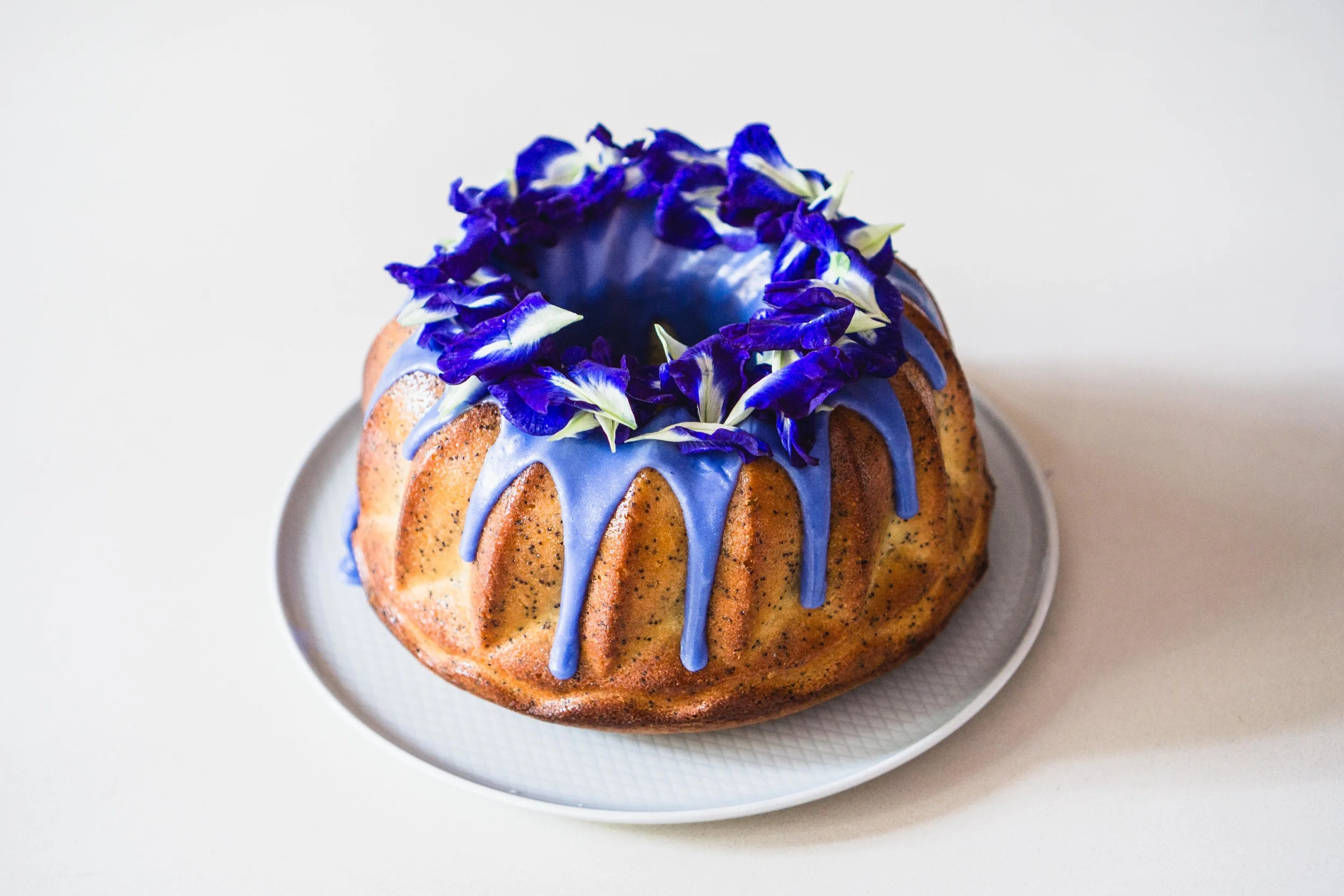
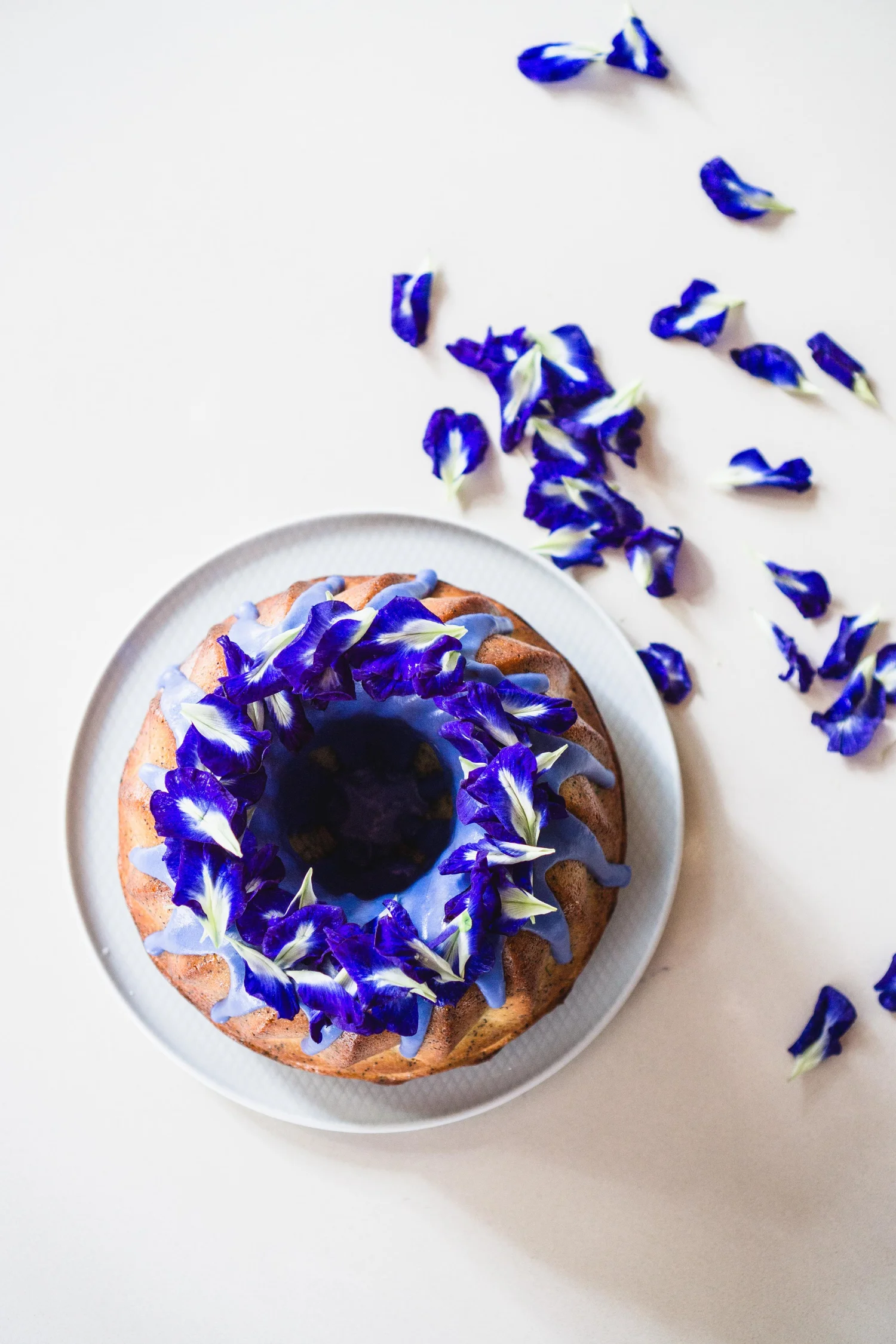
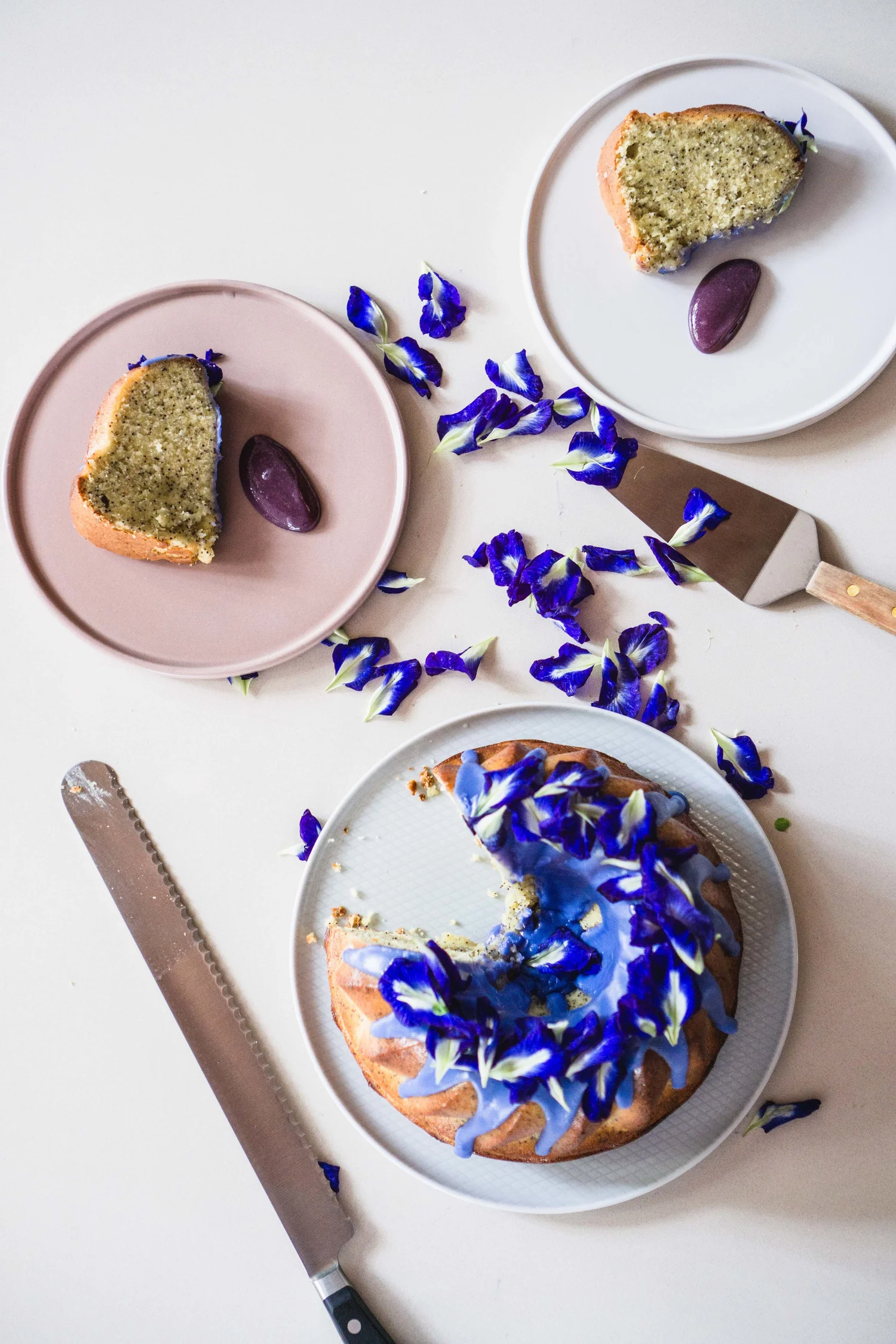
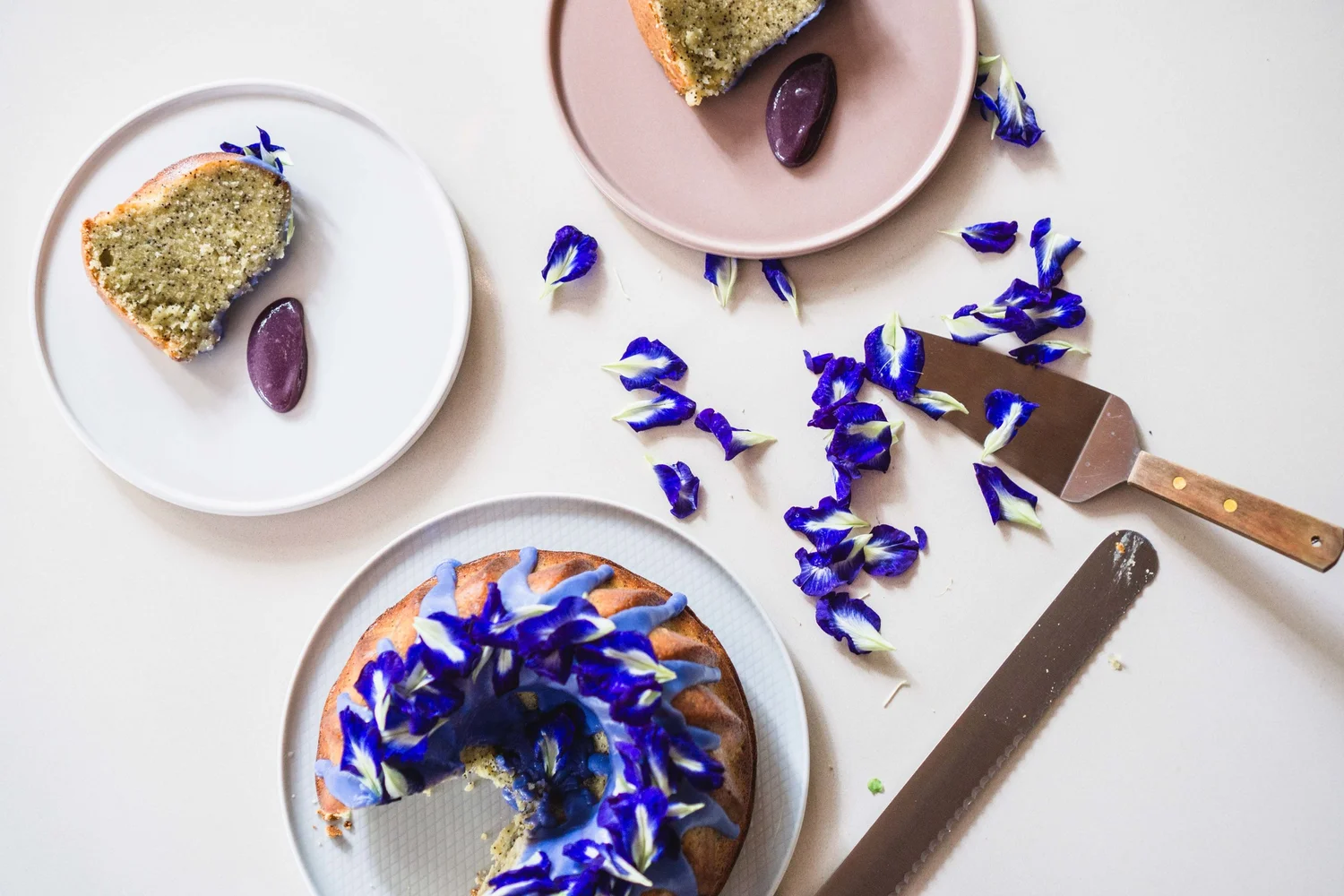
- When your bundt cake is cool to touch, place it on a wire rack. Then, carefully pour the glaze over the top of the cake, and give the wire rack a few gentle taps to make the glaze spill off the sides. Then, top the cake with some fresh blue pea flowers. Portion the cake into 8-10 slices, and serve with some lemon curd.
4 thoughts on “(Naturally) Blue Cake”
Hi Jun – I just found your lovely blog after reading an article you wrote about rendang published by “Taste.” Anyway, browsing your recipes, this one caught my eye. Given I’m in the cultural backwater that is rural Ontario, do you think blue pea flower TEA would give me that lovely blue colour? Happy to give it a try, as I’m sure it’ll still taste delicious, just curious whether you had any thoughts on the matter. Thanks!
Hey Julia (or not?!),
YES! If you manage to find some, you could steep them in hot water and they’ll give it a deep, indigo tint. It’s quite beautiful really! Although, I have to say that it doesn’t taste of much. It’s just very slightly vegetal, but you can put in a little lemon juice for some extra flavor, AND some color change magic too. 😉
Hi Jun! This comment is very very random, but your recipe just made me so happy. I’m obsessed with lemon-flavored desserts and blue flowers are very, truly symbolic to me. I was having a hard day, but your combination of two of my favorite things made me feel much better. So yeah ….. thank you! I love reading your articles!
Omgosh thank you so much for your message! Sorry I’m rubbish at replying on time, but your comment made my day today!! 😊 I’m glad the recipe resonated with you!