Despite my flagrant use of puns—especially in Instagram captions—I don’t think I’m an especially punny person. Nor do I like most puns; there are very few puns that truly tickle me. Having said that though, here are a few weird, niche, clever ones that have stuck with me.
- Cidekick. It’s the name of a company based in Petaling Jaya, Malaysia. Too bad they’re a HR agency. Ah, if only they were a cider house. What a waste of a good pun.
- “When life gives you melons, you’re dyslexic.”
- Niki’s wordplay on lowkey:
“No one’s gotta know, just us and the moon ’til the sun starts wakin’ Up‘s the only direction I see”
Not entirely a pun per se, but the implicit “up” of “wakin’ up” is so simple yet effective.
- Or my very own, self-invented Tea-ramisu. (Sure, self-praise is no praise. But I did think it was quite clever. )
Anyway, what do puns have to do with this recipe? Well…
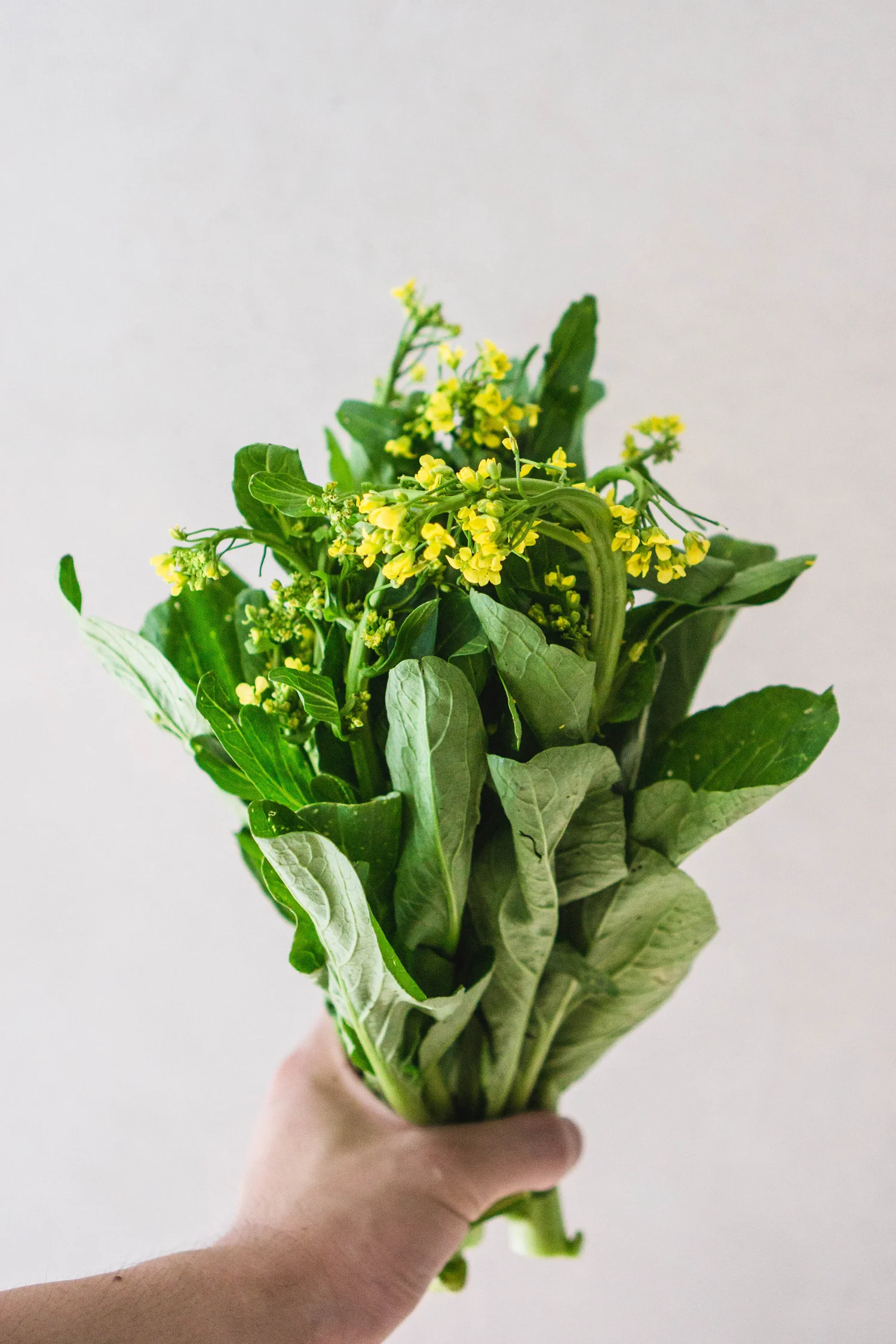
I was recently looking out to make an East-meets-West vegetable dish. Despite the prevalence of Asian vegetables, very little is known about them, and us Chinese rarely do anything to promote them outside of our kitchens, restaurants and community—though and exception is Cleaver Quarterly, who has this really informative card set on Chinese vegetables that I’ve been meaning to get—and bring them outside their stereotypical you-can-only-stir-fry-or-steam-them box.
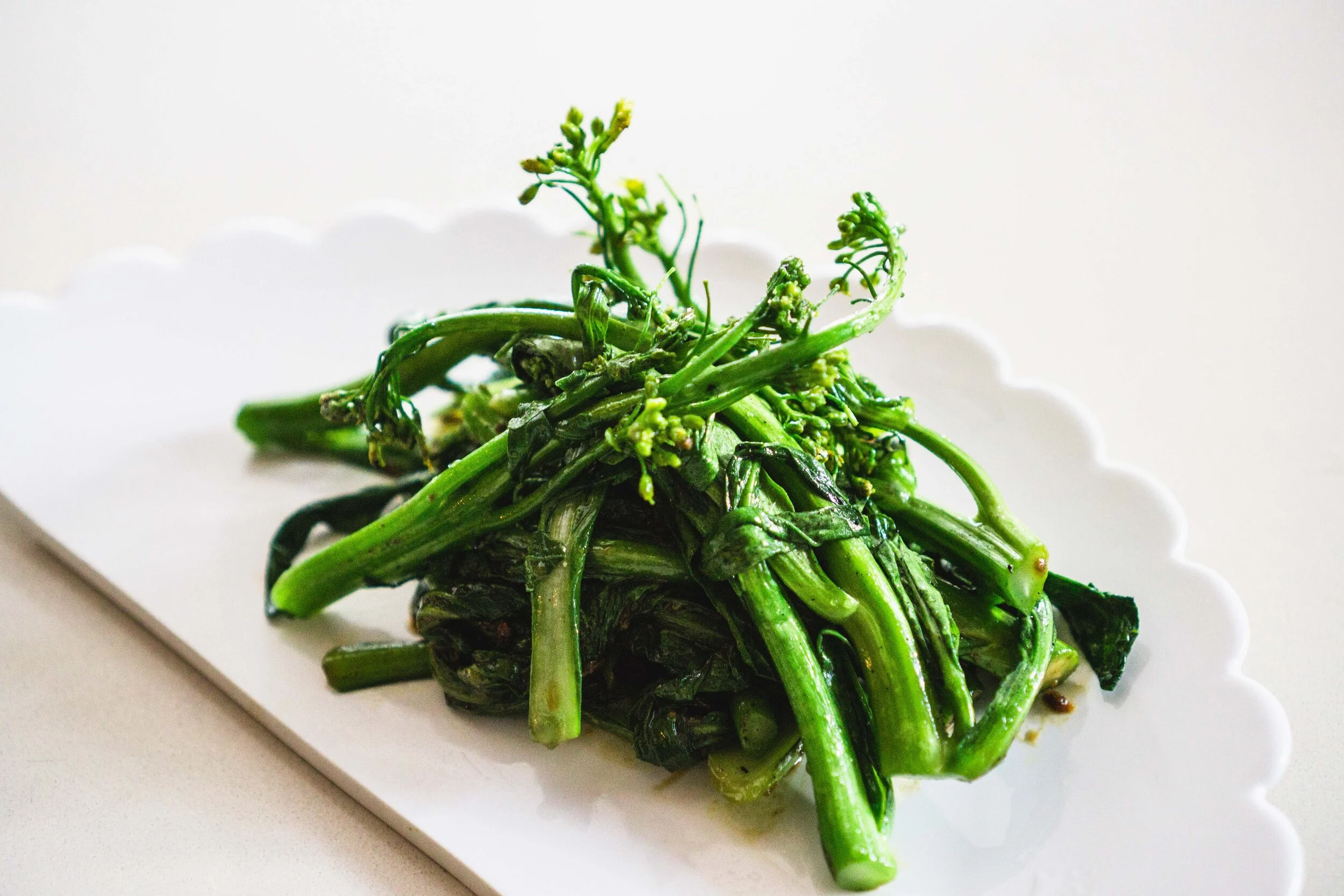
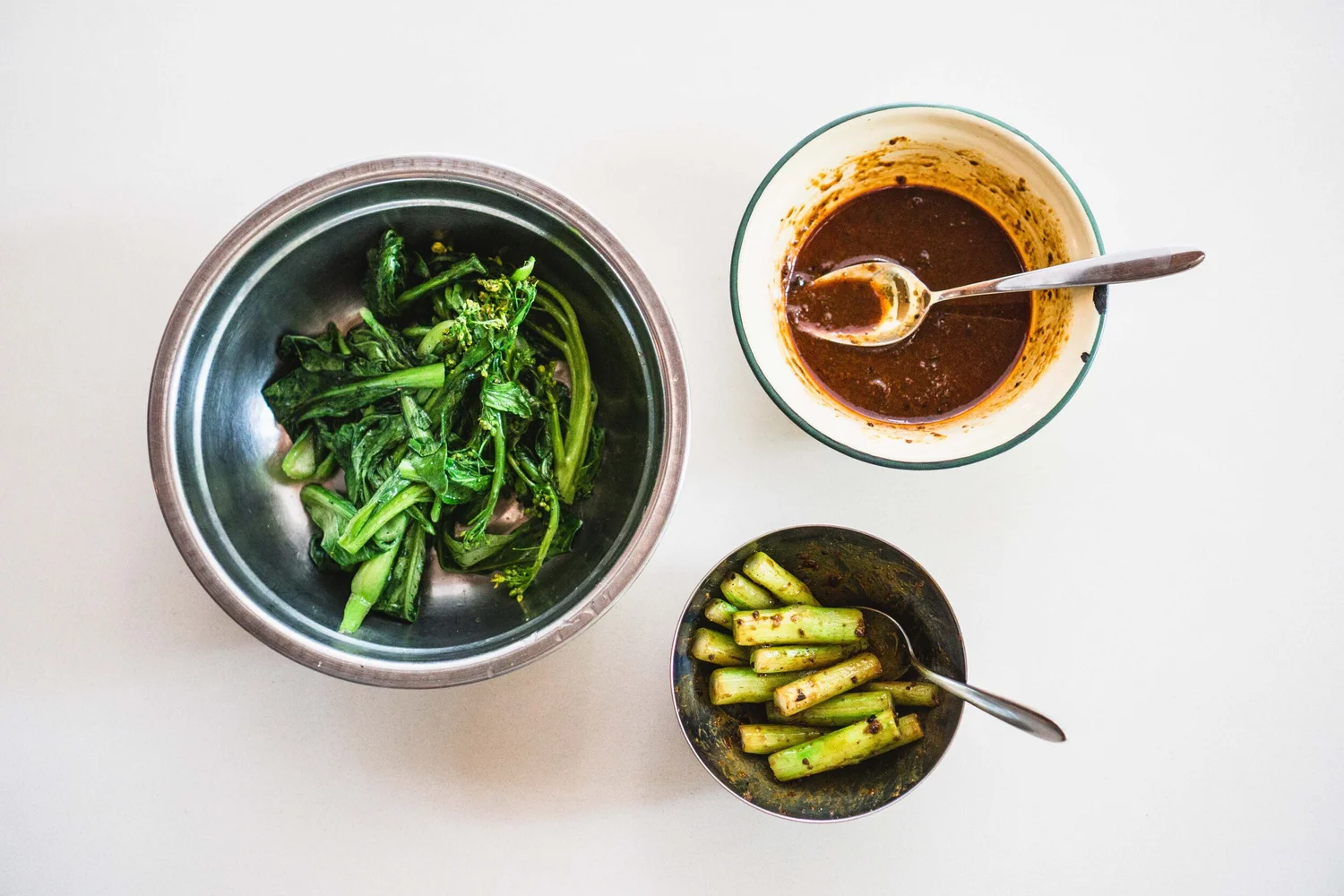
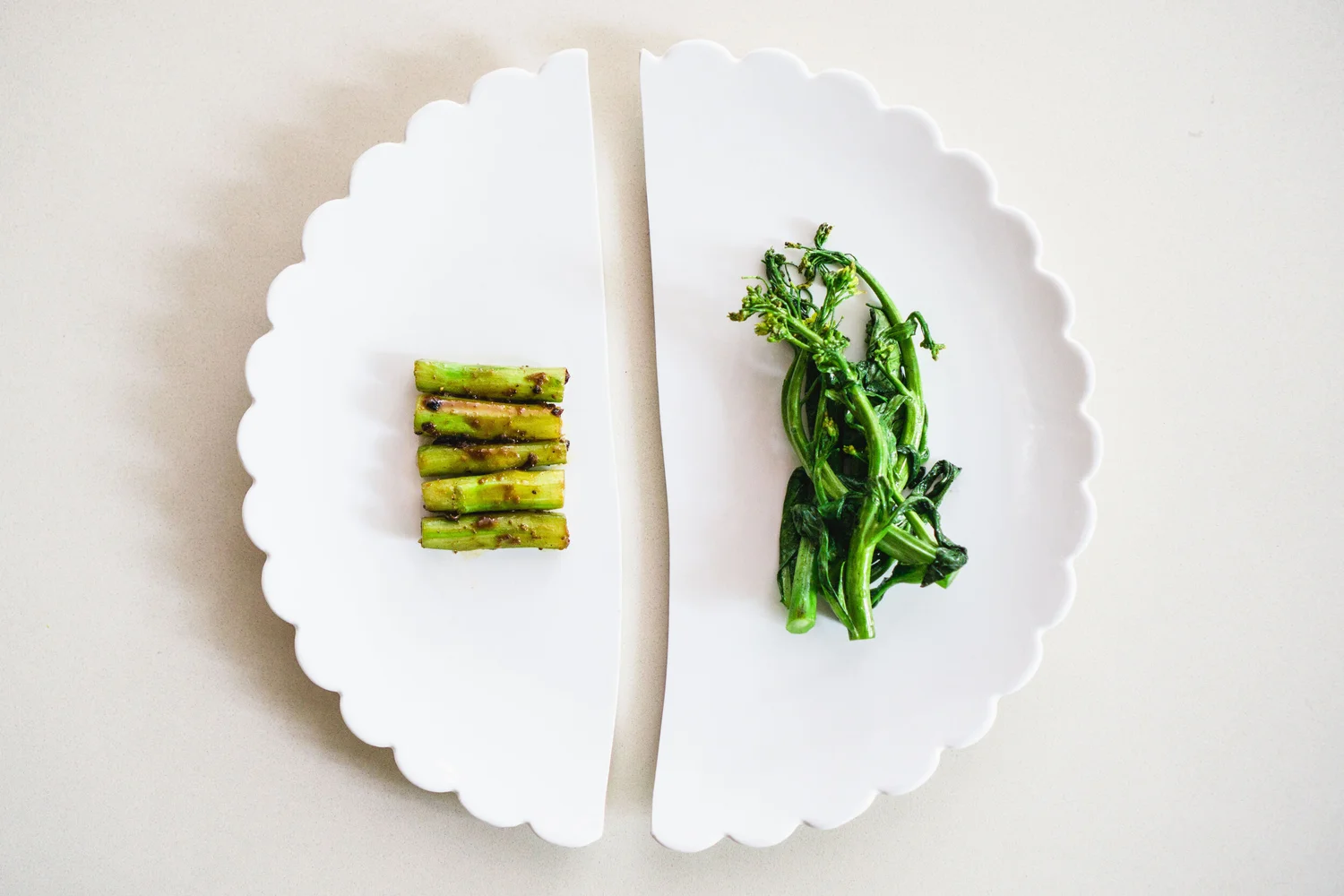
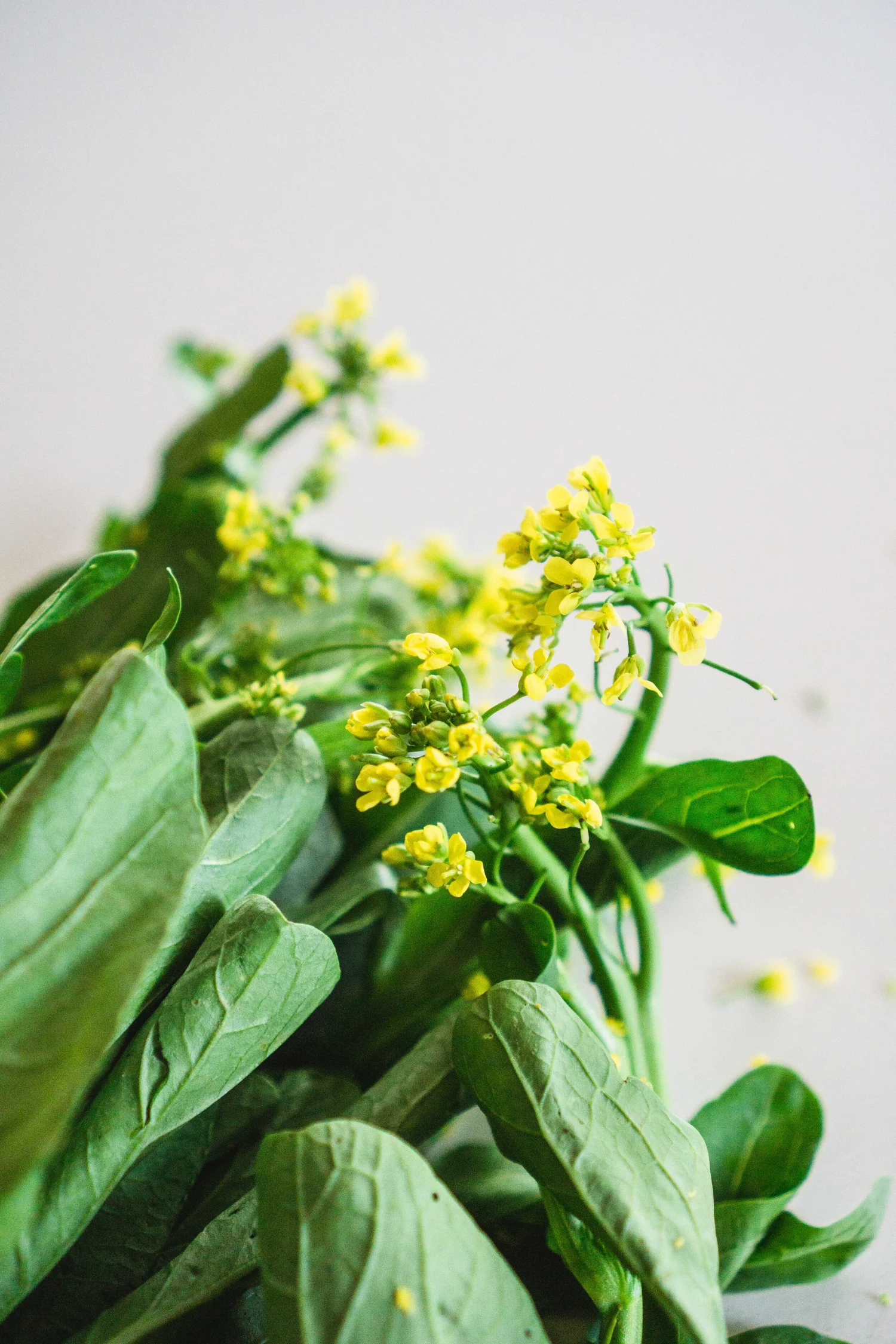
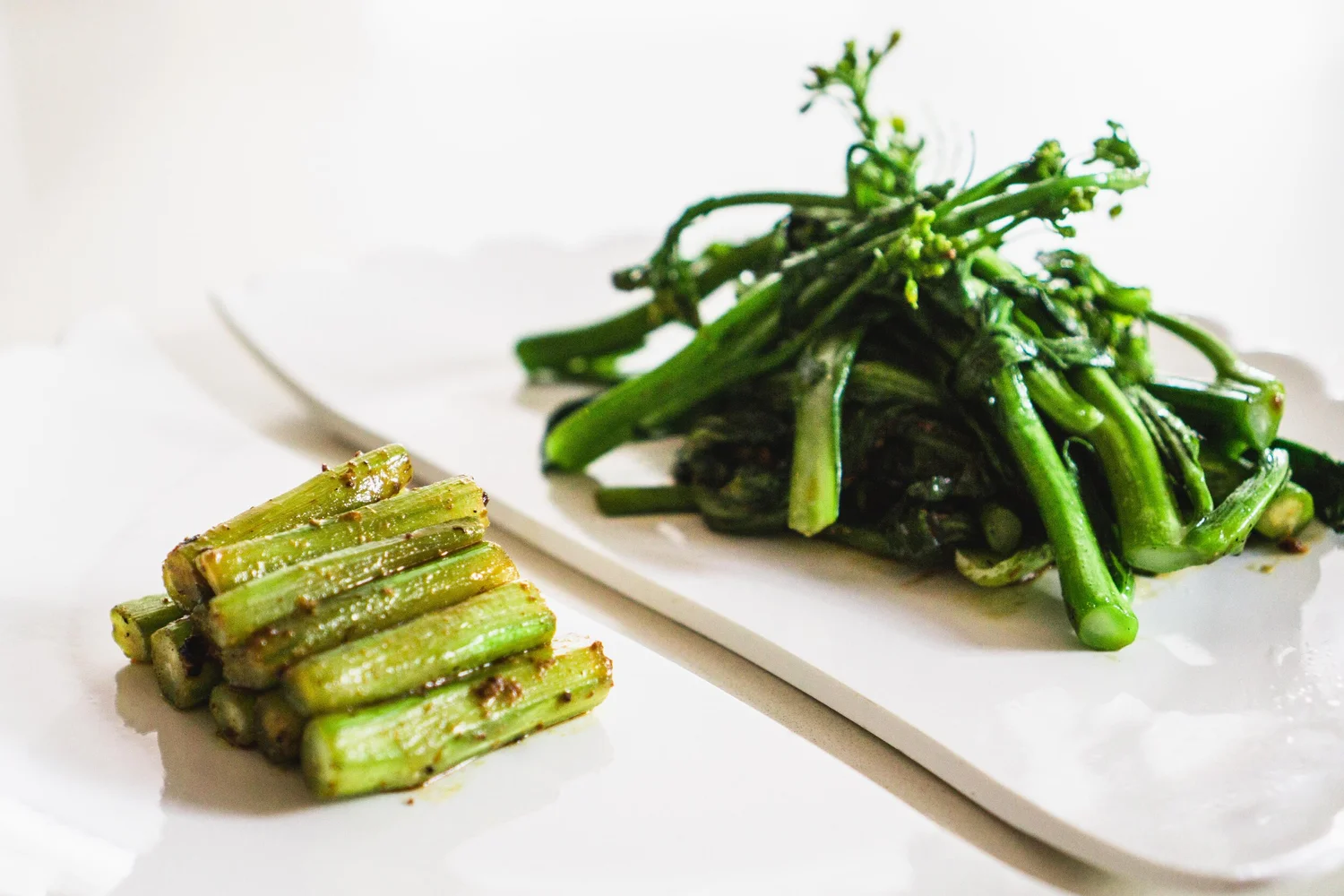
So, in an effort to bridge cultures. I brought home a bunch of choy sum from the market, split the stems from the leaves, and gave them a quick steam. But instead of the typical Chinese 轻蒸, sesame + soy sauce situation, I tossed them through a simple honey mustard dressing, just to see how they’d do.
They were decent, if a bit simple, reminiscent of a basic, quarry-tile-diner salad, but instead of limp icebergs and romaines, it’s a bundle of budding choy sum that came straight from the raging steamer of a hot and bothered Chinese kitchen.
Wild metaphors aside, there wasn’t much tying two—vegetable and sauce—together. But that’s when I spotted a familiar in the fridge. It was a bottle, labelled with an image—black and white—of the face of an old grandmother. It was Lao Gan Ma—that dark, smoky, funky Chinese chilli sauce, an iconic staple of any Chinese home kitchen.
I threw it into the honey mustard, along with a splash of soy and sesame, just to reinforce that blend of cultures. Steamed up another batch of choy sum, and tossed them through the sauce, still steaming. And it clicked. Culture, bridged. Palate, satiated.
So here it is, a recipe for a dressing that draws from two disparate cuisines. The heat of mustard, along with the heat of the Asian tiger-grandma. It’s choy sum, with a dressing of… Lao Gan Ma-ustard. *ba-dum tss*



1 thought on “Choy Sum with Lao Gan Ma-ustard”
Love the title of the post and bridging cultures. We fashioned a line of globally inspired Chile crisp off 老乾媽 and took it to a new level celebrate aromas and tastes of Oaxaca,Mexico – Fez,Morocco and Kerala, India. We pay homage and want to share the food and culture of these wonderful places with an innovative approach. Would love to get you some samples to explore with. You can check us out at http://www.oomame.net and let me know who to ship to. Have a great day! Mark Engel Founder Fifth Taste Foods. 314 345-9067