





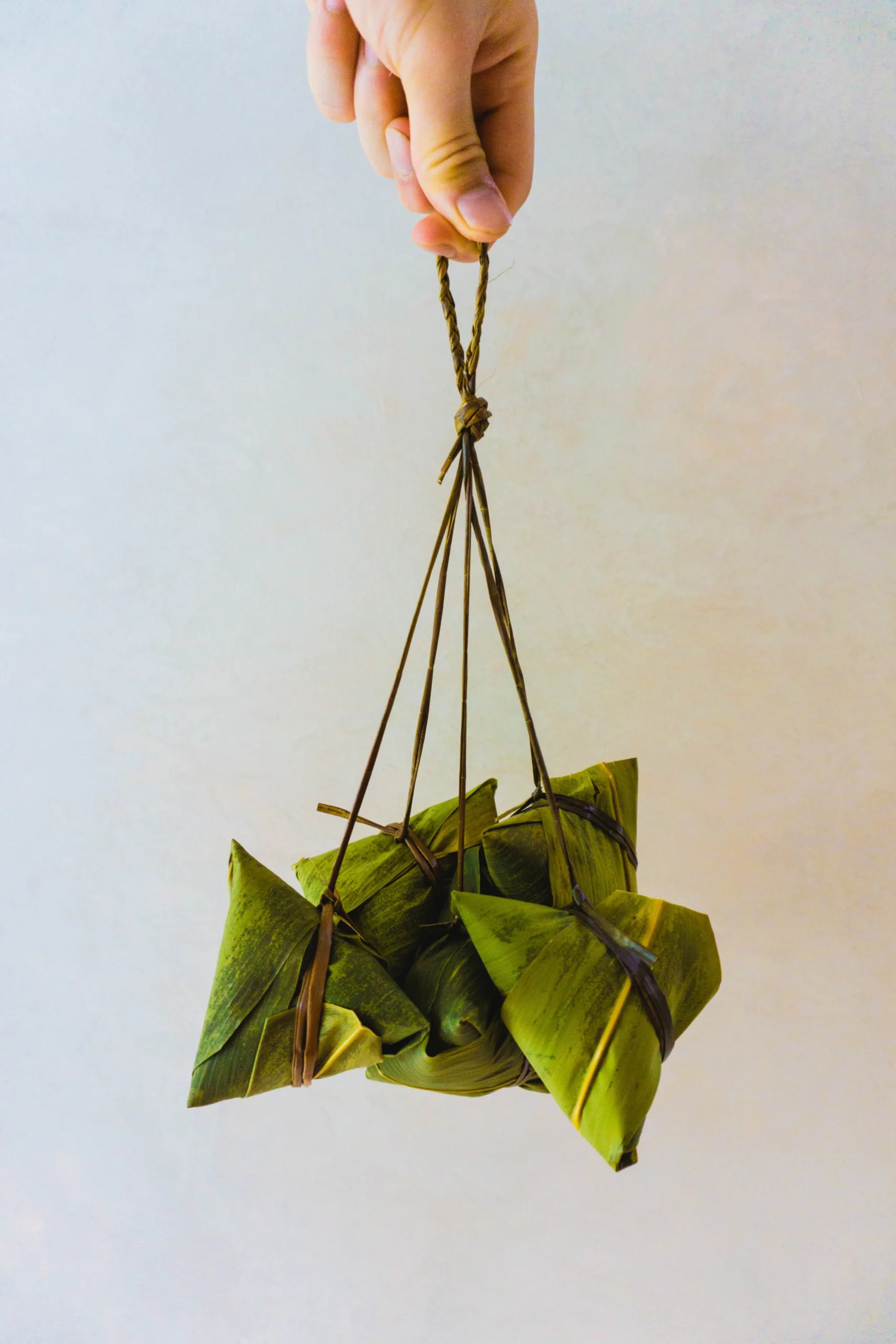
Ingredients
Yields: 12 dumplings
- 24 bamboo leaves - (you’ll need two per zongzi), plus more just in case
- 12 pieces of twine or string - around 50cm each
- 6 shallots - thinly sliced
- 100 g vegetable oil
Glutinous rice
- 500 g glutinous rice
- 2 cloves of garlic - minced
- 1 tbsp light soy sauce
- 2 tbsp dark soy sauce
- 1 tsp five spice powder
Pork belly and mushrooms
- 100 g pork belly - cut into pieces
- 30 g dried shiitake mushrooms
- 2 cloves of garlic - minced
- 1 tsp light soy sauce
- 1 tbsp dark soy sauce
- 1 tbsp oyster sauce
- 1 tsp five spice powder
Peanuts
- 80 g peanuts - uncooked
- 1 tbsp dark soy sauce
- ½ tsp five spice powder
Other fillings
- 6 salted egg yolks - halved
- 30 g dried shrimps
- 60 g dried chestnuts - optional
- salt
- pepper
Method
Soaking
- Soak the bamboo leaves, glutinous rice, dried mushrooms, peanuts, and dried chestnuts in water overnight in separate bowls.
Shallots
- Heat up some oil in a pan/wok. Add the shallots in and fry them for around 2 minutes, removing them when they get crisp and golden. Reserve the oil.
Glutinous rice
- Heat some shallot oil in a pan/wok. Fry the minced garlic in the oil. Add the glutinous rice, the light and dark soy sauce, five spice powder, salt and pepper. Fry for roughly 10-15 minutes. (It won’t be completely cooked through) Season to taste.
Pork belly and shrooms
- As with the rice, start by frying the garlic in shallot oil. Add the pork belly, rehydrated shiitakes, light and dark soy sauce, oyster sauce, five spice powder. Add salt and pepper to taste.
Add more salt than you might think, the rice will absorb some of this salt which balances the overall flavour of the zongzi
Peanuts
- Lightly fry the soaked peanuts for 5 minutes, adding the dark soy sauce, five spice powder and salt.
Chestnuts
- Boil for roughly 30 minutes in salted water. Remove any bits of chestnut skin left in the nooks and crannies of the chestnuts.
Prepare to assemble
- tie 6 lengths of twine together at one end, leaving the other end free to tie your zongzis to. Anchor the tied end of twine to a hook/windowsill/underside of a table. This is to make tying the zongzis a lot easier! (You’ll wish you had three hands when tying them for the first time.) You can wet the twine to make them easier to work with.
Assembly
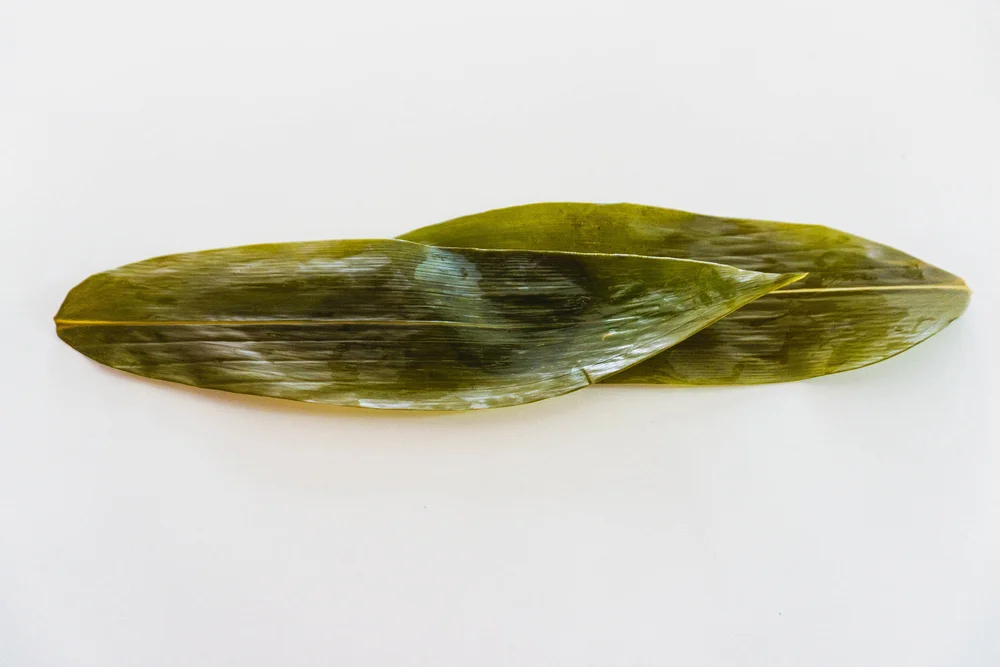
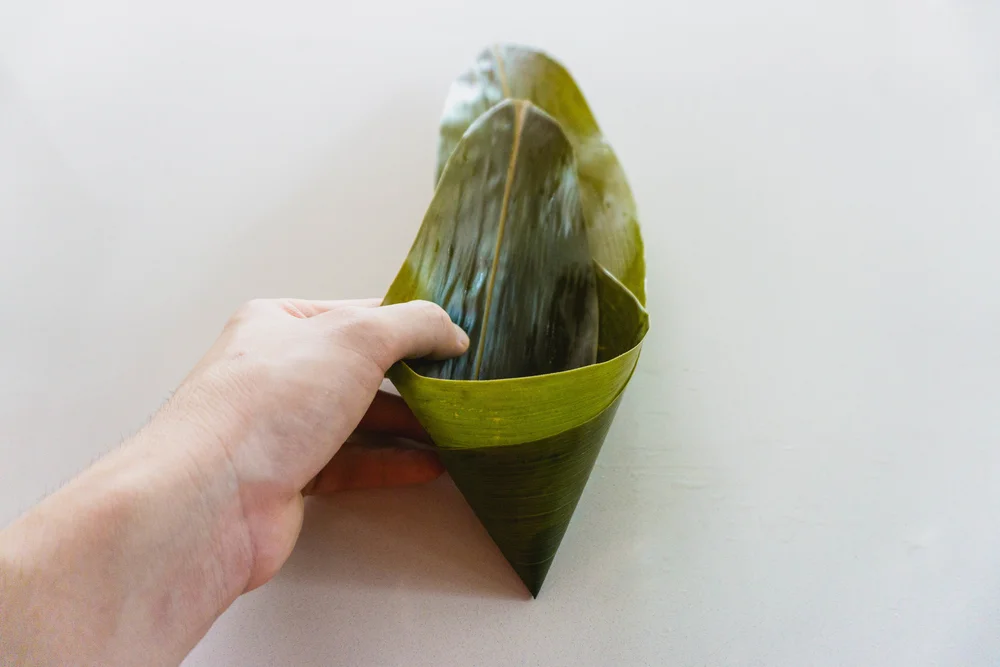
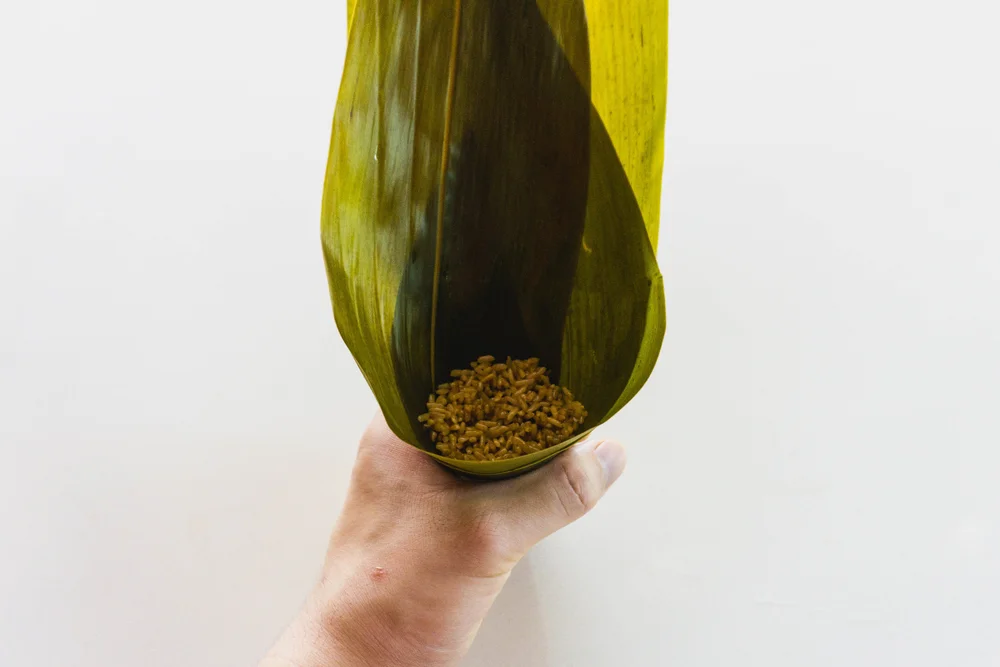
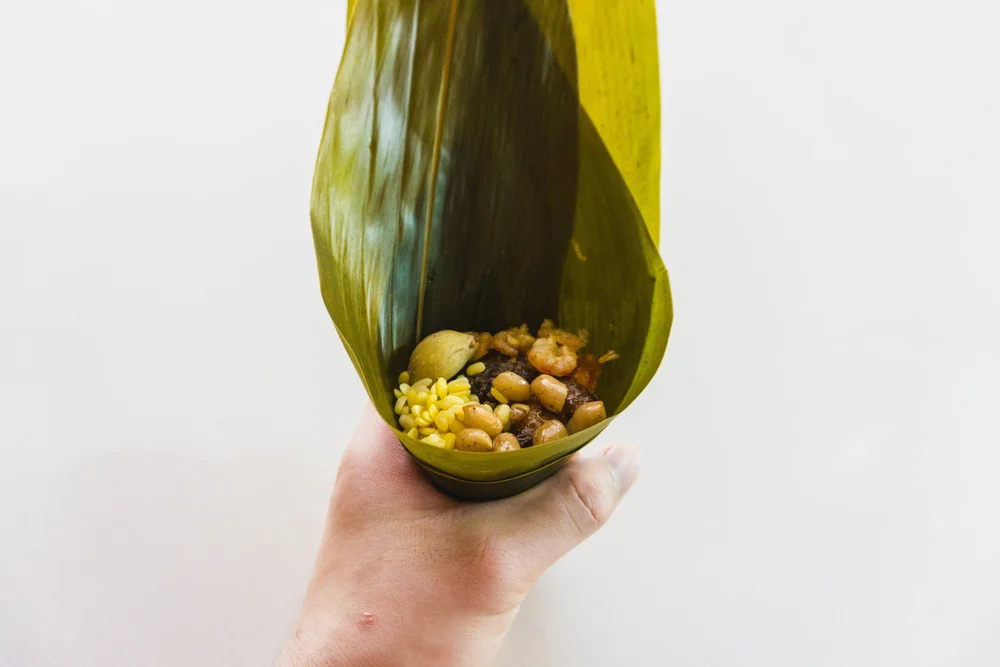
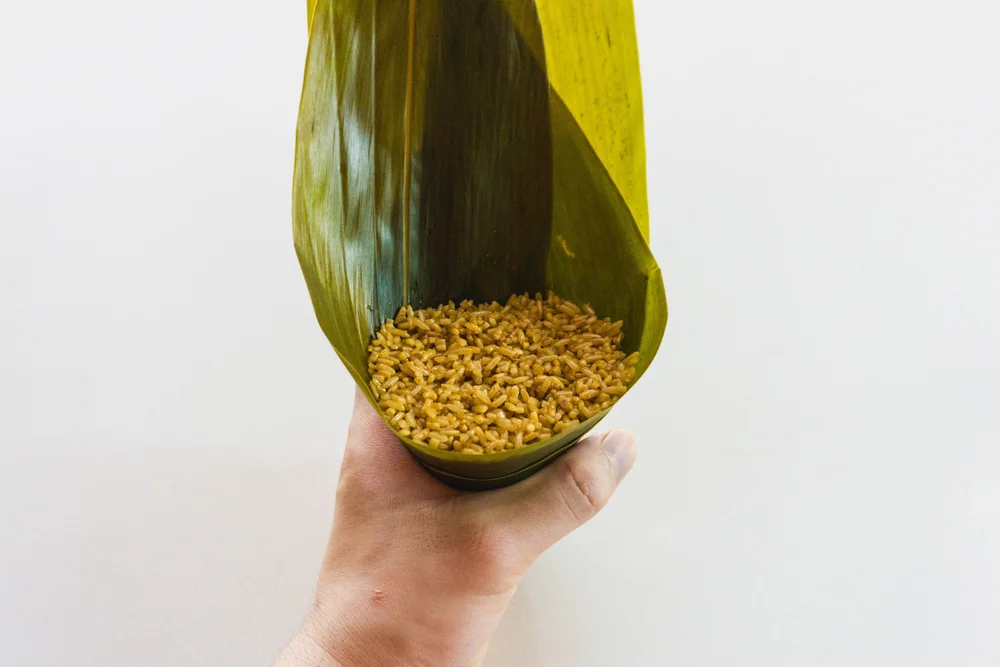
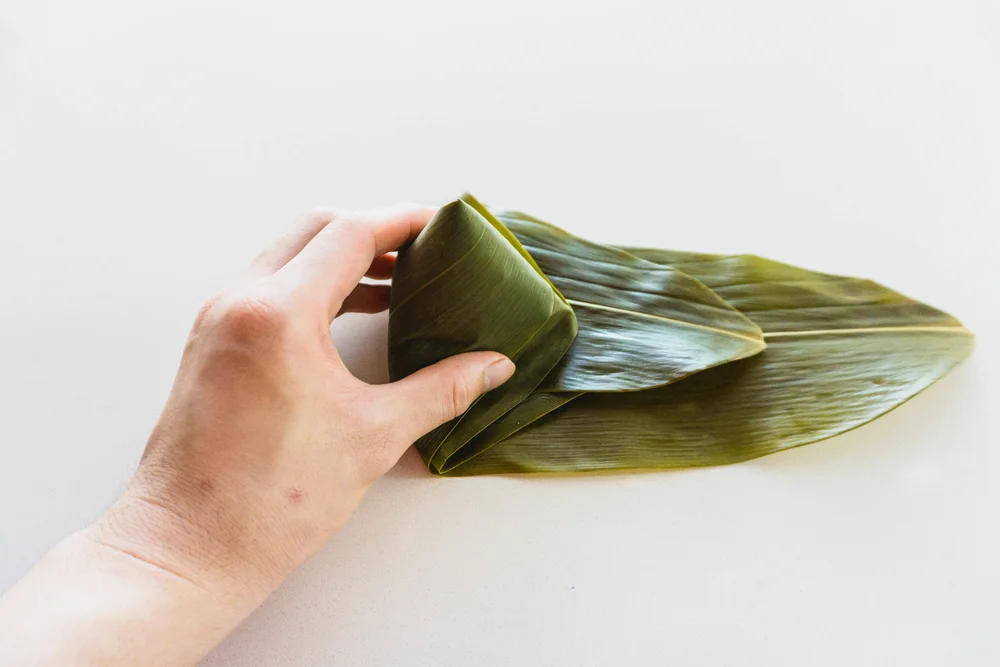
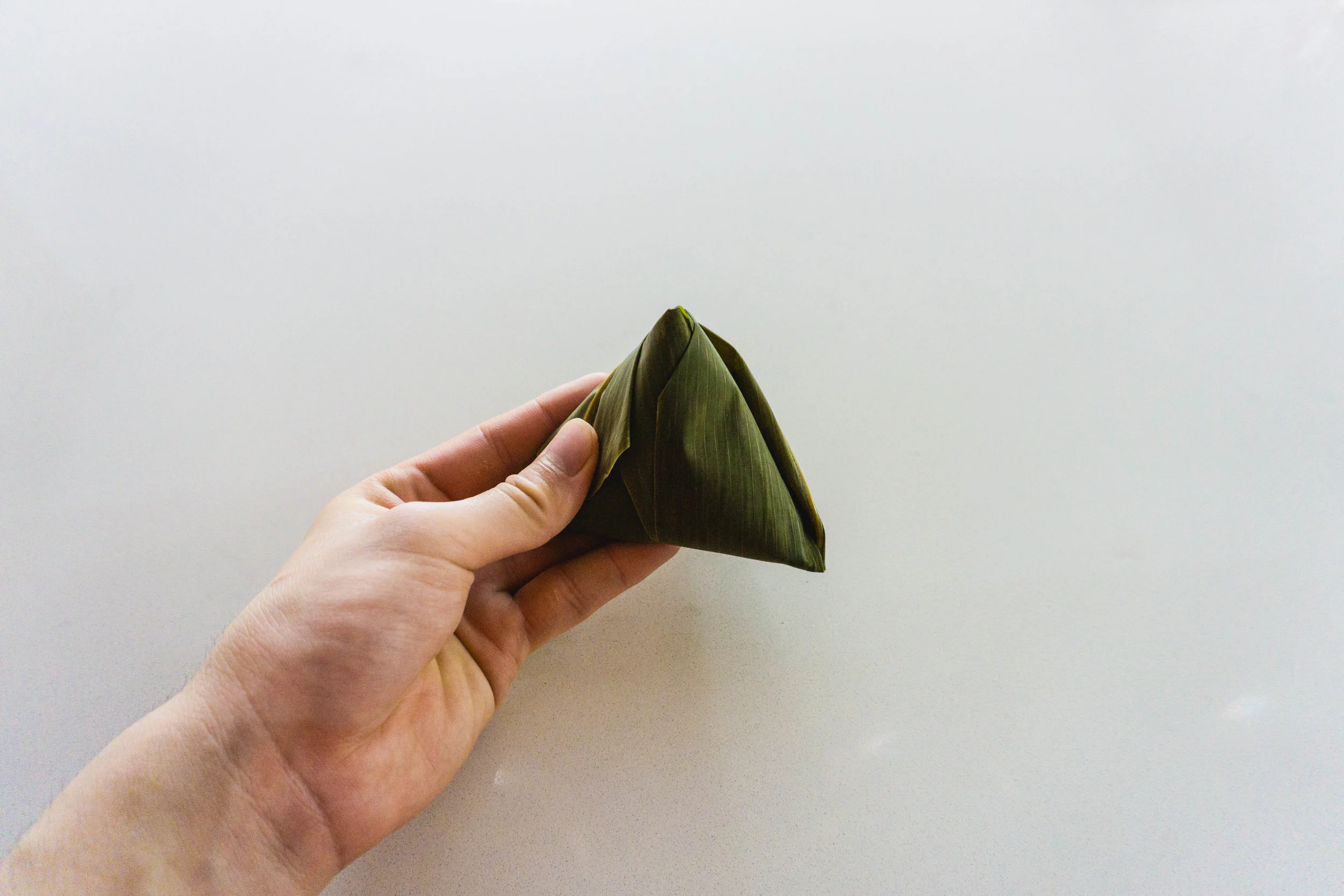
- Here comes the tricky part! (Refer to the photos if you get stuck!) First, take two pieces of bamboo leaves together and overlap them halfway. Then, bend the leaves just off-center and fold them so they make a cone-shaped, with one end longer than the other. Fill the cone with the glutinous rice, then add a bit of each ingredient, finally filling up the rest of the space with more rice. Make sure the rice and ingredients are tightly packed. Then, cover the rice with the part of the leaf that’s sticking out, and fold in the two edges (make sure there’s no rice trapped in between). Then, squeeze and shape the zongzis so you get a pyramidal shape, and fold the rest of the leaf around the dumpling. Finally, loop the twine around the zongzi twice, tying a knot at the end of the second loop. Repeat for the remaining zongzis.
Cooking the zongzis
- Gently nestle the zongzis in a deep pot. If you don’t have a pot large enough to fit all of them, cook them in batches. Fill the pot with water until all the zongzis are fully submerged. Add a good amount of salt and oil (to prevent the rice from sticking too much to the leaves) to the water, and bring it to a boil. Once it starts boiling, turn it down to a simmer, cover the pot, and let it simmer for 3-4 hours.
Eat
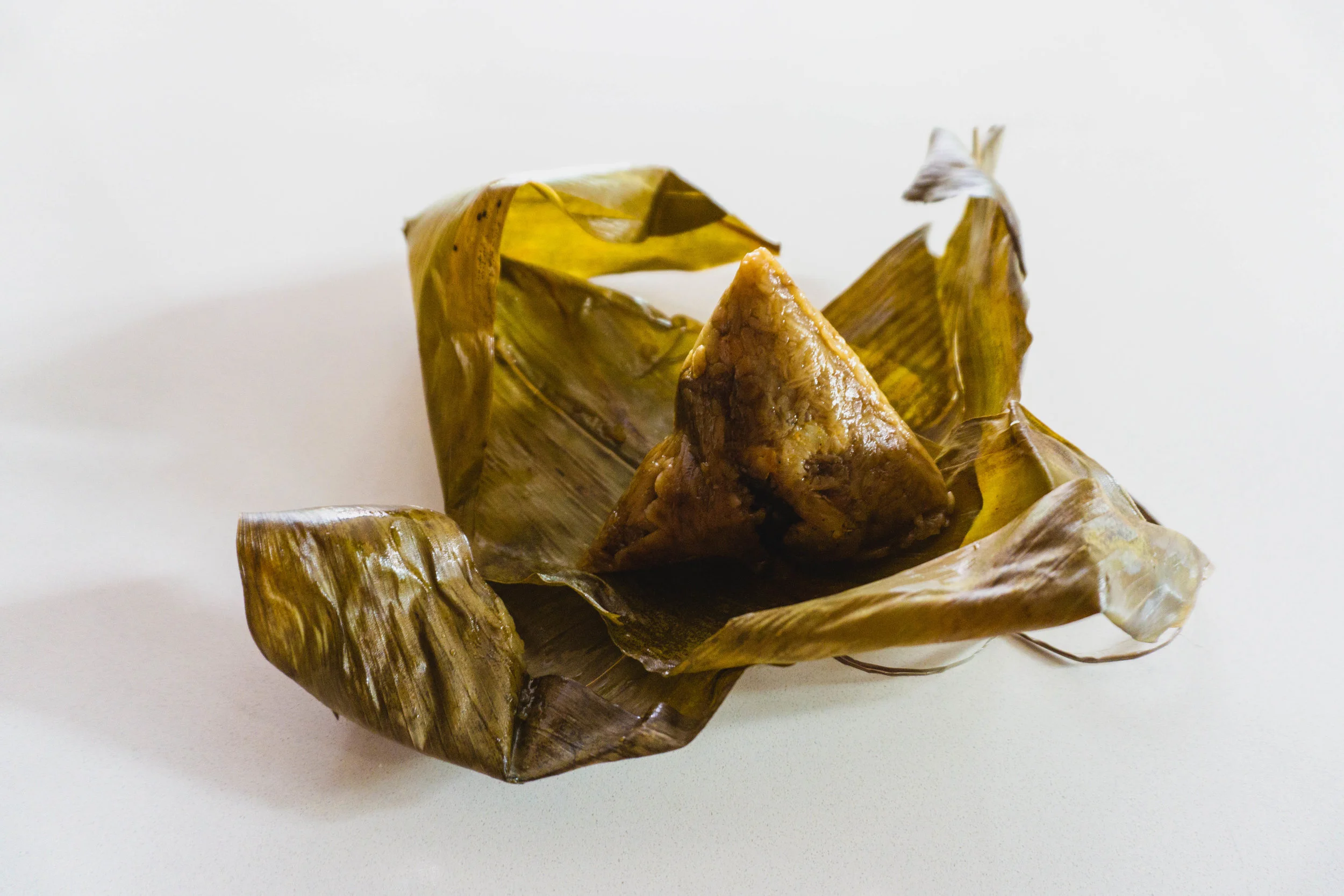
- Cut the twine and unwrap the zongzi. Enjoy the hard-earned fruits of your labour!
Notes
- The cook times in this recipe are very forgiving. If the peanuts or chestnuts are undercooked in the first stage, no matter, just extend the cooking time of the zongzis in the water for an hour or so.
- The zongzis can be cooked in a pressure cooker, which cuts down the cooking time to 45 minutes!

1 thought on “Dumplings, Dragon Boats, and Pesticide-Wine”
Great article!