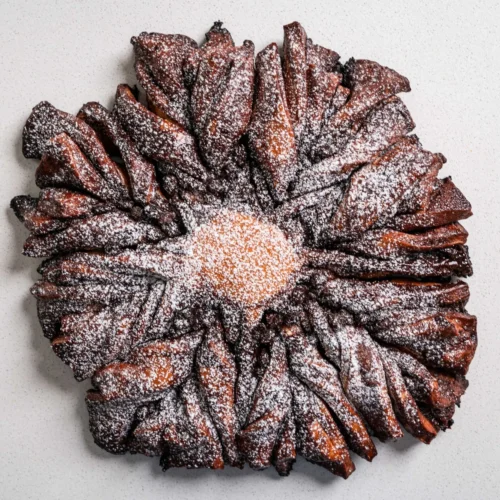
I pledge this recipe to the upcoming Earth Day, and to all the Earth Days thereafter.
It’s not often that I speak of the environment or of cooking and eating in a more environmentally conscious way, so allow me this one recipe to do so. To be frank, I’m far from an environmentalist, nor do I consider myself someone who thinks about the environment on the daily and have its best interest at heart when I cook. But this Earth Day, I thought it would be apt to share a few things I do, a few rules I keep in mind, that I think help me cook and eat with a little more conscientiousness for our little planet. I’ll be the first to admit, I still have a long way to go, but baby steps!
For those already doing things with the benefit of the environment fully in mind, props to you. Feel free to jump straight to the recipe below and make those cookies! But for those who don’t, allow me to share.
- Buy local produce. Using local produce will have a ripple effect on the environment. A lot of energy and pollution goes towards the international food trade, where ingredients gets transported all over the world. I’m not about to delve into the details here, but if you’re interested, you can read up on it in this data-filled article. But in summary, when you can, use one less stick of butter from Brittany, one less slab of Australian Angus beef, one less spoonful of Japanese ikura. It will go a long way. As an alternative, look to what’s around you. There are gems to be found. Not to mention it’s usually a lot friendlier on your wallet too. If you’re Malaysian, go to your local wet market for a produce treasure hunt, or if you want some great quality ingredient, Farm Fresh, Cultiveat, T’Lur Caviar, and Weeds & More are but a few names to look out for.
- Plant your own herbs or small plants. I know there are a lot of plant parents out there, but for a more productive garden that can add to your meals, know that you can nurse a spent stalk of spring onion or parsley back to life by putting it in some water. Or take a sweet potato plant and give it some love in a small pot of soil. If you have a little more space in your outdoor garden, some of the easiest vegetables to start with are chiles, pandan, and lemongrass. If you’re in Malaysia, there’s a local herb called ulam raja that thrives with the littlest of attention, and I’ve heard the same can be said for Thai chaphlu or Vietnamese lolot (wild betel leaf). Admittedly, I’m not the most fervent farmer, nor did I inherent my parents’ green thumbs (they went full force on building a mini garden-farm over the pandemic), but I do what I can!
- Start composting. All those trimmings from fruits and vegetables you cook, along with any leftover food can be turned into fertiliser for plants. This was brought about by my sister, who’s ever more conscientious of the environment than I am. She started composting three years ago and got our whole family in on it. Anytime we peel fruits or prep vegetables, all the trimmings go into our compost bin. Or if we have leftover for dinner that we can’t keep, we’ll bury it in the ground the next day. It’s a little effortful to start, but after a while, after watching your waste turn to gold for your garden, it’ll all feel worth it! For a starter guide to composting at home, might I suggest this NPR episode on composting for beginners.
- Cook your vegetables with more care. You don’t have to cut out meat entirely from your diet and go vegan, but what I would encourage is to focus more on the vegetables when you’re cooking. Give them a little more love. Rather than seeing them as sides to a typically meat-and-carb heavy meal, think about how you can make them as glorious as the rest of your meal. Make them into the stars they deserve to be. I learnt so much from working at Blue Hill and still carry Chef Dan’s vegetable-forward philosophy with me in my cooking, and it’s made me love and appreciate greens and vegetables so so much more over the years.
But if all this doesn’t appeal to you, look to your community. Learn from others, people you admire, people you respect, and have conversations about it. After all, our lives are so interconnected with the land we live on, that no man is an island, and no cookie a world (except maybe the ones I made for this recipe).
About the Dish
I know some of you didn’t come here for a lecture on saving the earth, but thank you for your patience if you read through all of the above. As a reward, in the spirit of Earth Day, here’s a recipe for a cookie that might not save the earth, but will at the very least save you from hunger.
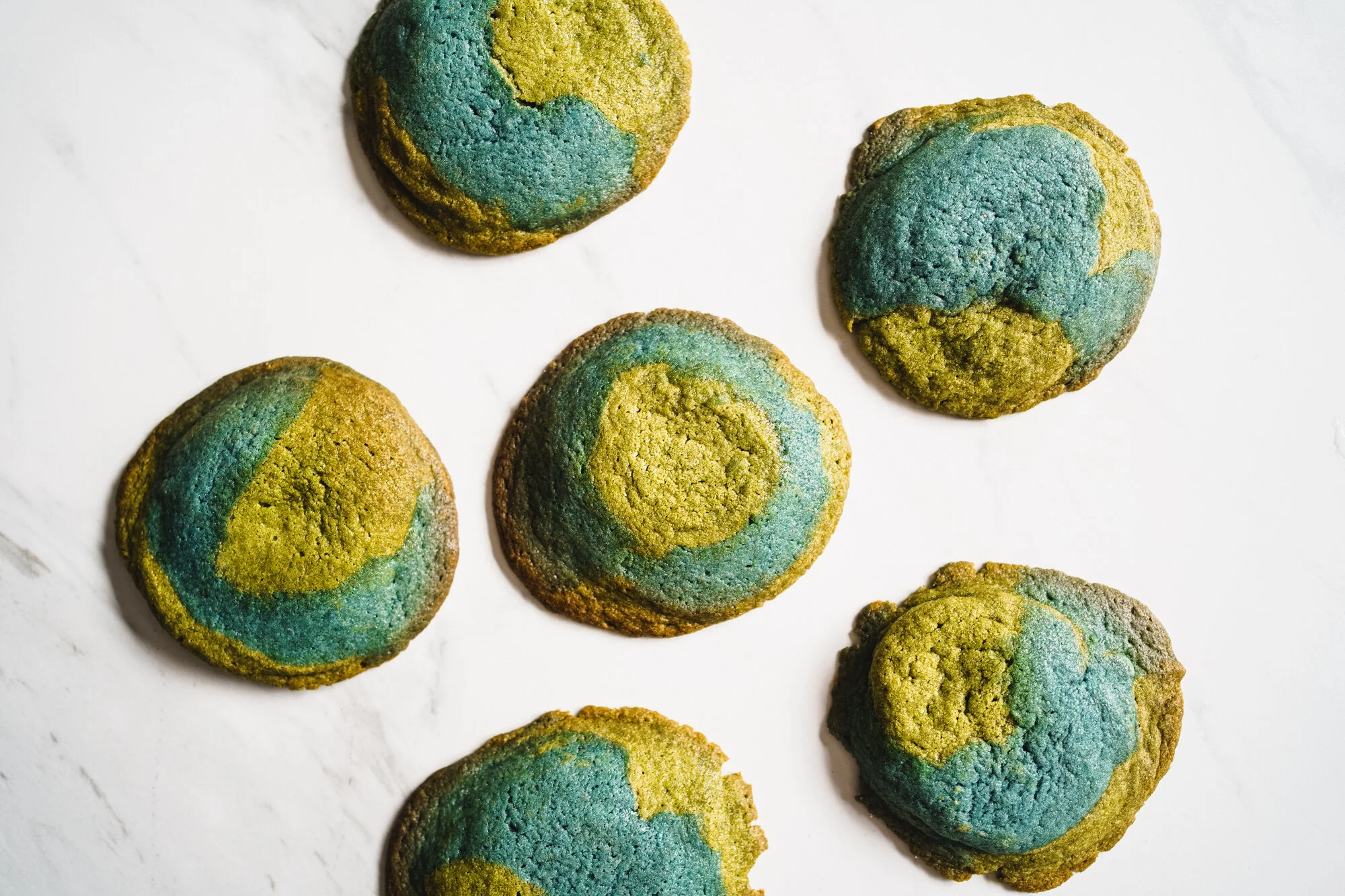
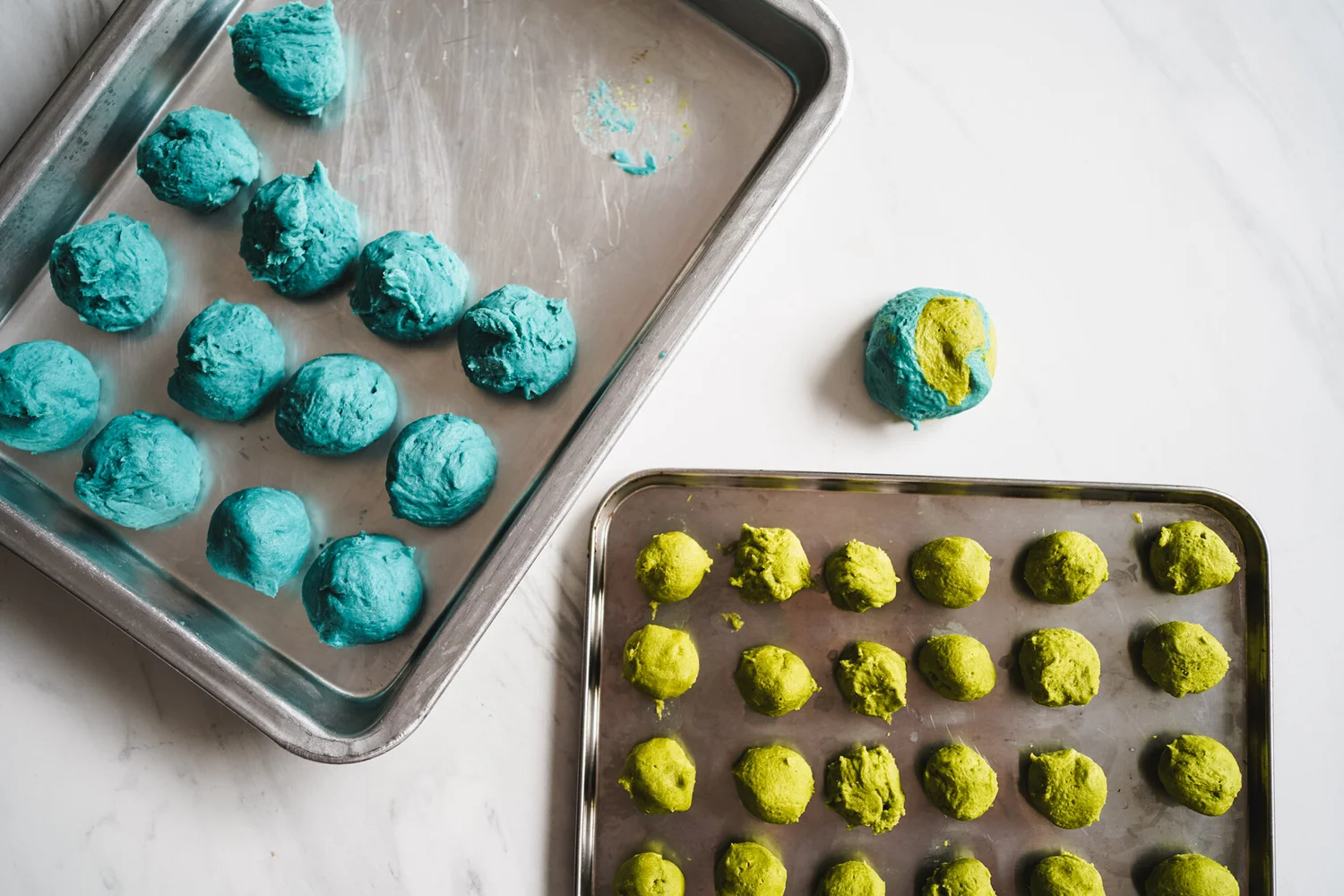
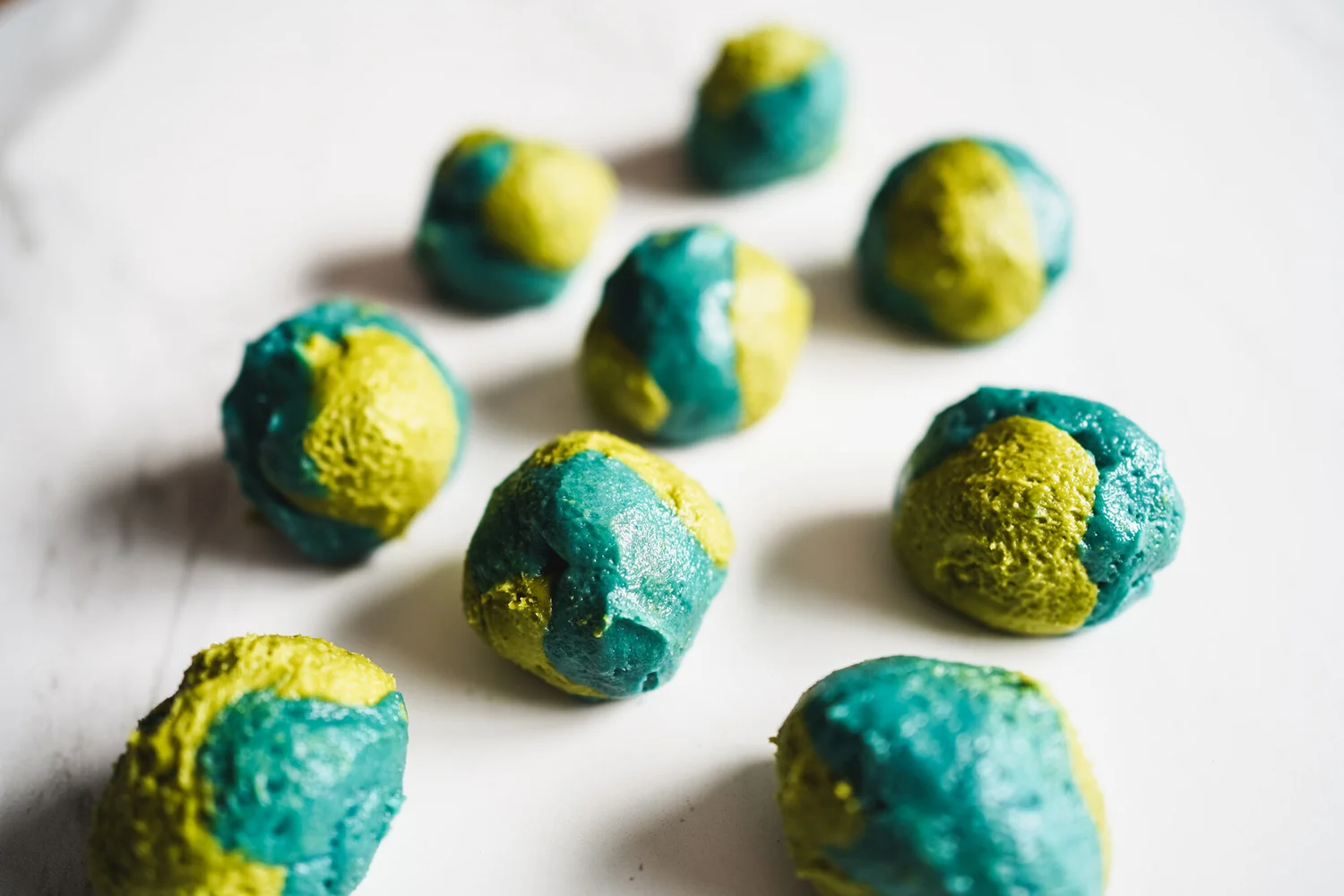
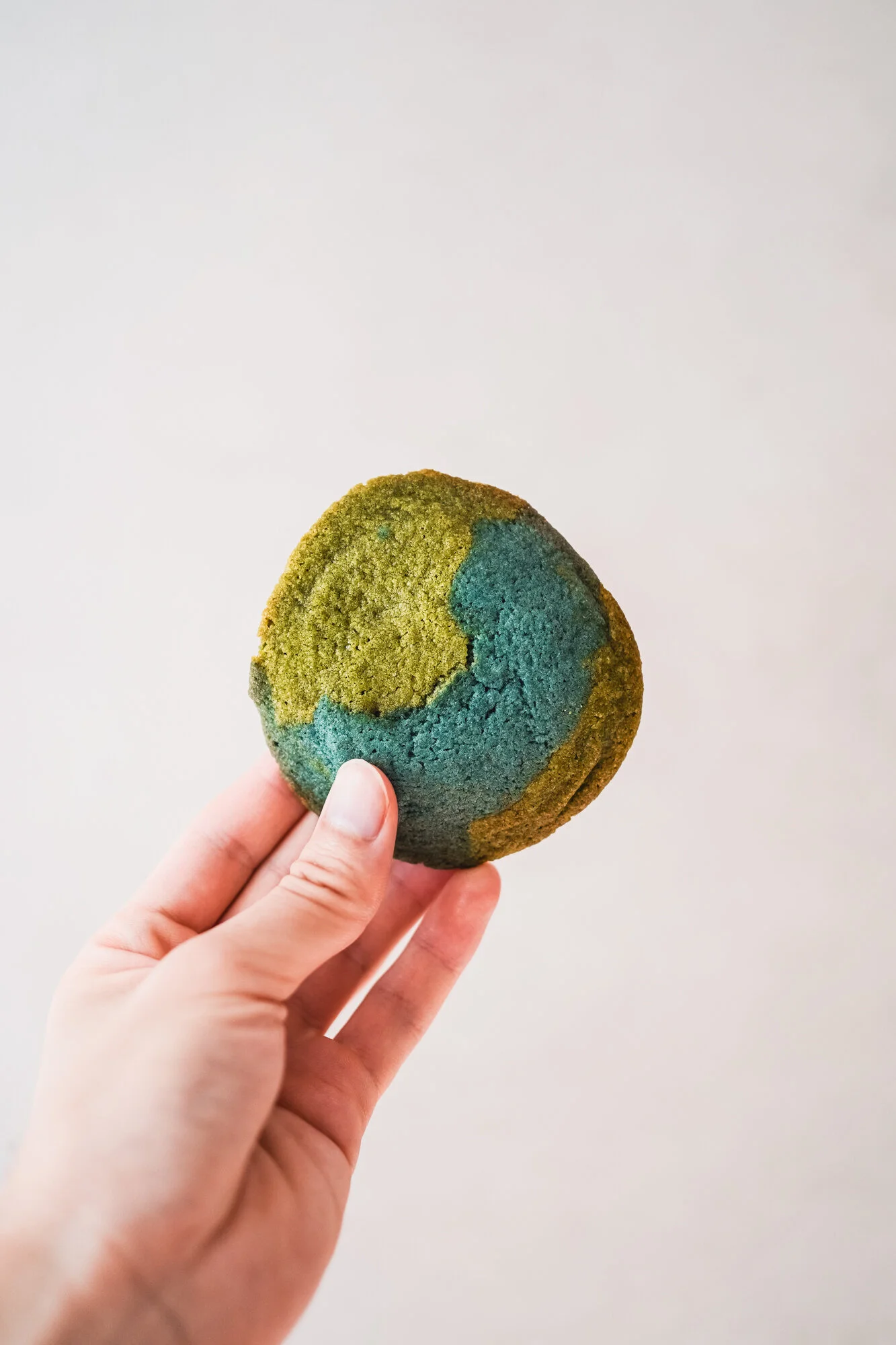
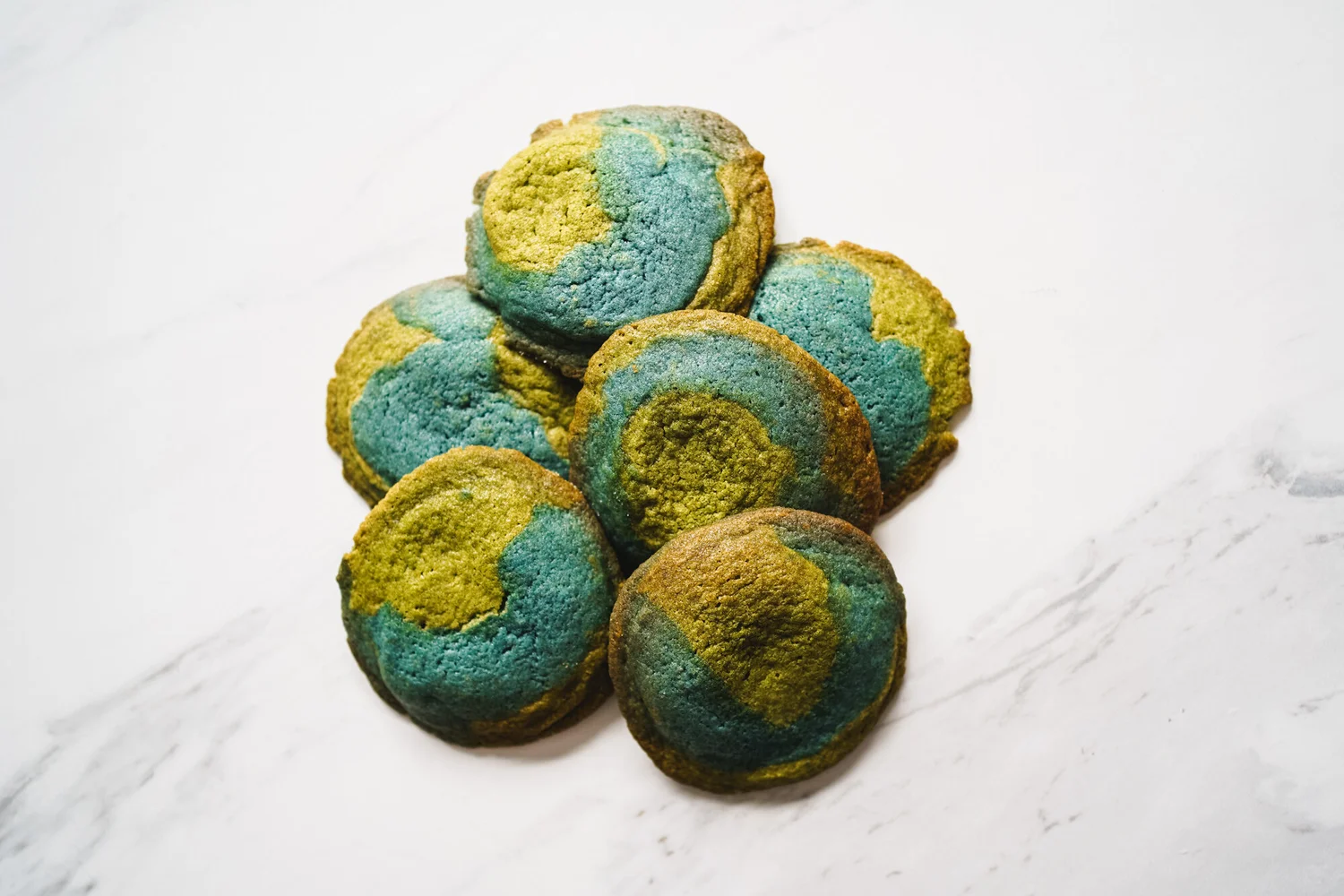
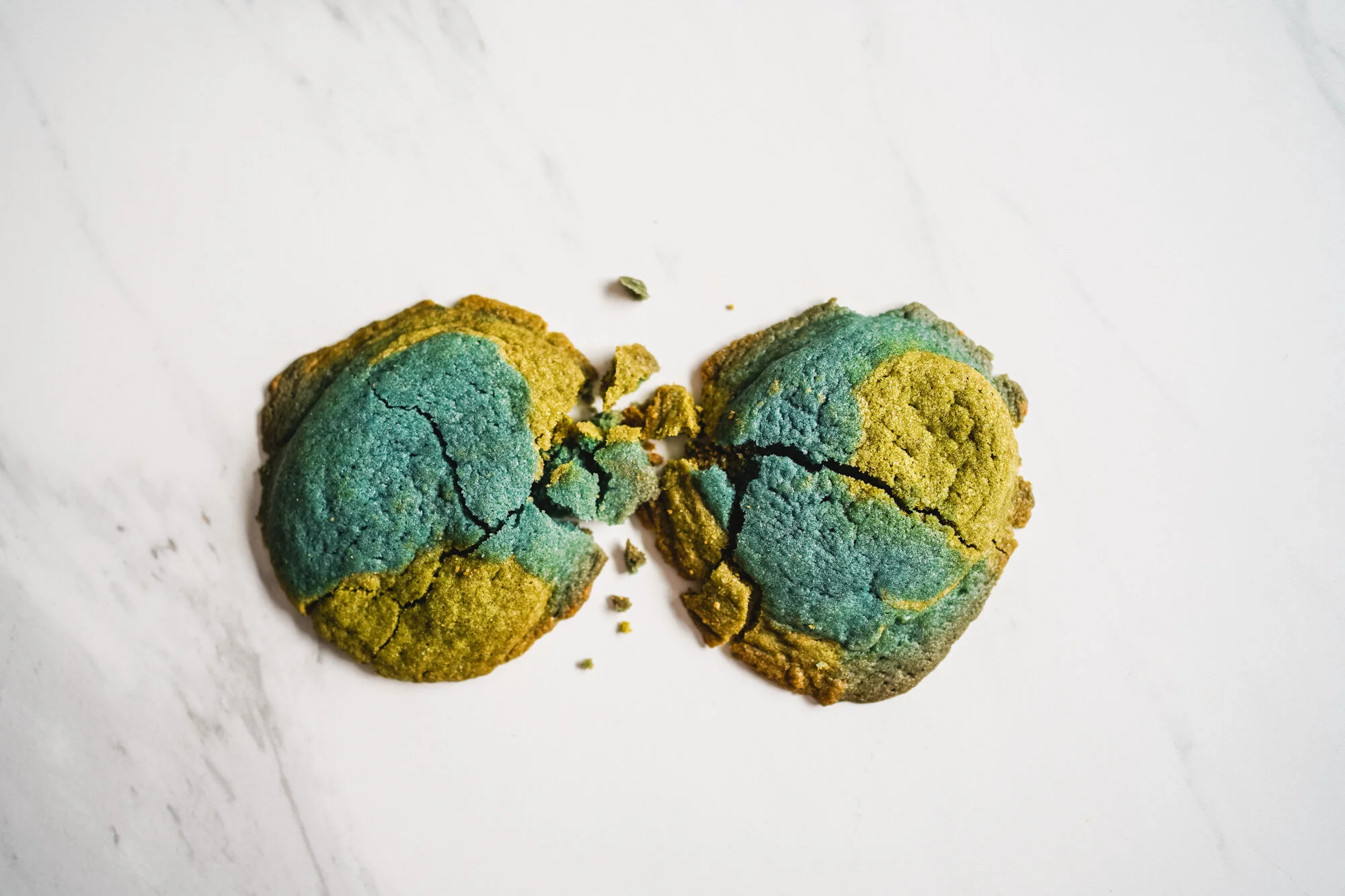
This colourful, mouldy looking cookie is based on my recipe for Neapolitan cookies (which was in turn inspired by Amy Ho), but instead of colouring it matcha green, kinako brown, and black sesame black, I turned it green and blue like our lovely home planet! The process is essentially the same—cream up butter and sugar, add an egg plus flour to make the cookie dough, colour it green and blue, smoosh them together, and bake!
Tips for Success
These are here are a few friendly tips to help you get aesthetically-pleasing (though not anatomically accurate) Earth Day cookies.
- I went with a natural blue colouring from blue pea flowers, which admittedly turned out more teal than sea-blue. I like it, but feel free to go with a blue food colouring if you prefer. (Remove the extra flour from the recipe if you do go with food colouring.)
- If you’re using a home-made blue dye as I did, make sure to reduce the extra liquid so your dye turns thick. And when you add the liquid to the dough, it might make the dough a little sticky and wet. To curb this, I would suggest adding an extra bit of flour to the dough as you knead in the blue colouring.
- Think of the earth as you make these.