Ingredients
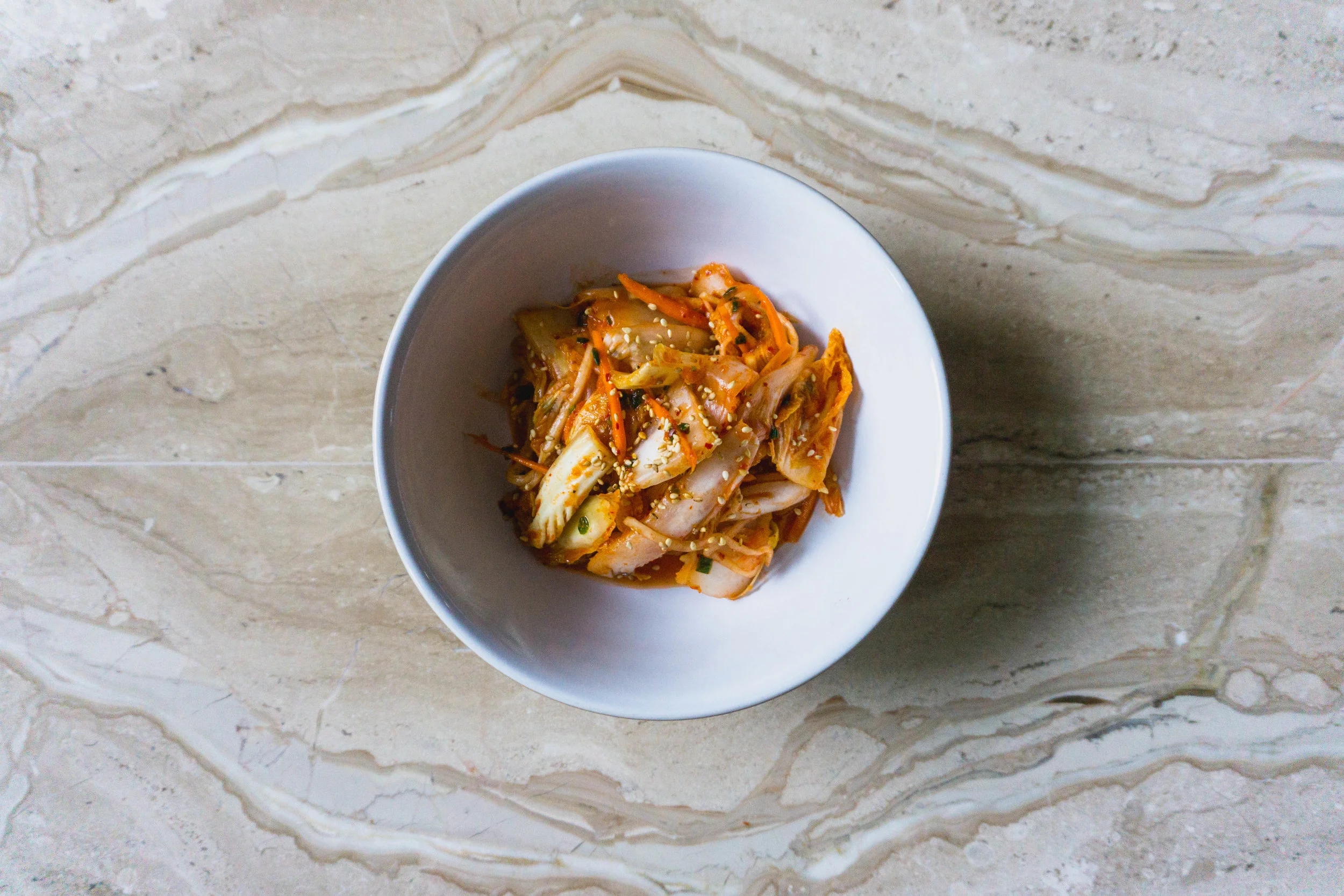
Yields: 4 cabbage kimchi parcels
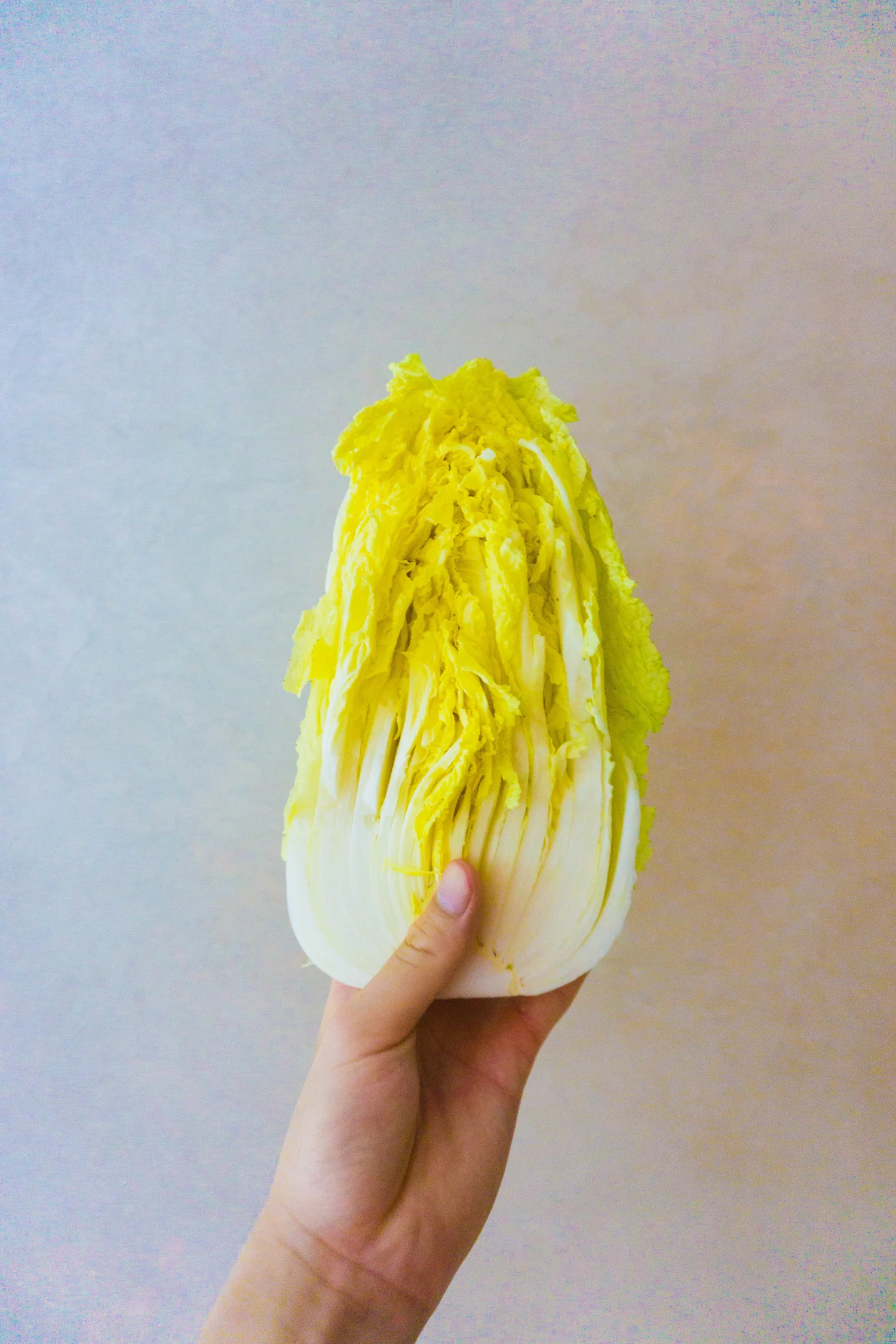
- 1 whole napa cabbage
- 50 g salt - more if needed
- 100 ml water
- 10 g glutinous rice flour
- 10 g brown/caster sugar
- 2 tbsp fish sauce
- 1 tbsp fermented salted shrimp - optional (called saeujeot in Korea, cincalok in South East Asia)
- 40 g hot pepper flakes - add more, depending on desired spiciness
- 1 carrot - julienned/cut into matchsticks
- ½ daikon radish - julienned/cut into matchsticks
- 2 spring onions - chopped
- 8 cloves of garlic - minced (blend it together with the ginger and onion to save much chopping time)
- 5 g ginger - minced
- ½ white onion - minced
Method
Salt the cabbage
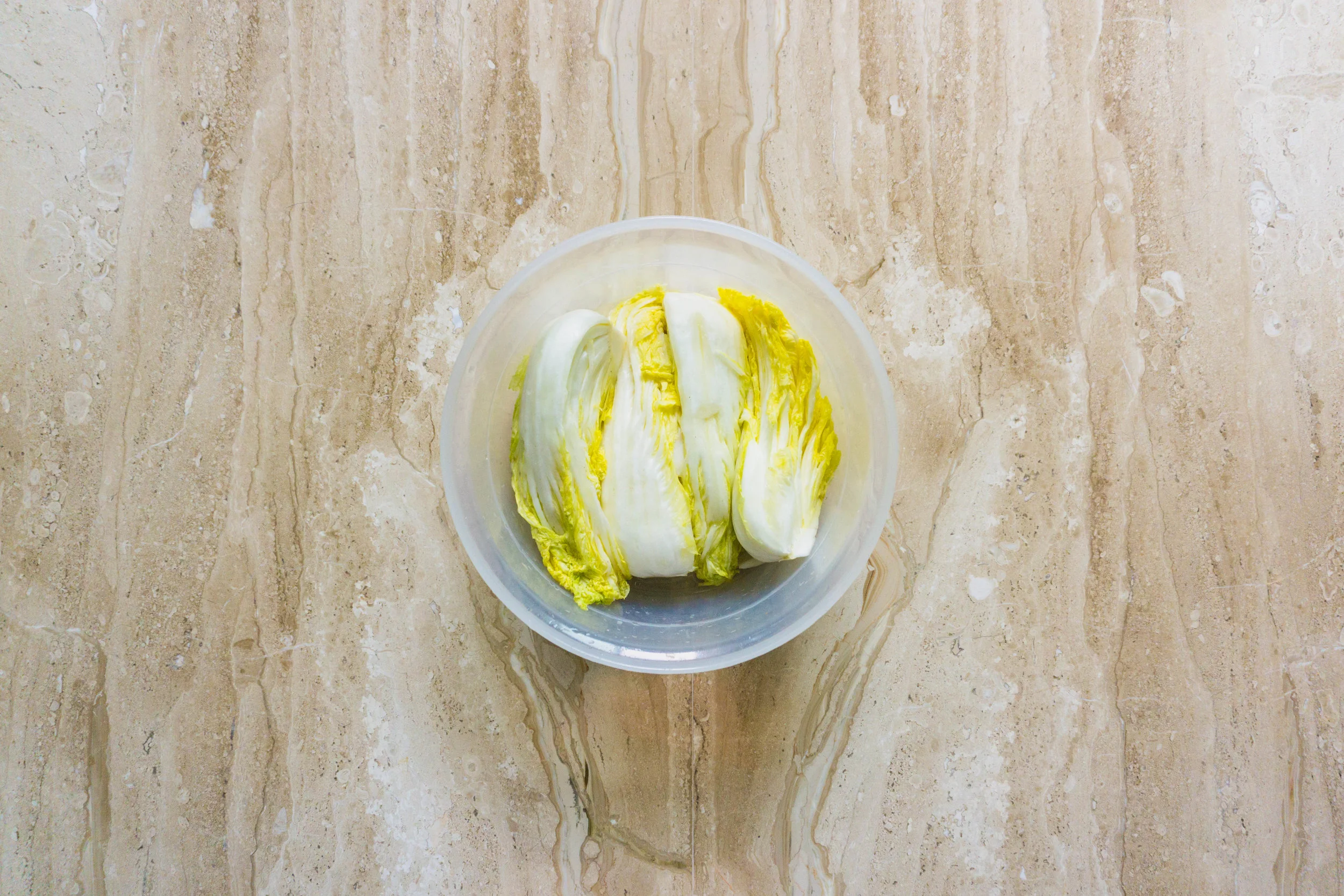
- Split the cabbage into quarters, carefully so as not to let individual leaves separate. Wash the cabbage quarters with water, and salt the cabbage leaves, sprinkling salt between each layer. Place cabbage quarters in a deep bowl, and let them salt for 3 hours or overnight, flipping them every hour or so to get them evenly salted.
The best way to do this without too much leafy wastage is to cut a short slit at the base of the cabbage, then gently pull the halves apart, then cut another slit at the base of each half, and pull them into quarters.
Make slurry
- While the cabbages are salting, add the water, glutinous rice flour and sugar into a small pot and simmer for about 5 minutes, stirring often. Leave the slurry to cool. Strain the liquid if there are any large clumps of flour left.
Mix errthang together
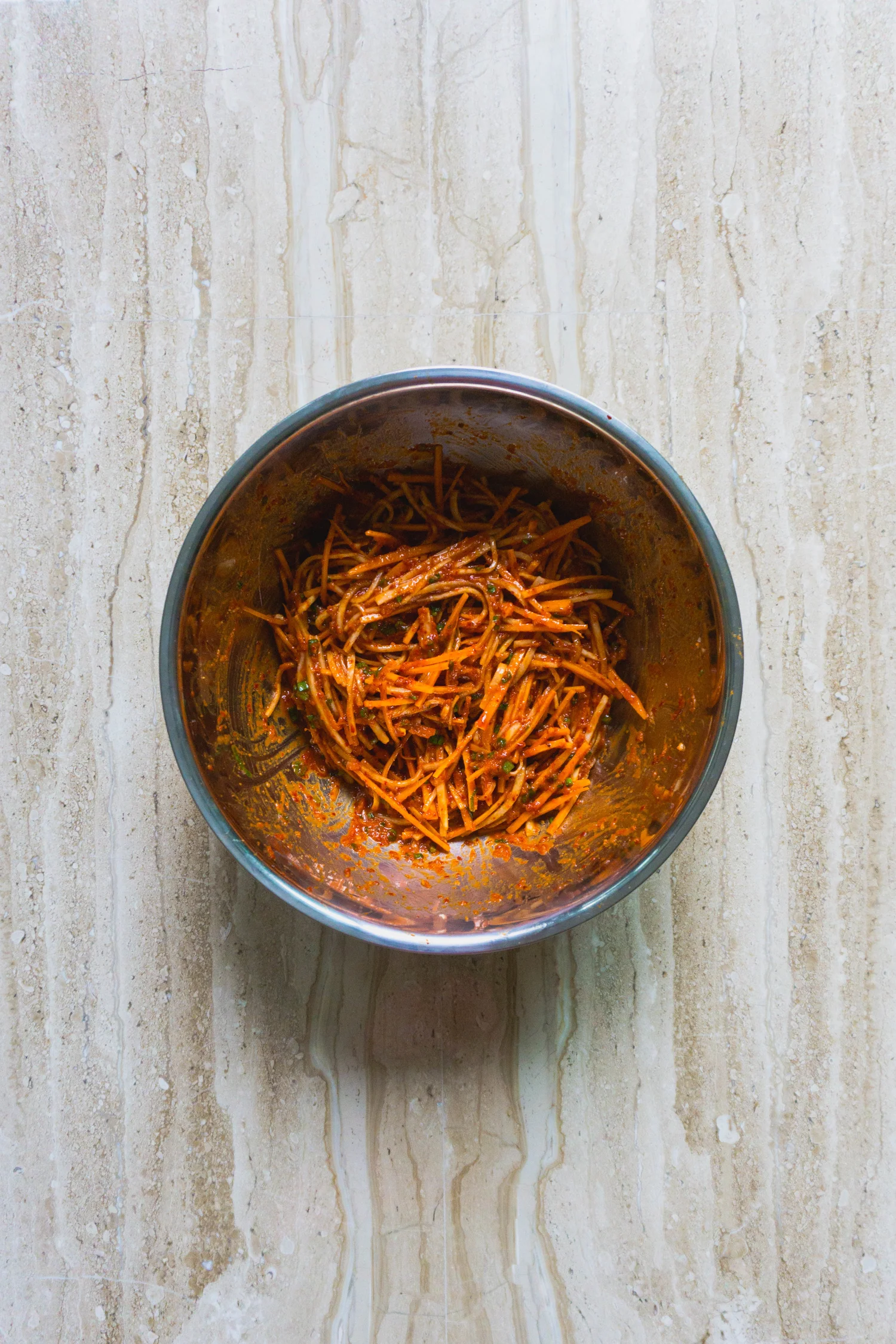
- To the slurry, add the garlic, ginger, onion, fish sauce, fermented salted shrimp, and pepper flakes. Mix well until it becomes pasty. Then, add the radish, carrot and green onion and mix until the veggies are coat in the paste. At this point you can add a touch of water if the mixture becomes too stiff to combine.
Wash lettuce
- After the cabbage quarters have salted (they should be limp and foldable), wash and rinse them with water. Make sure the cabbages are relatively dry, pouring away any excess water from the bottom of your rinsing bowl.
Make kimchi
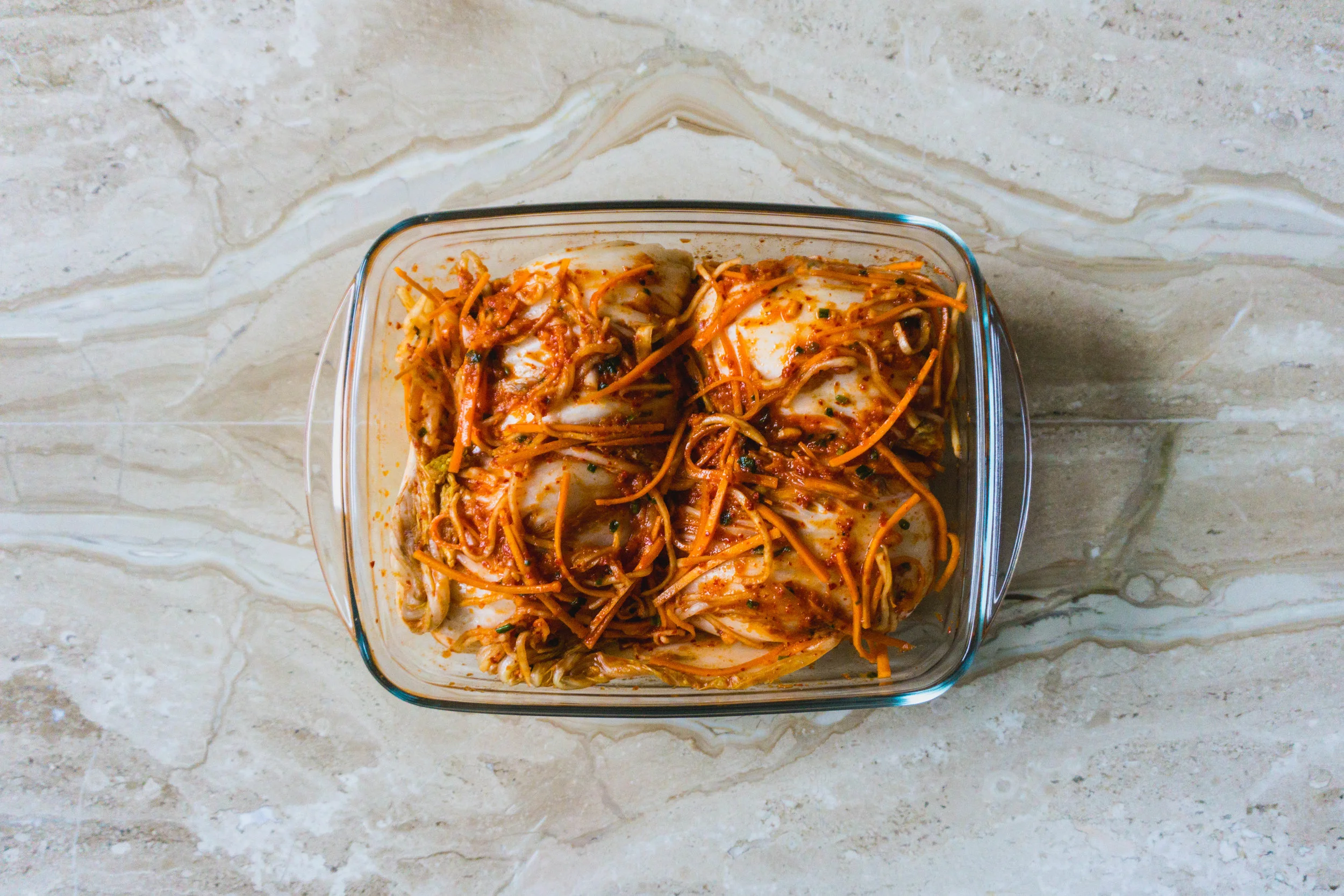
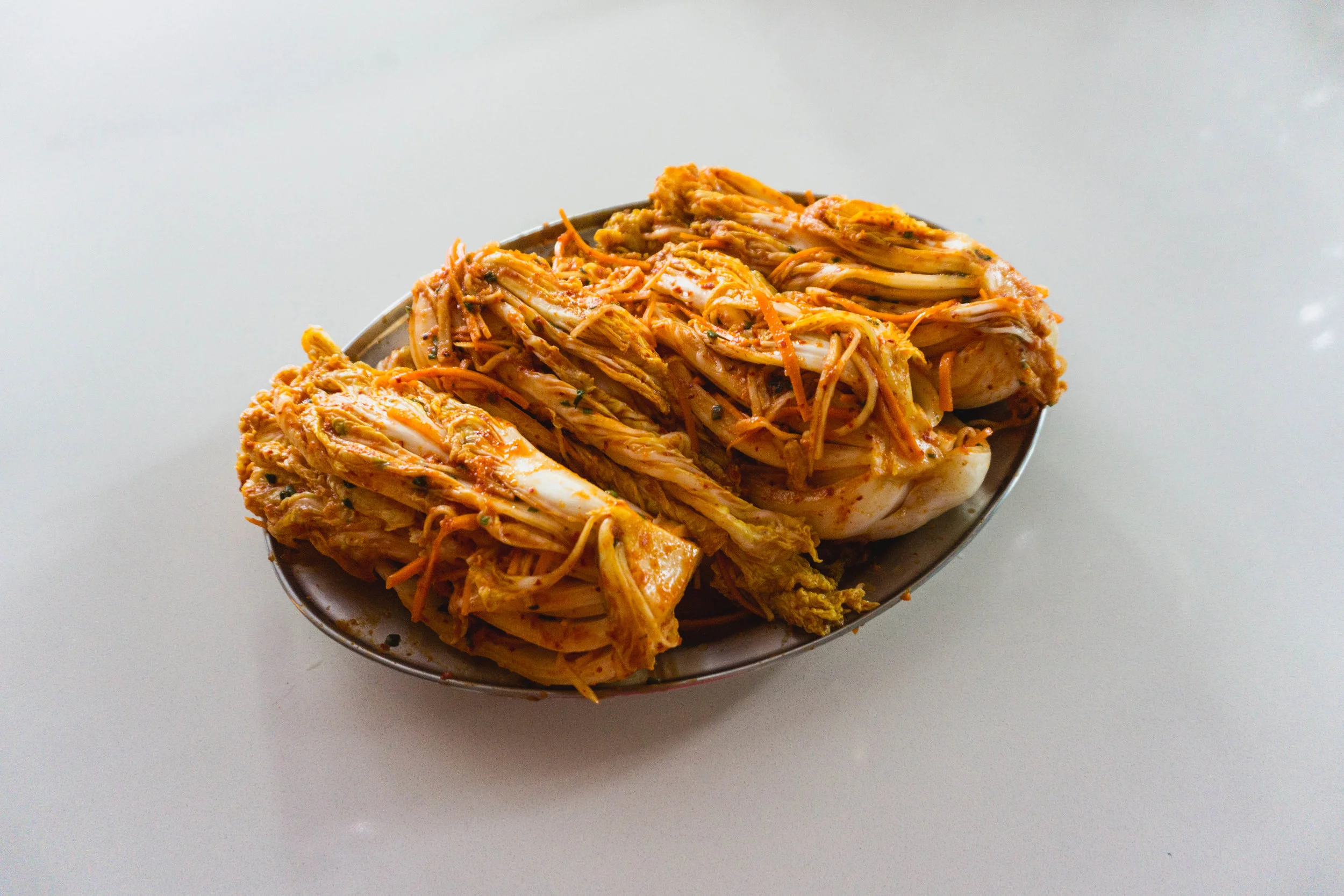
- Spread the kimchi paste onto each cabbage quarter, make sure to lift each leaf individually to get the paste in between each layer. Fold the cabbage quarters in half lengthwise.
If you don’t want your hands feeling all numb from the chilli, you might want to wear gloves for this step!
Eat, or store
- The kimchi can be eaten immediately (which is called a geotjeori (fresh kimchi)). Or to get that distinct funky kimchi flavour, leave the kimchi to ferment at room temperature for one to two days, then refrigerate (I’m inclined to say indefinitely..? But don’t blame me if it starts to look dodgy after 2 years :P)