
Ingredients
Yields: 6
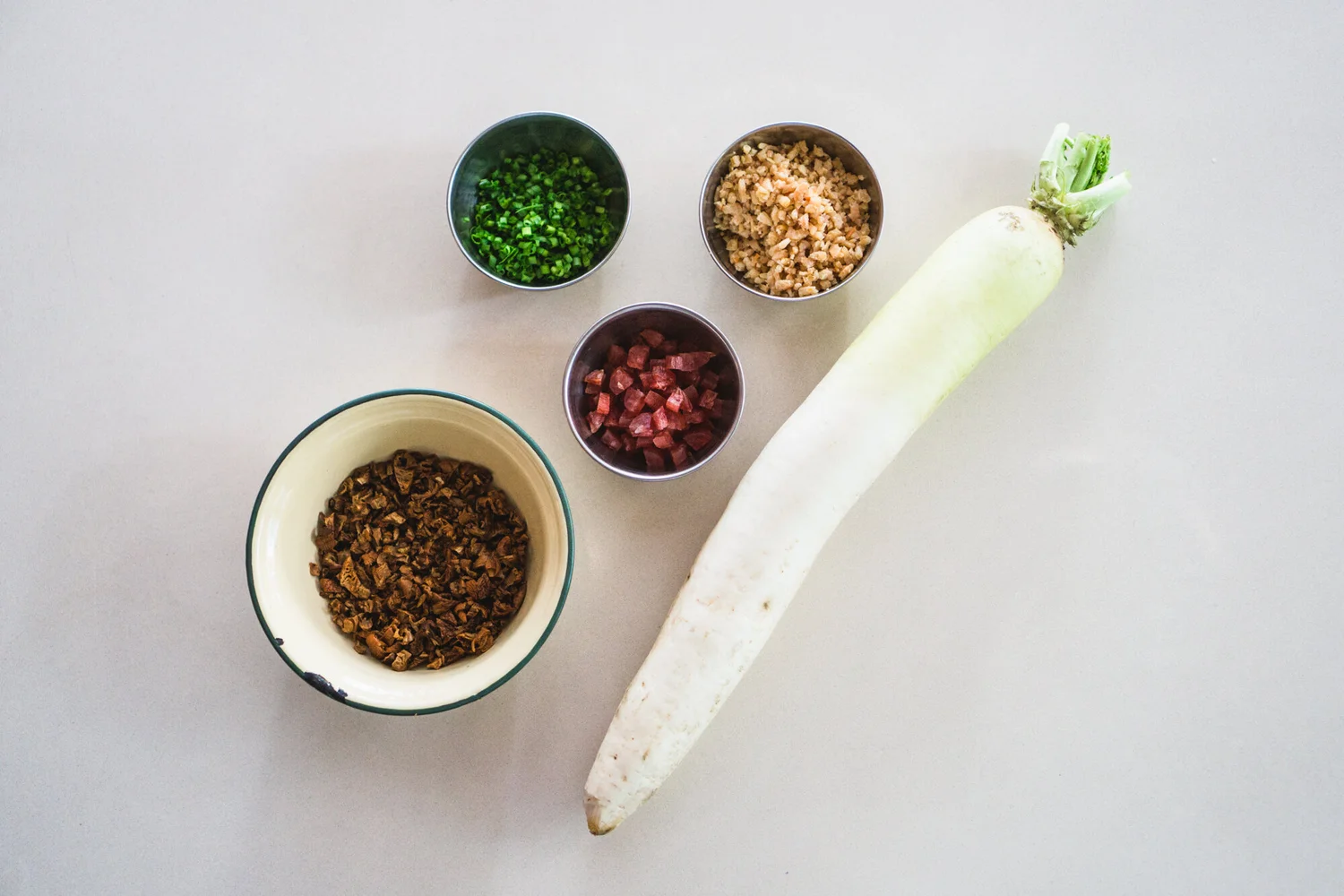
- 700 g daikon radish - or Chinese turnip
- 250 ml water
- 120 g rice flour
- 30 g all-purpose flour
- ½ teaspoon salt
- ¼ teaspoon five spice powder
- ⅛ teaspoon ground white pepper
- 1 lap cheong - Chinese sausage
- 5 dried shiitake mushrooms - soaked in water for at least 30 minutes
- 10 g dried shrimp - soaked in water for at least 30 minutes
- 2 tablespoons vegetable oil
- 1 sprig scallion - sliced thinly
Method
Cooking the radish
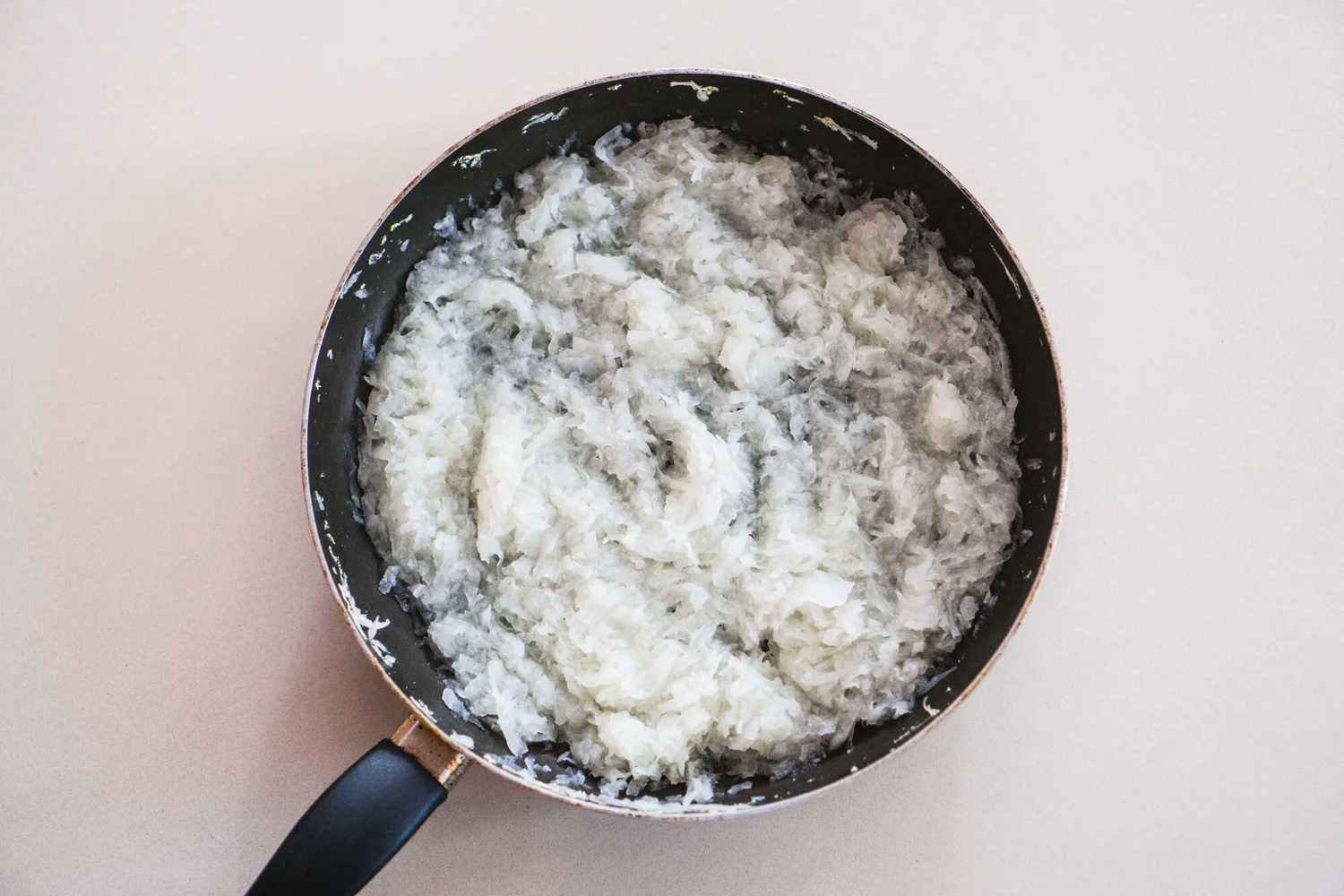
- Peel the radish and grate it with a box grater into thin shreds (I use the biggest holes on the box grater). Transfer the grated radish into a pan, add 100ml of water to the same pan, and place it over medium heat until it comes to a boil. Let the radish and water simmer for 10 minutes, stirring occasionally, until most of the water has evaporated. Then, remove the radish from the pan, straining out and reserving all the liquid that remains. Measure this liquid, and top it up with more water until it reaches 250ml.
Measuring the dry ingredients
- Combine the rice flour, all-purpose flour, salt, five spice powder, and ground white pepper in a bowl, and sift them all together.
Pan-frying ingredients
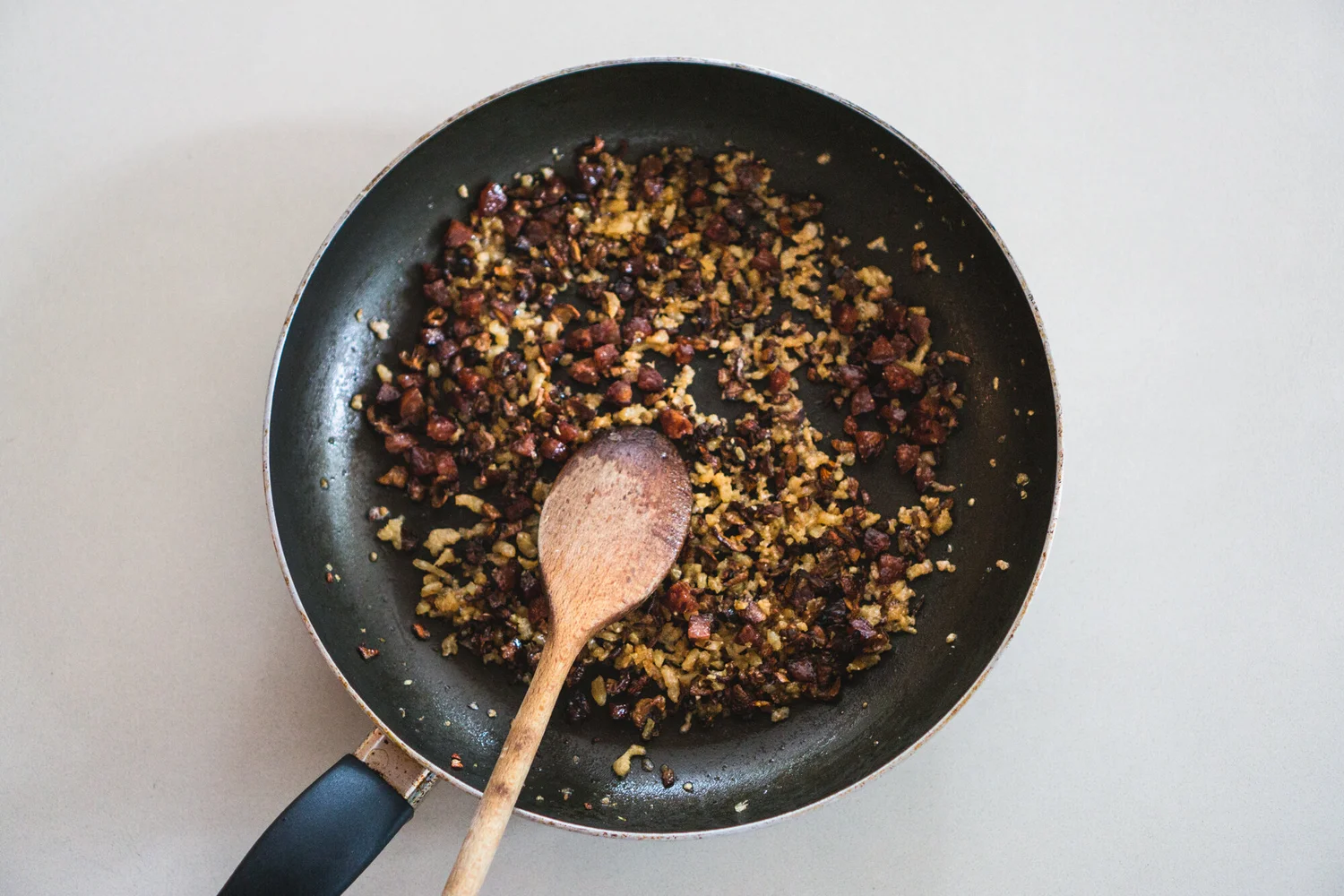
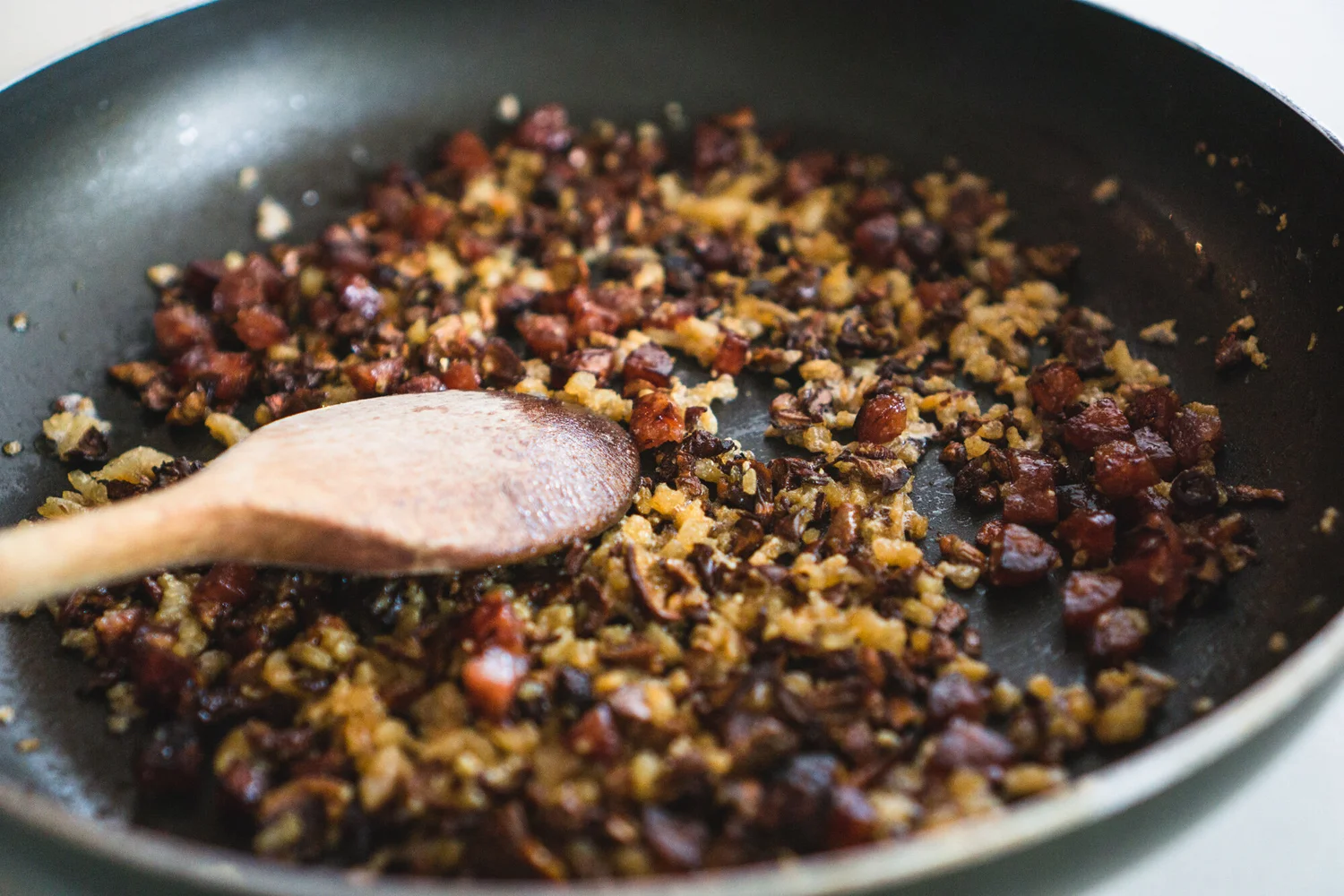
- Mince the lap cheong, shiitake mushrooms, and dried shrimp into 1/2 cm chunks. Then, heat up a pan with a tablespoon of oil and fry them all together for 3-5 minutes, careful not to burn them. When done, reserve a tablespoon of these ingredients in a separate bowl, which we’ll be using as a garnish.
Prepping the steamer
- Place a steamer set-up. (I use a wire rack over a wok of boiling water, but you can use a pan too, or a dedicated steamer basket.) While waiting for the water to boil, oil a 15cm x 20cm glass/metal tray to cook your lo bak gou in.
Making the batter
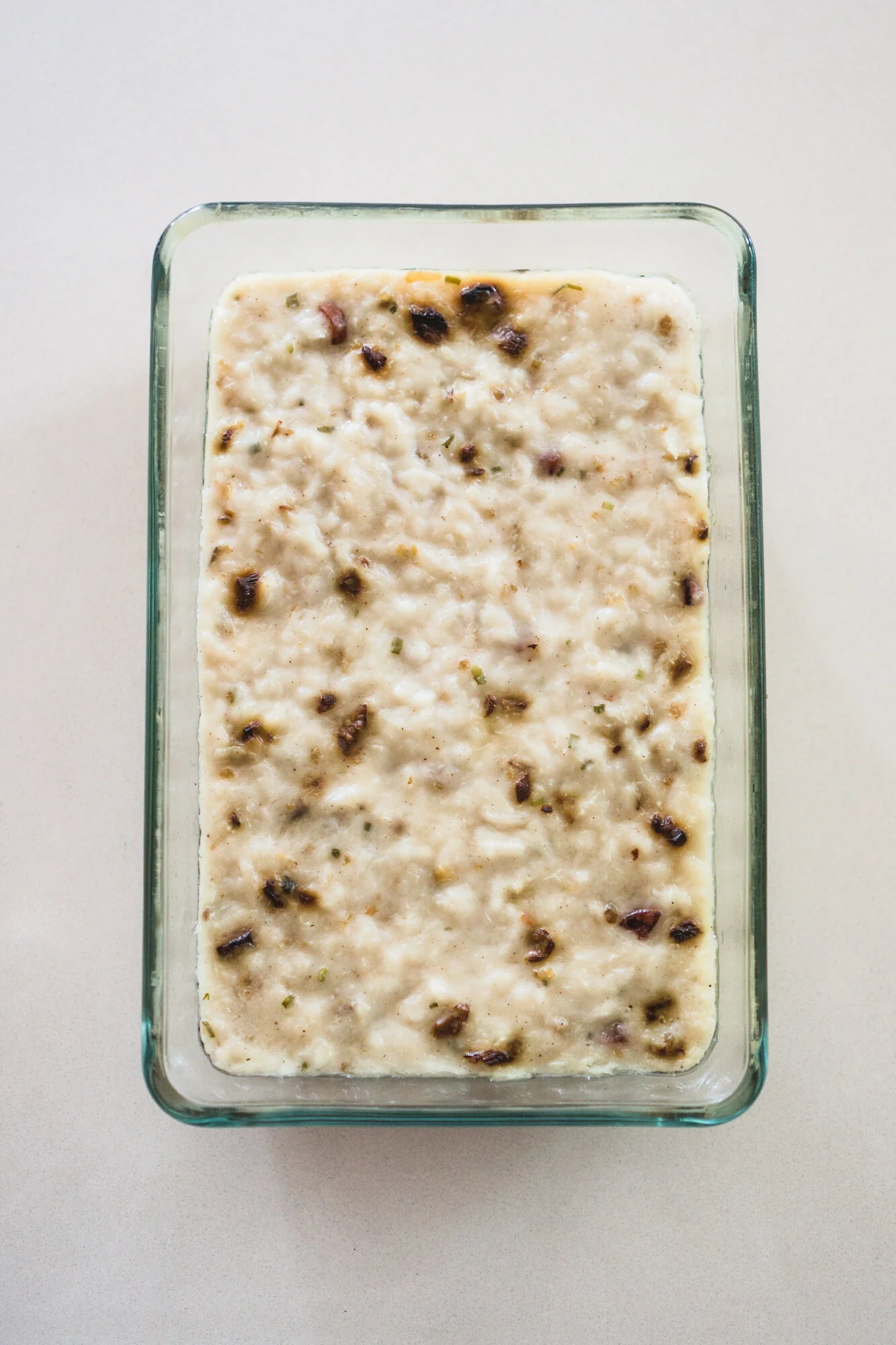
- Combine the grated radish, dry ingredients, pan-fried ingredients (except for the reserved tablespoon of ingredients), and the scallions together in a bowl and mix until no lumps of flour remains. Then, pour this into the tray and even out the top. Steam the lo bak gou for 45-50 minutes. When done, remove immediately from the steamer and let it cool in the tray for at least 30 minutes, until it reaches room temperature.
Searing the pieces
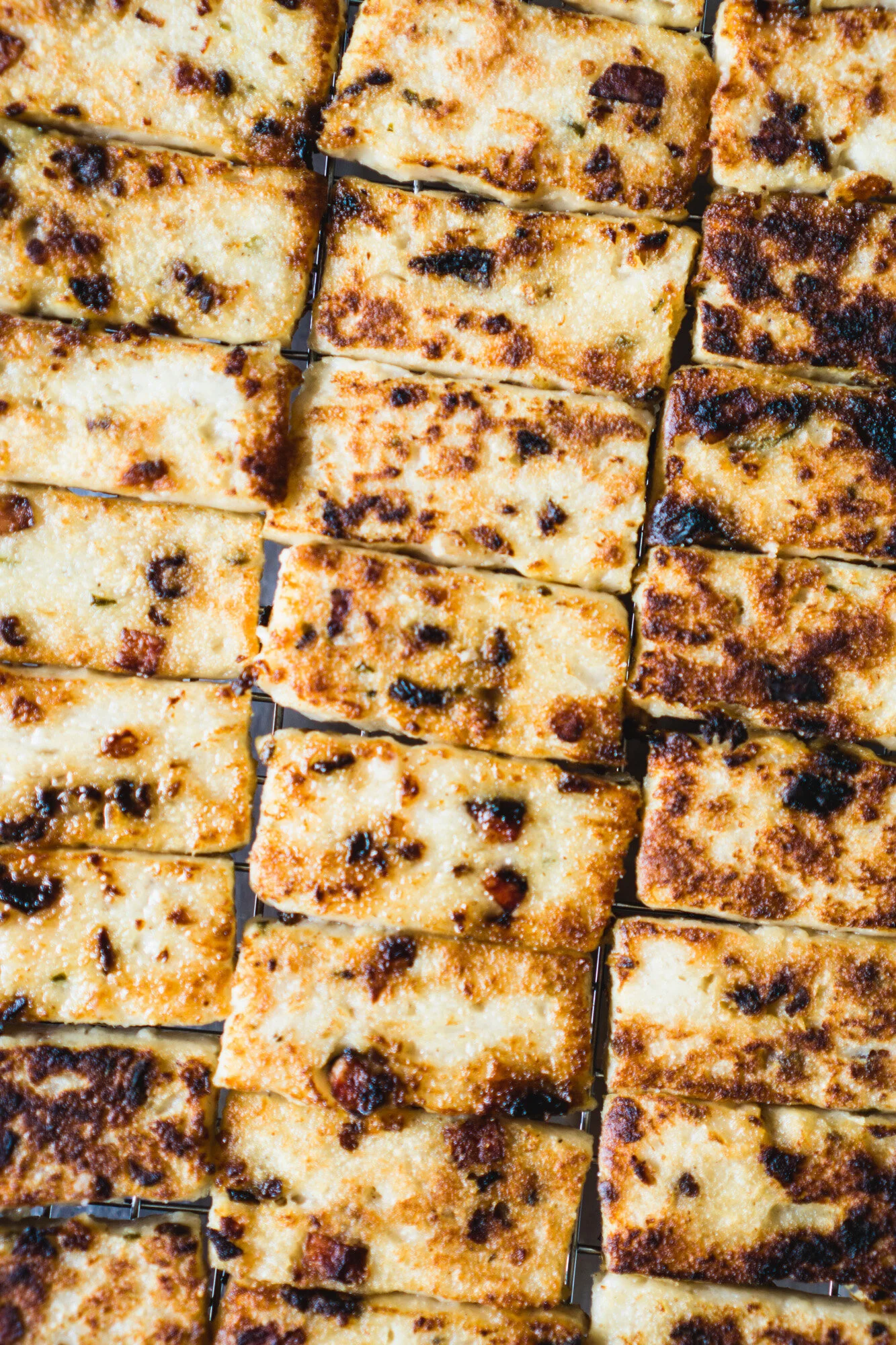
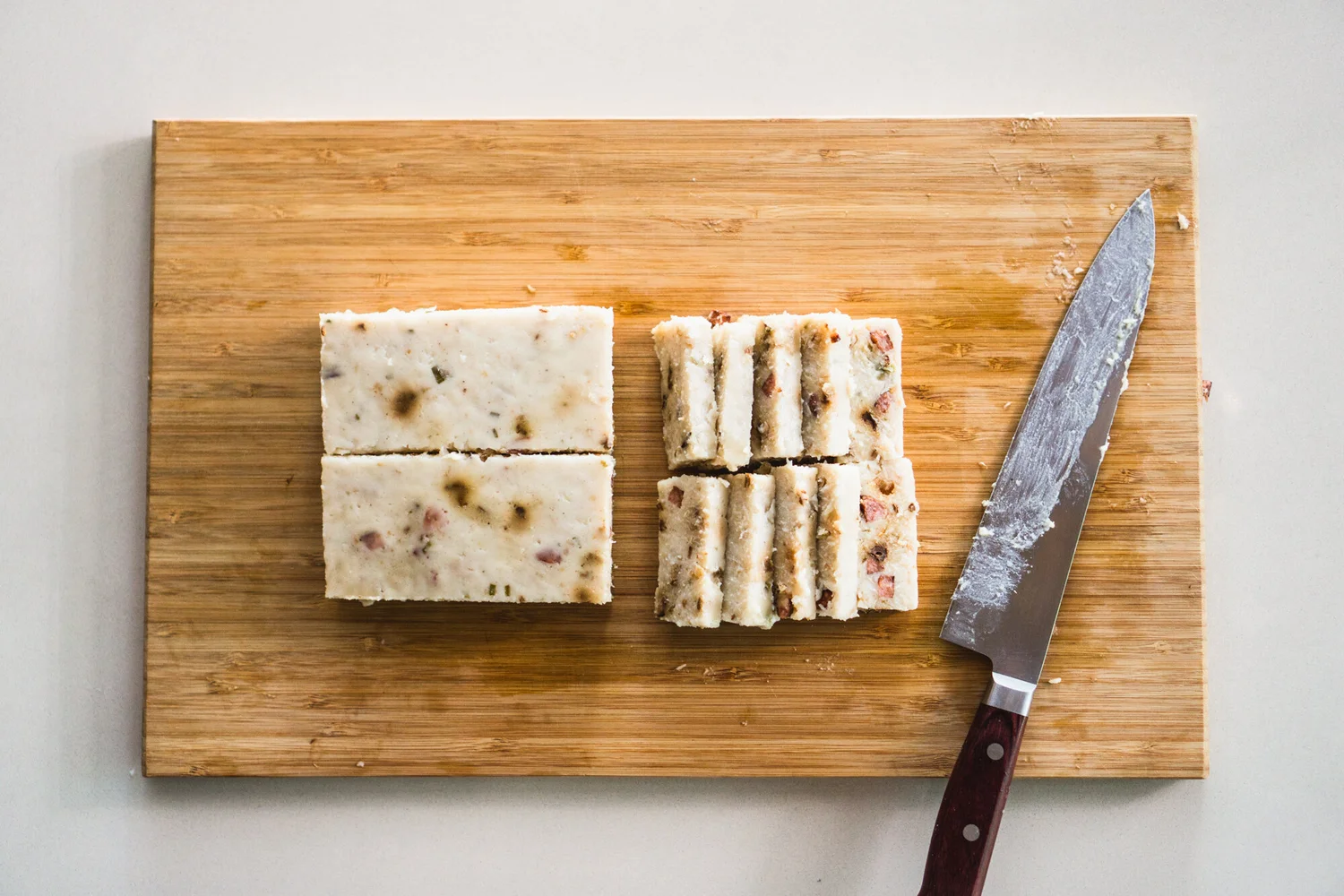
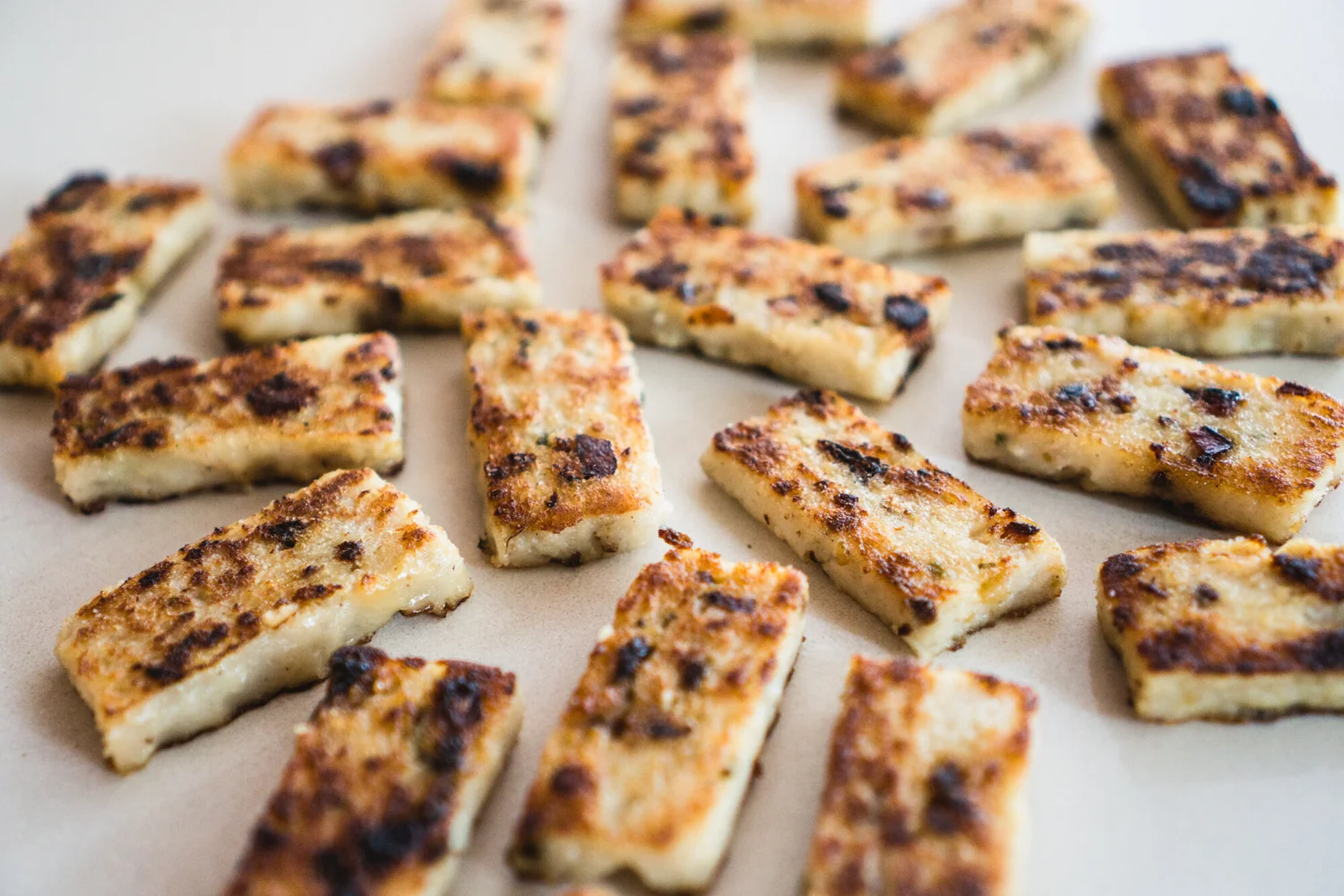
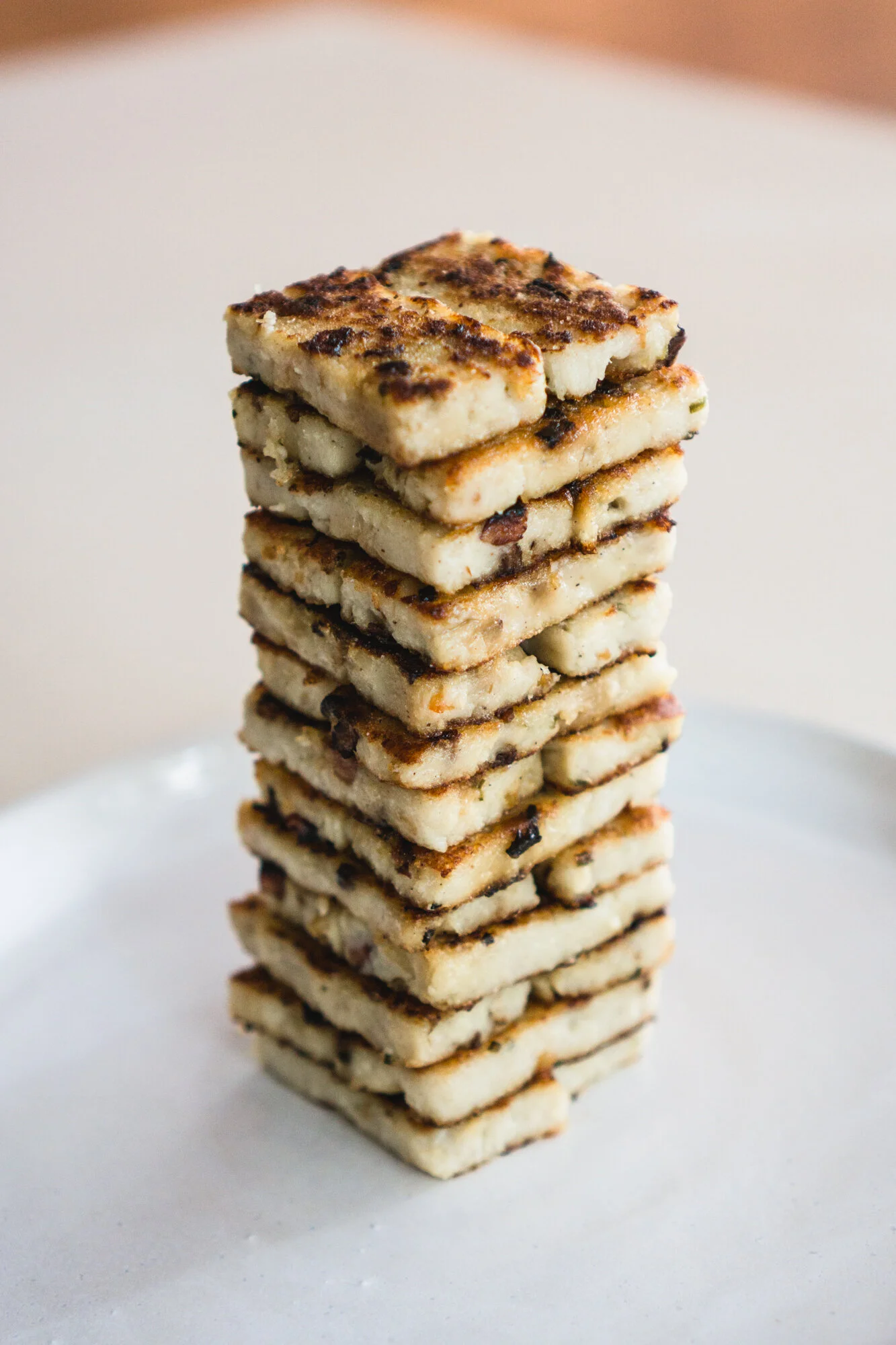
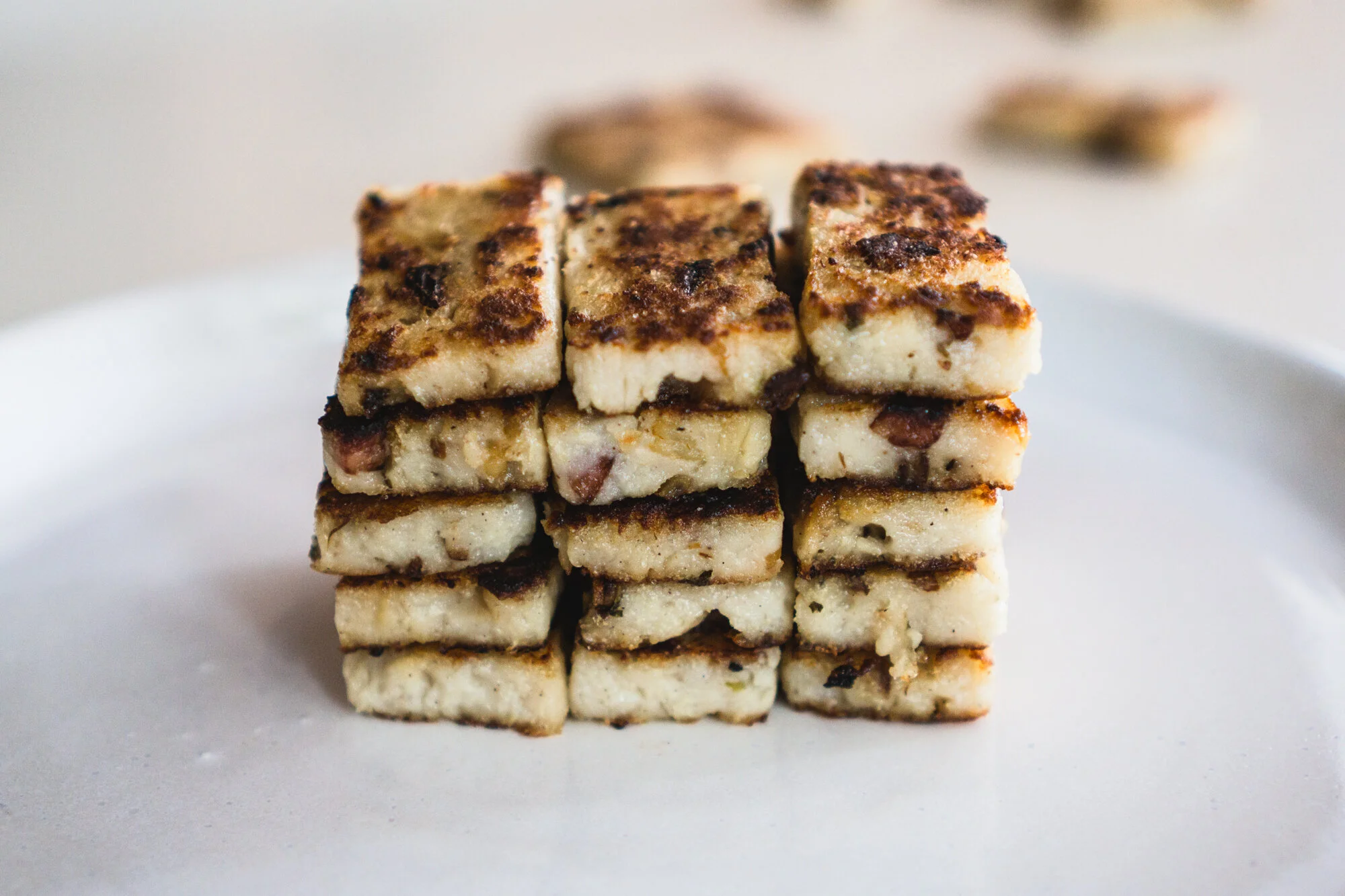
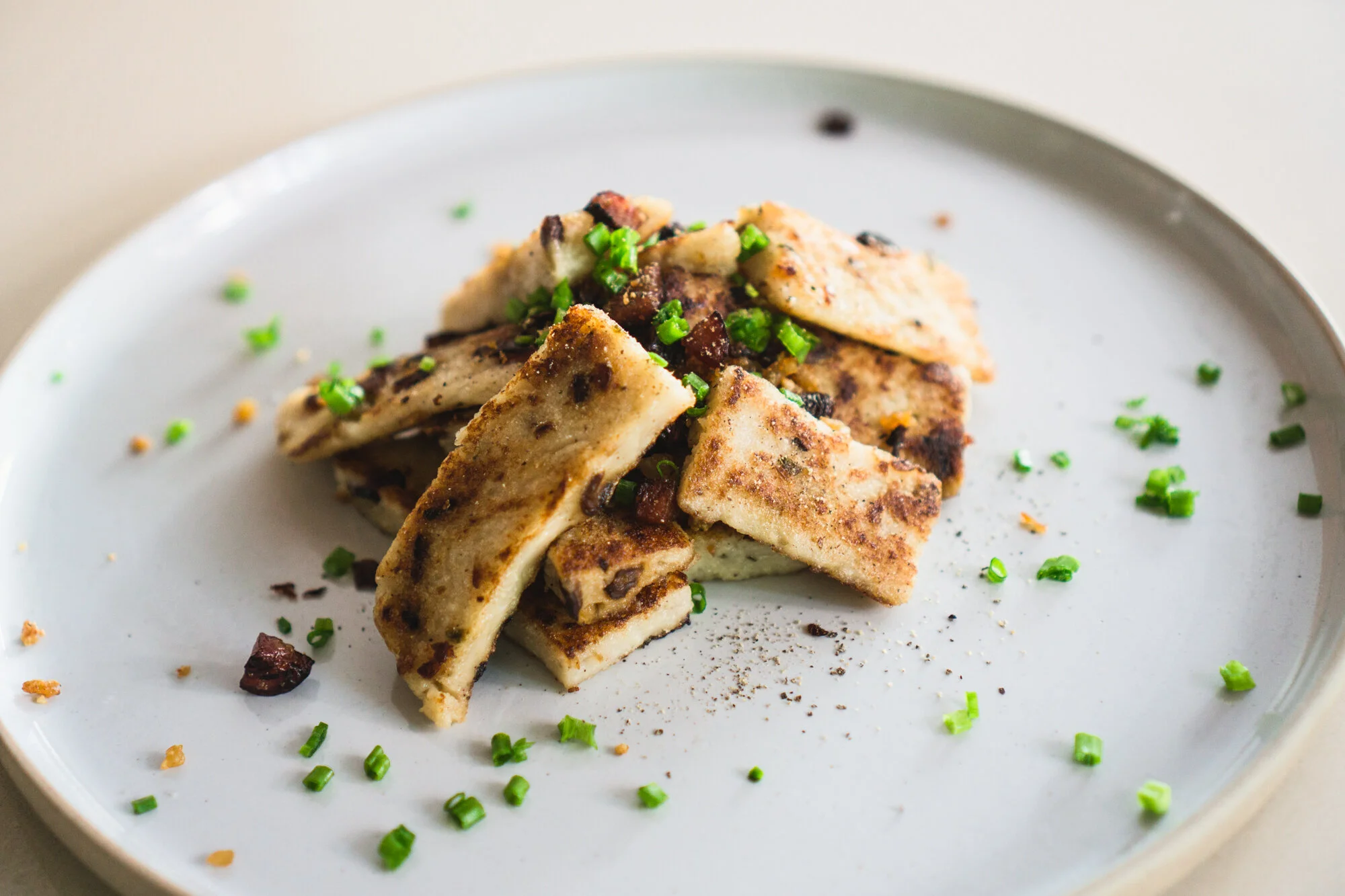
- Slice up the lo bak gou and pan-fry each slice in a bit of oil for 2 minutes on each side, until the sides get brown and caramelised. Then, stack them up on a plate and garnish with the reserved bits of lap cheong, mushrooms and dried shrimp. Then, eat!

1 thought on “Lo Bak Gou (Turnip/Radish/Carrot Cake)”
Hi there, U mentioned to keep aside the strained liquid from simmering the radish, topping up to 250ml. What do we do with this 250ml?