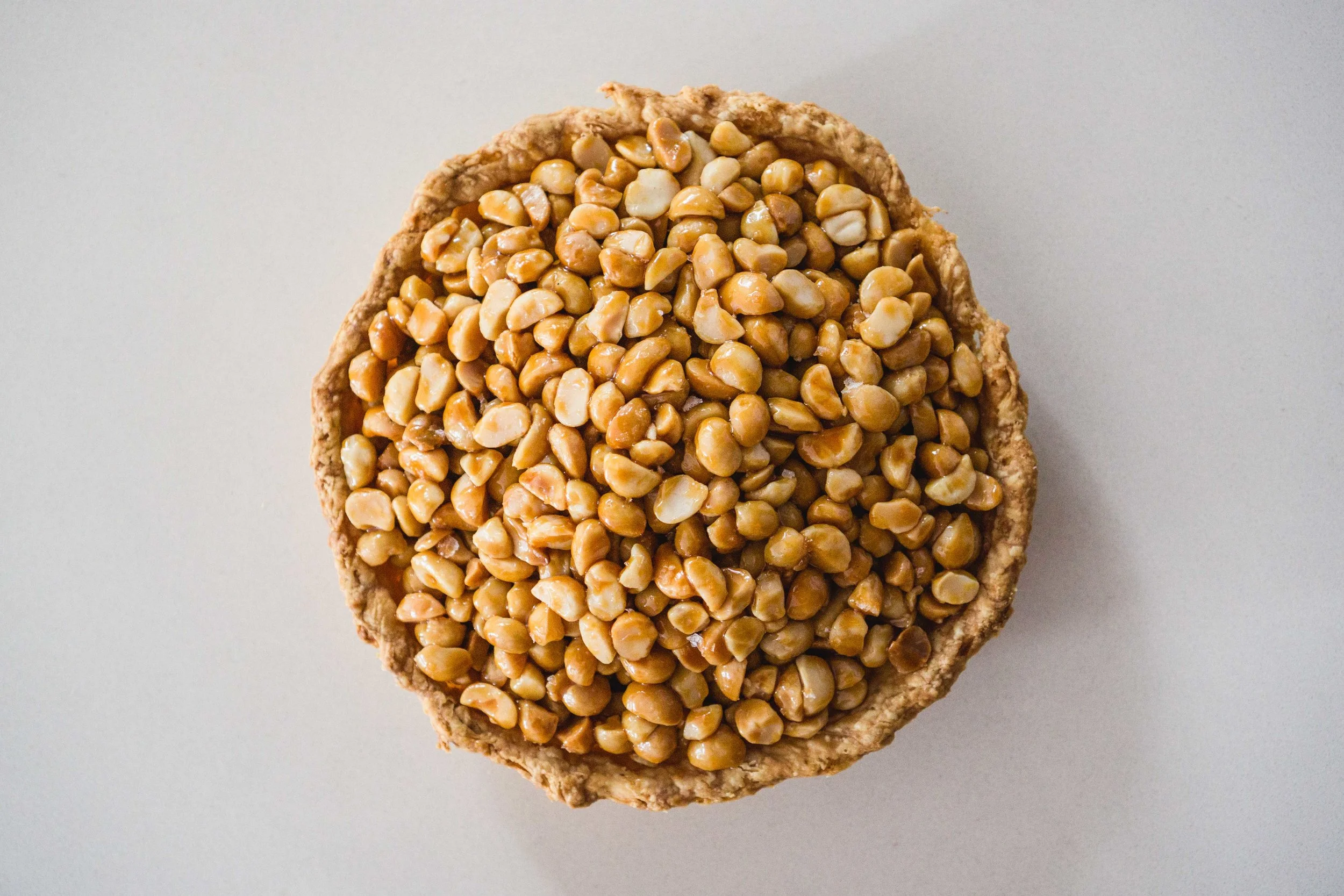
Ingredients
Yields: 2 tarts
Shortcrust Pastry
- 200 g all-purpose flour
- ¼ tsp salt
- 100 g butter - cut into rough cubes and chilled
- 1 egg
- 1 tsp water - plus more if need
Macadamia Filling
- 700 g macadamia nuts
- 150 g sugar
- 30 g water
- 5 g salt
Method
Shortcrust pastry
- Put the flour, salt, and cubes of cold butter into a stand mixer (with a paddle attachment). Then, mix on medium speed for 1-2 minutes until it becomes sandy, with little to no large lumps of butter left. Then, add the egg and a teaspoon of water and mix briefly until the dough comes together. If you find the dough doesn’t come together, add in a bit more water until it does. Wrap the dough in plastic wrap and refrigerate for at least 2 hours, or overnight. (The recipe above makes enough for 2 tarts, so you can split it in half and store them separately.)
- On a well-floured surface, roll out the shortcrust dough using a rolling pin until it is at least 4 cm/1.5 inches larger than your tart pan all around, and about 2-4mm thick. Lay the dough into the tart pan, making sure to fit the dough snugly into the edges, and trim off the excess dough using a knife or by rolling a rolling pin over the sides of the tart pan. Refrigerate for at least 30 minutes, then dock it with a fork, fill it with baking beans, and blind-bake it for 25 minutes, removing the beans halfway through the baking process. You want to fully bake the tart shell, so when the middle is nice and brown, you can remove it from the oven and let it cool in the tart pan.
Macadamia filling
- Heat your oven up to 160°C. Toast the macadamia in the oven for 15-20 minutes, until golden brown. Then remove it from the oven and set it aside.
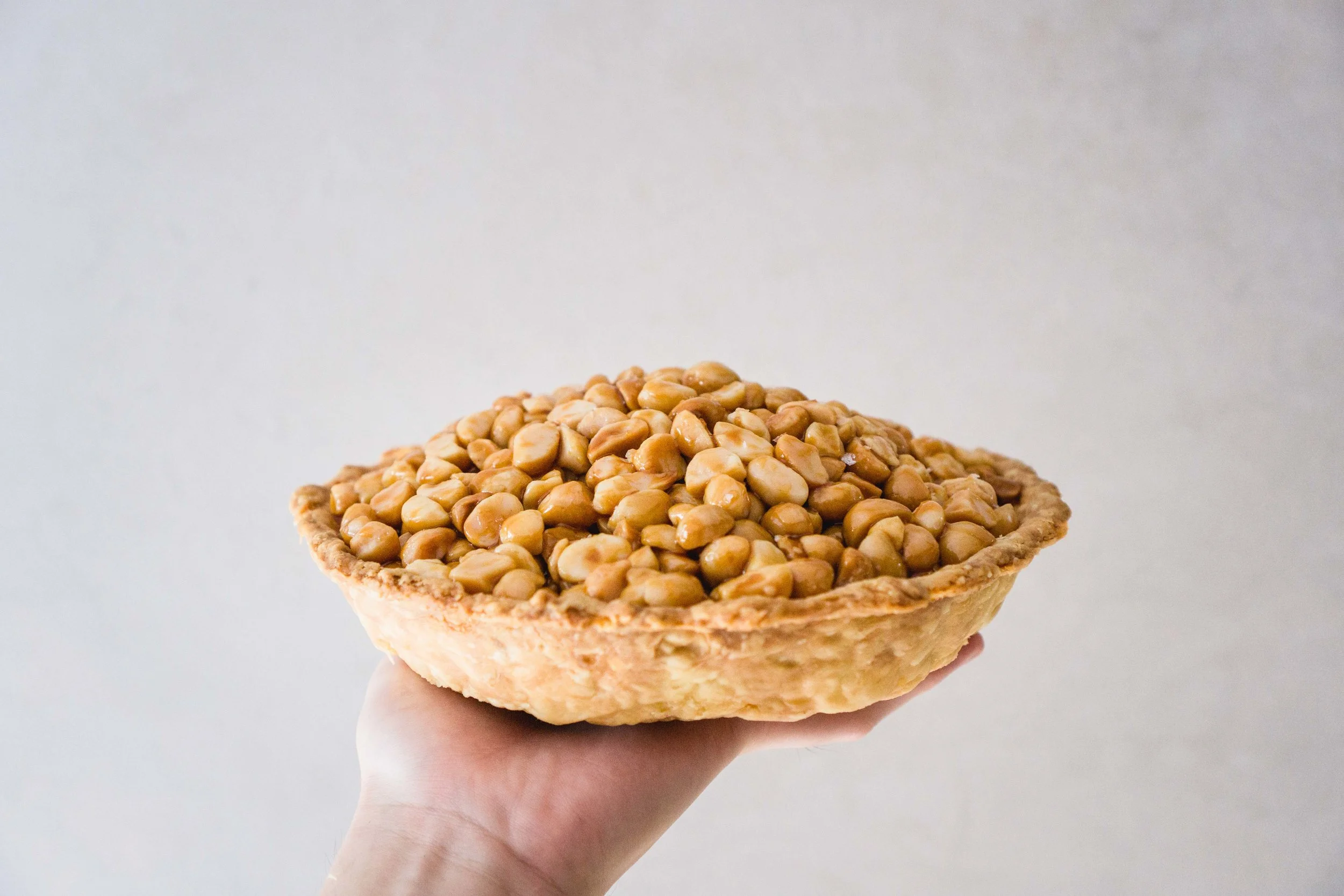
- To make the caramel, start by sprinkling about a quarter of the sugar into a medium pan, and heat it up until the sugar begins to melt. Some parts of the sugar might melt and caramelise faster than others. But don’t panic, just add some more fresh sugar to the parts that are browning the quickest. Do this until all the sugar has been added, and swirl the pan around to let the sugar even out. Keep heating the sugar until it turns into a dark caramel. (Be careful not to burn it!) Then, when your caramel is a nice deep shade of brown (not black), pour in the water. The caramel will hiss and sputter, but just keep swirling it around until the caramel becomes smooth again. Then, add the salt and toasted macadamia nuts, and mix it all with a spatula until all the macadamia has an even coating of caramel. Moving quickly, pour the macadamia mix into the tart crust, and with a spatula, shape it into a mound.
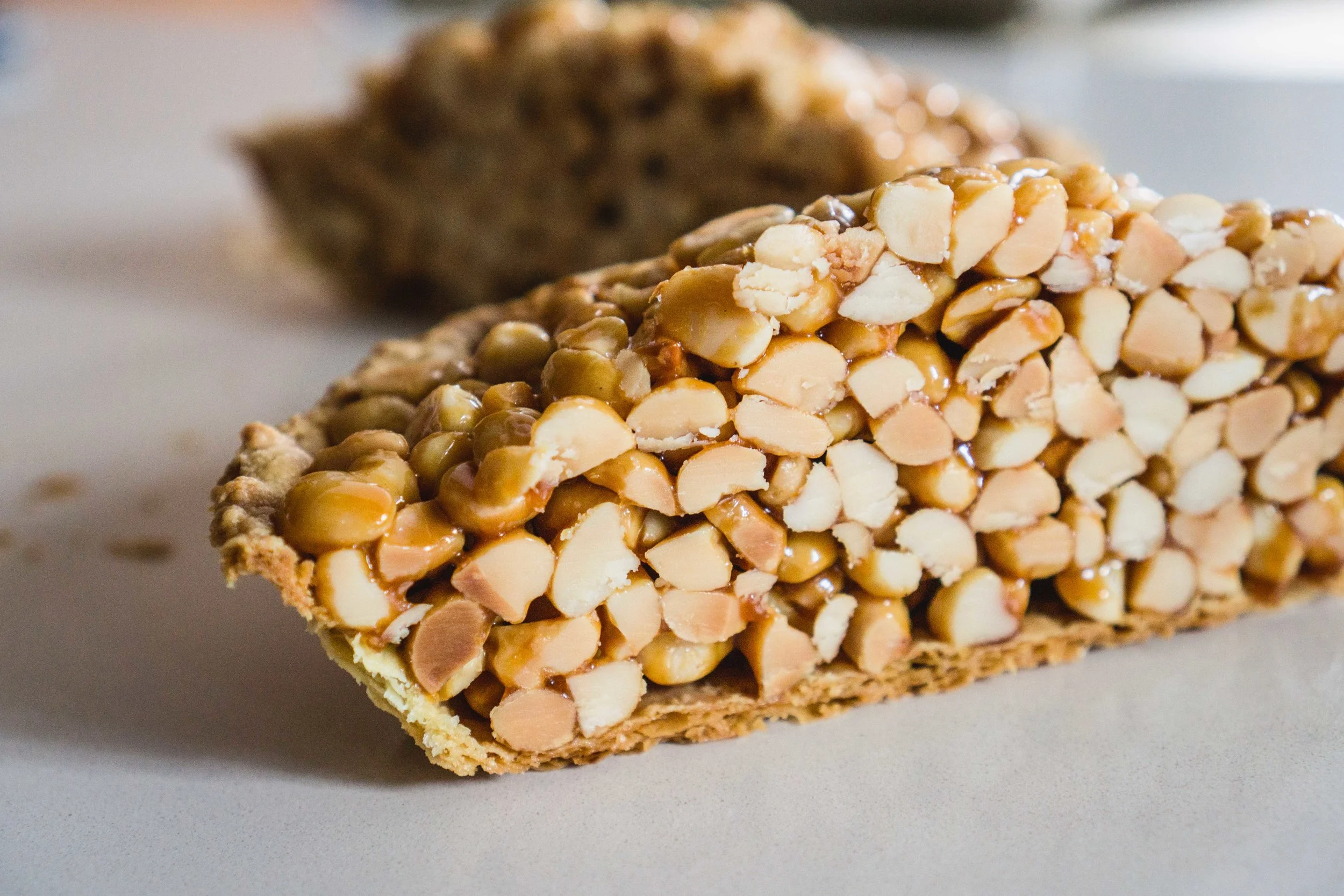
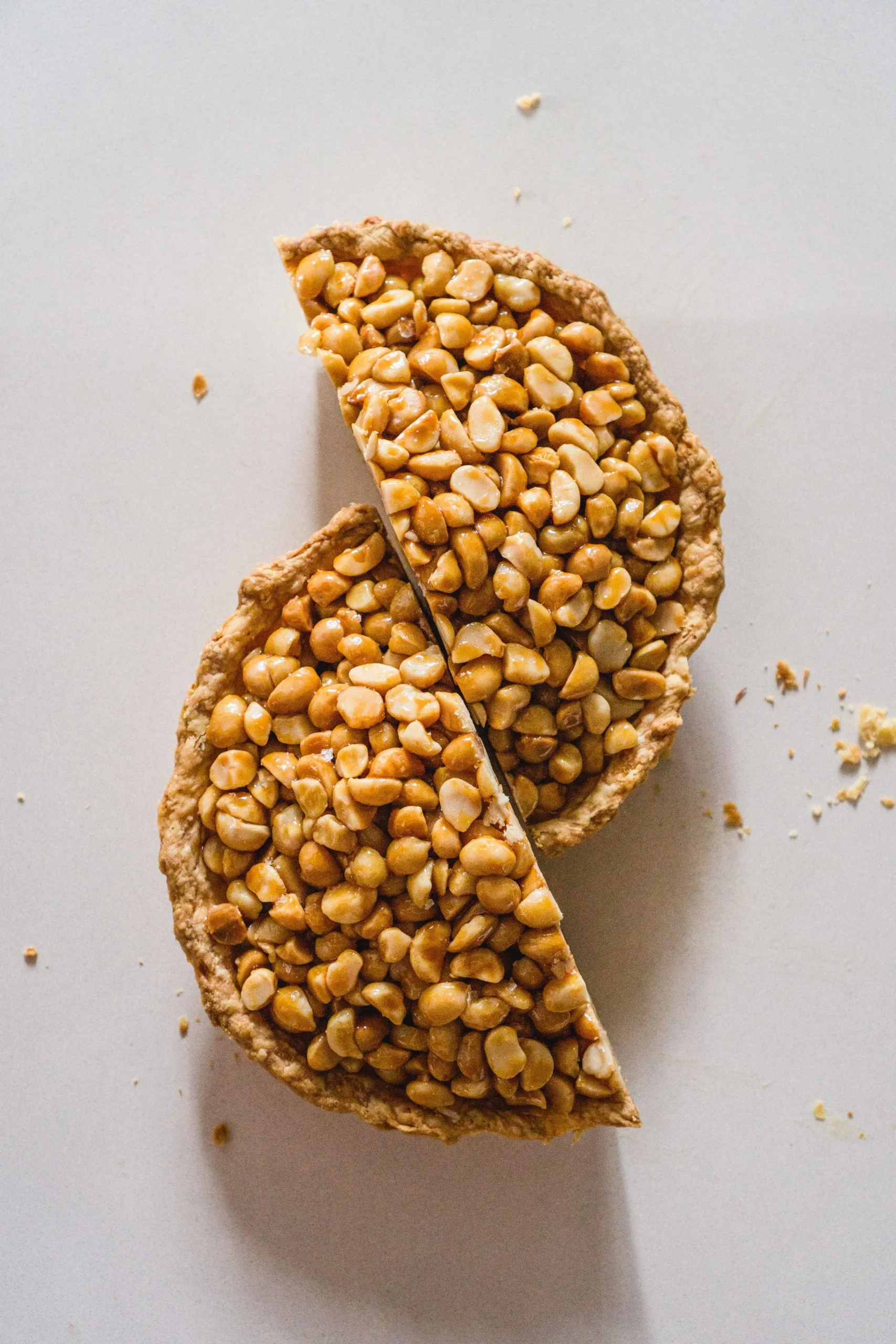
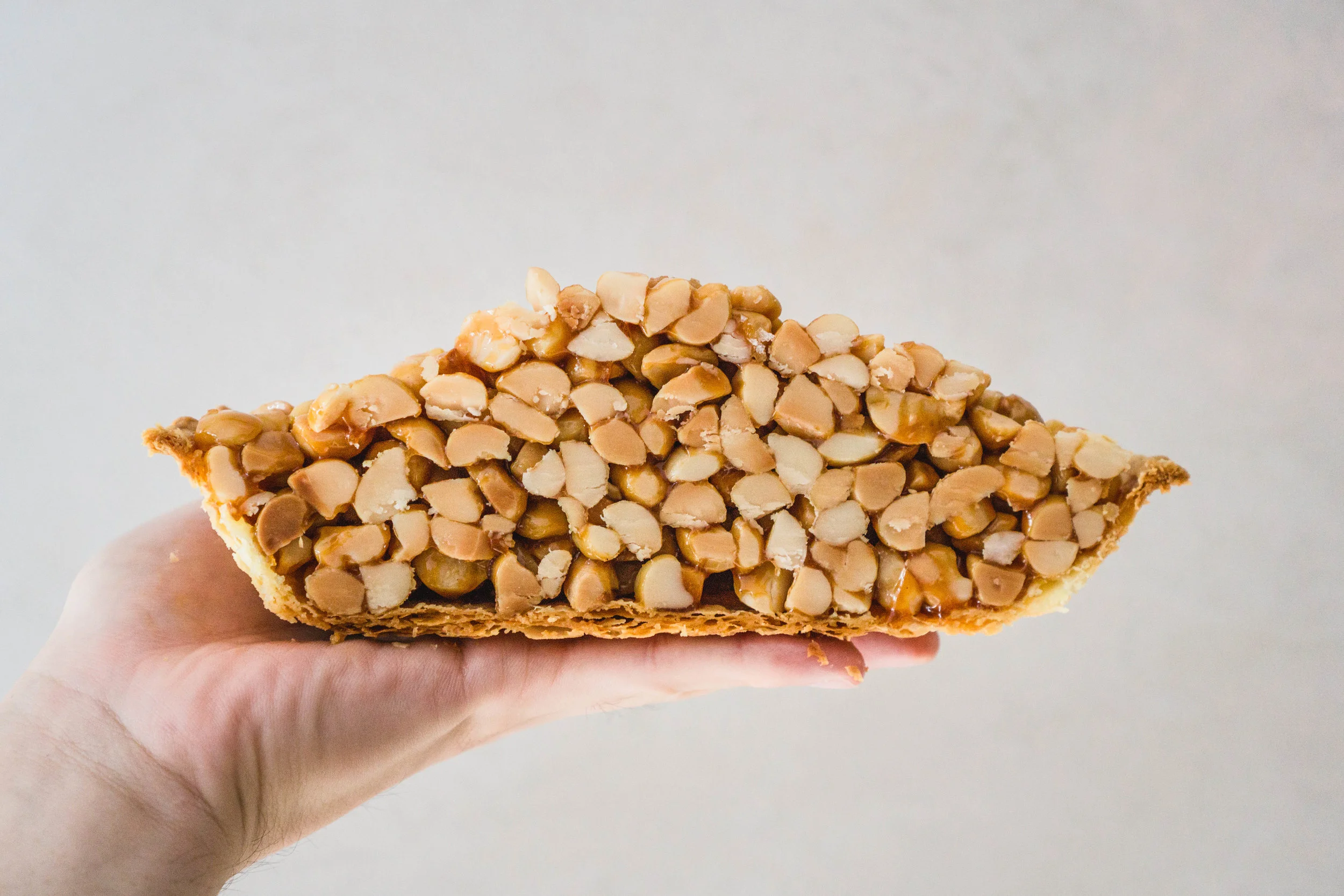
- Let the tart cool for about an hour until it hardens completely. Then, slice it into 8-12 pieces using a serrated knife, and serve!