Anyone who’s seen the top shelf of my fridge knows that I’m a bit of a pickle freak. Pickling has been the answer to many “oh shit I bought more (insert vegetable/fruit) than I know what to do with” moments.
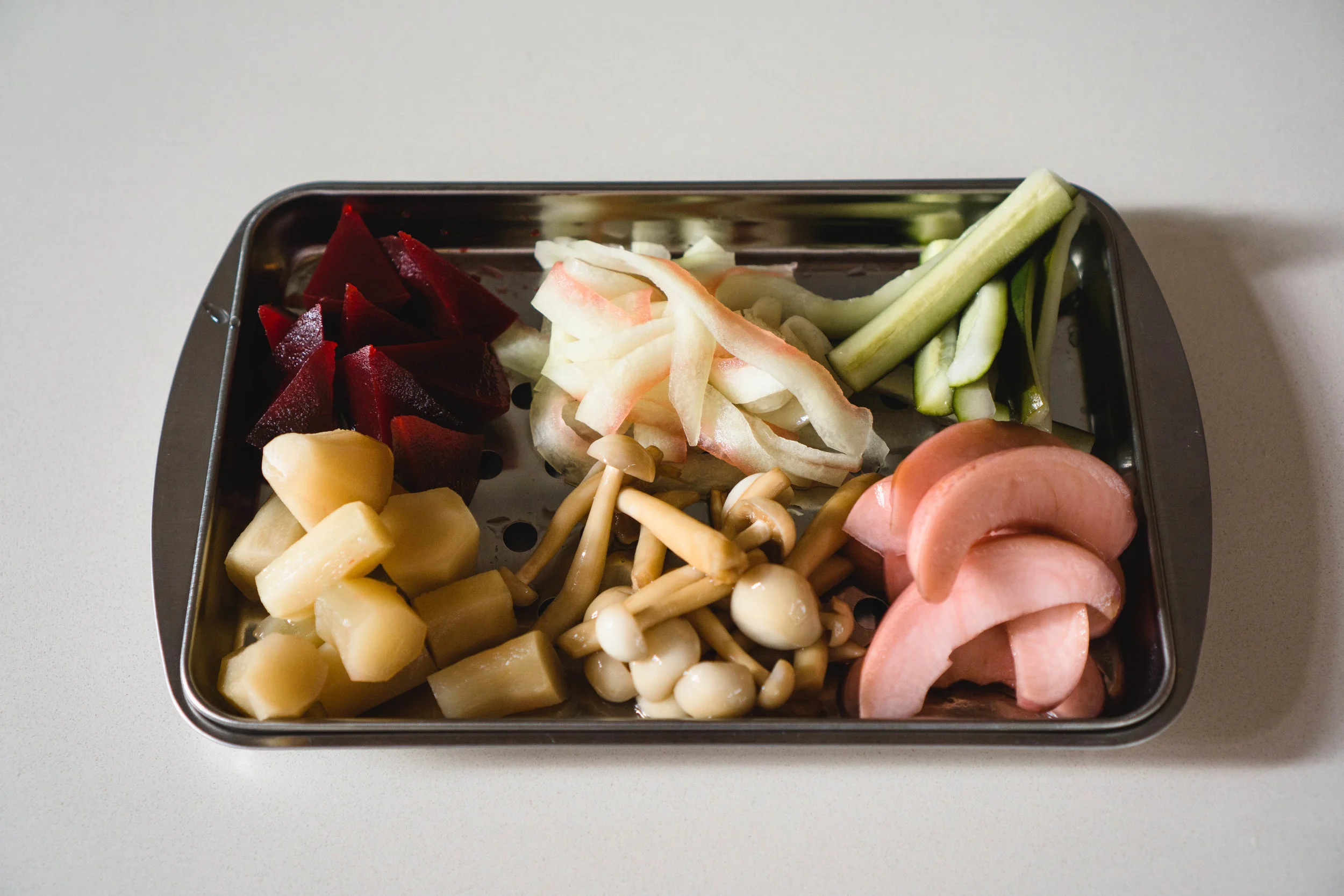
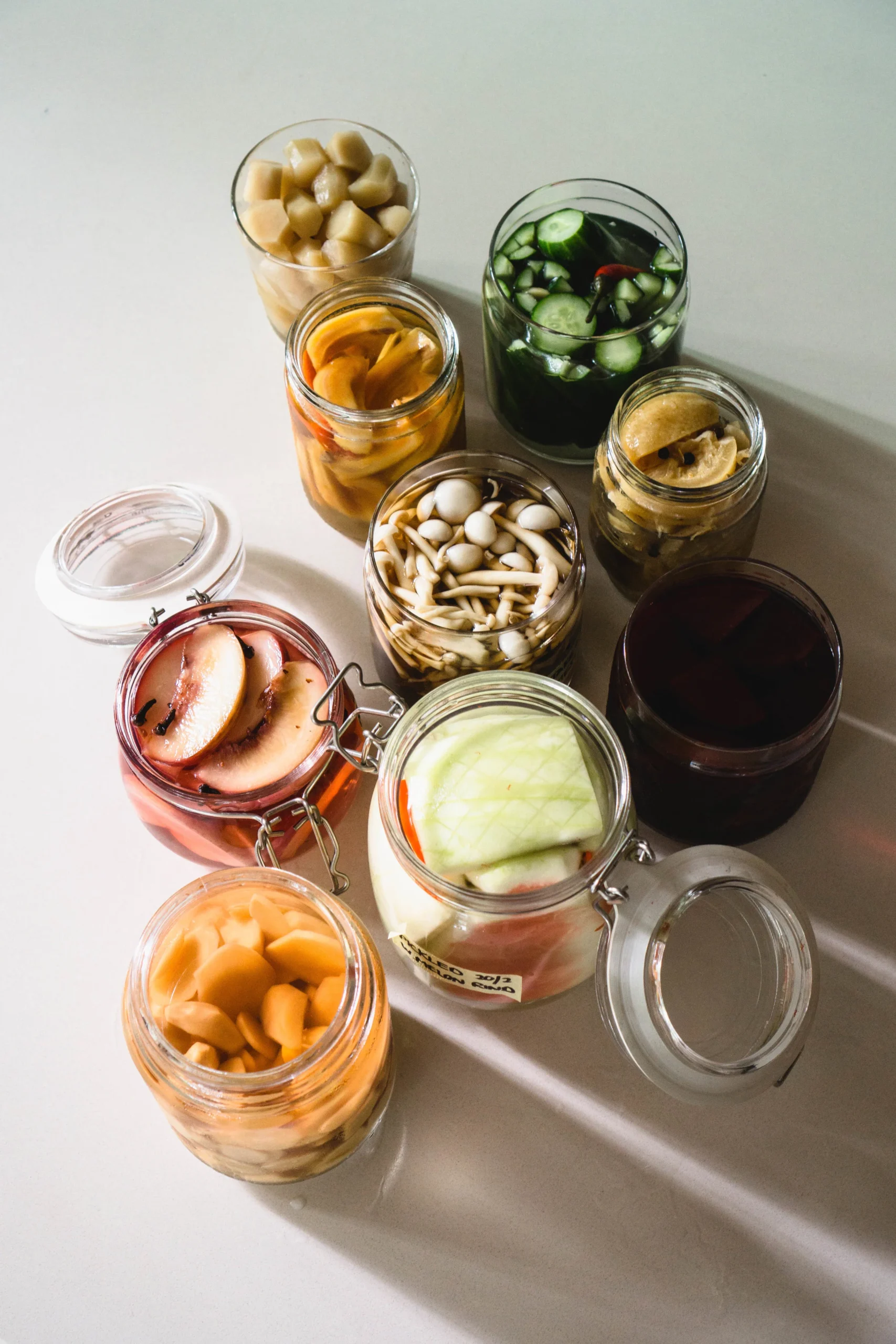
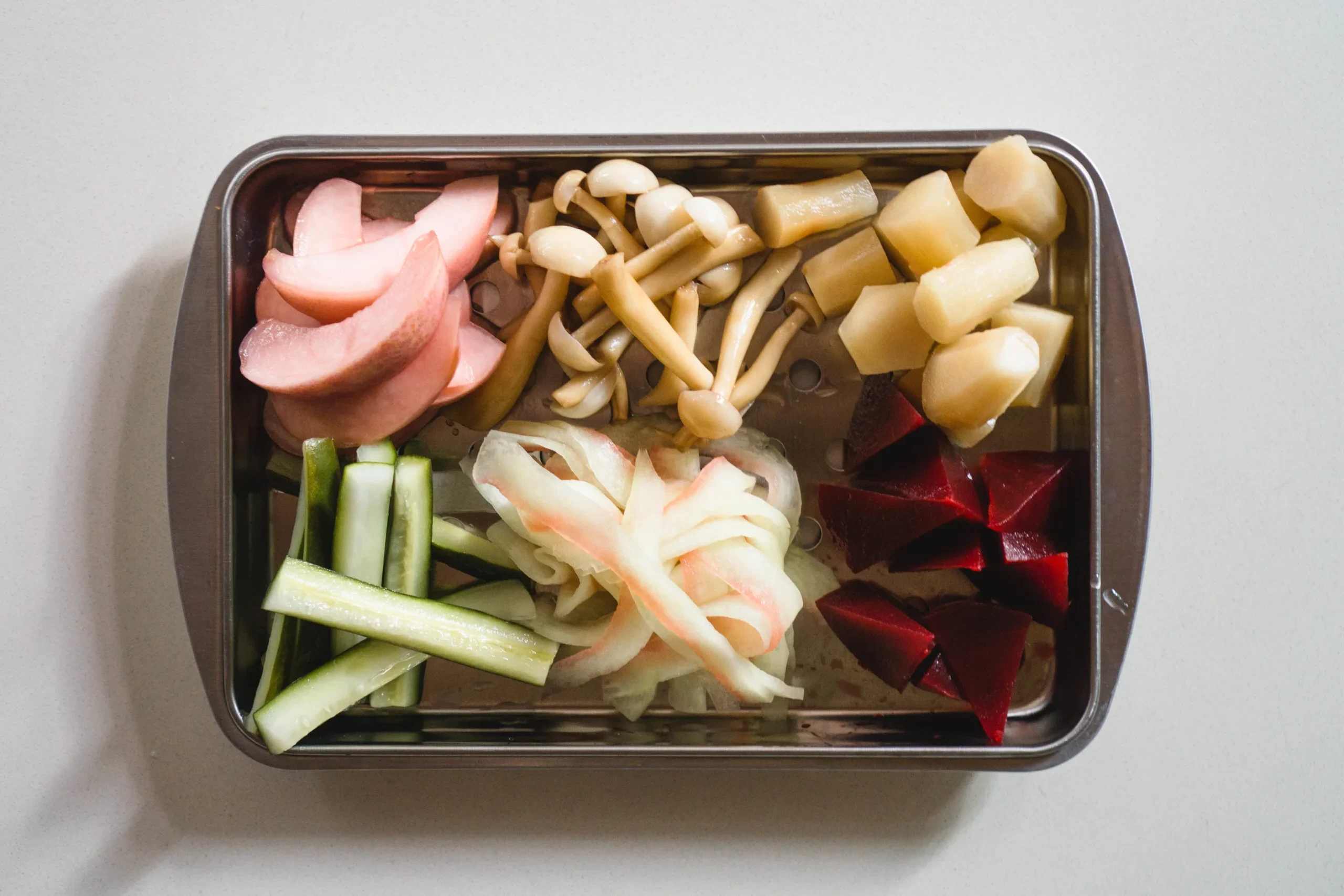
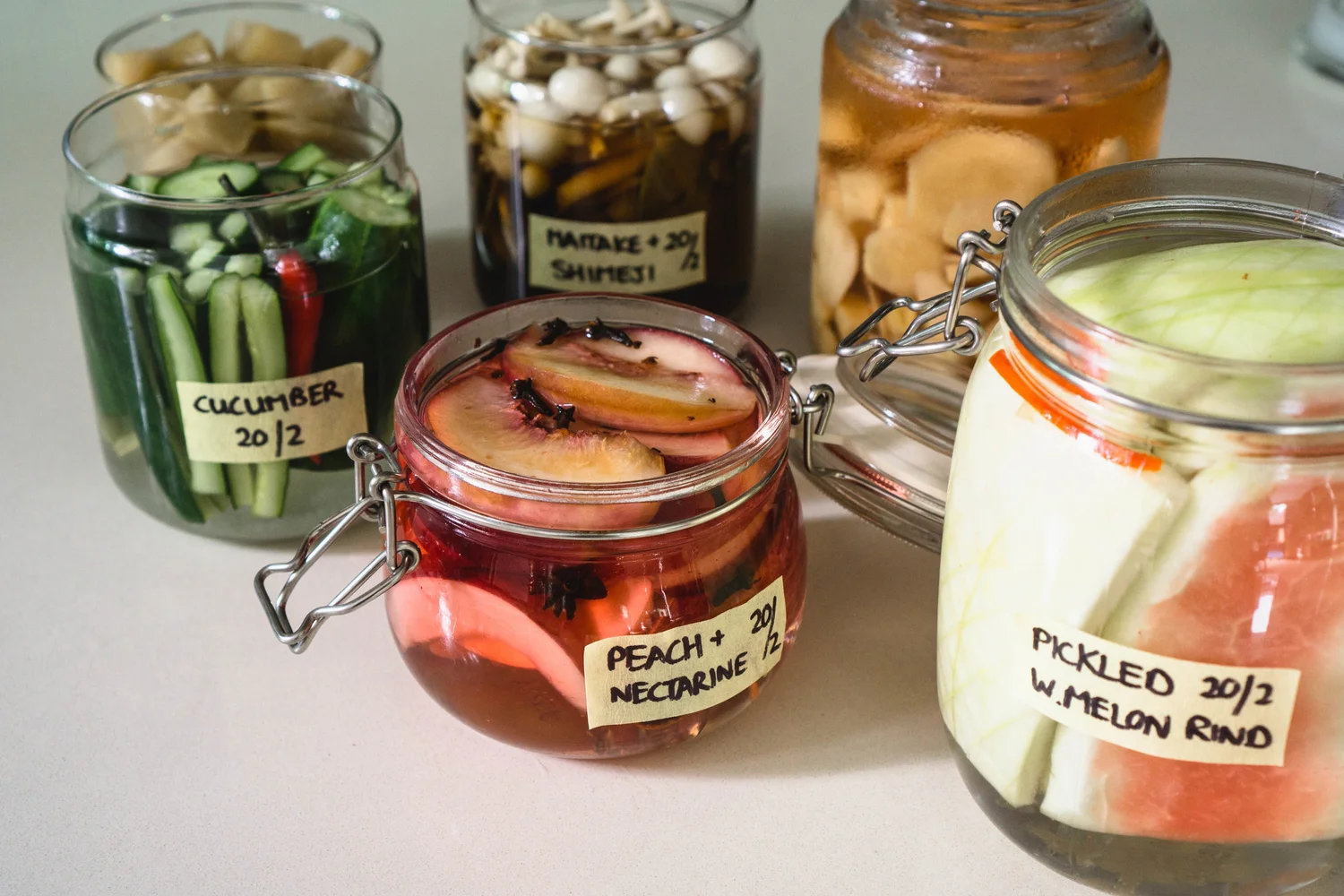
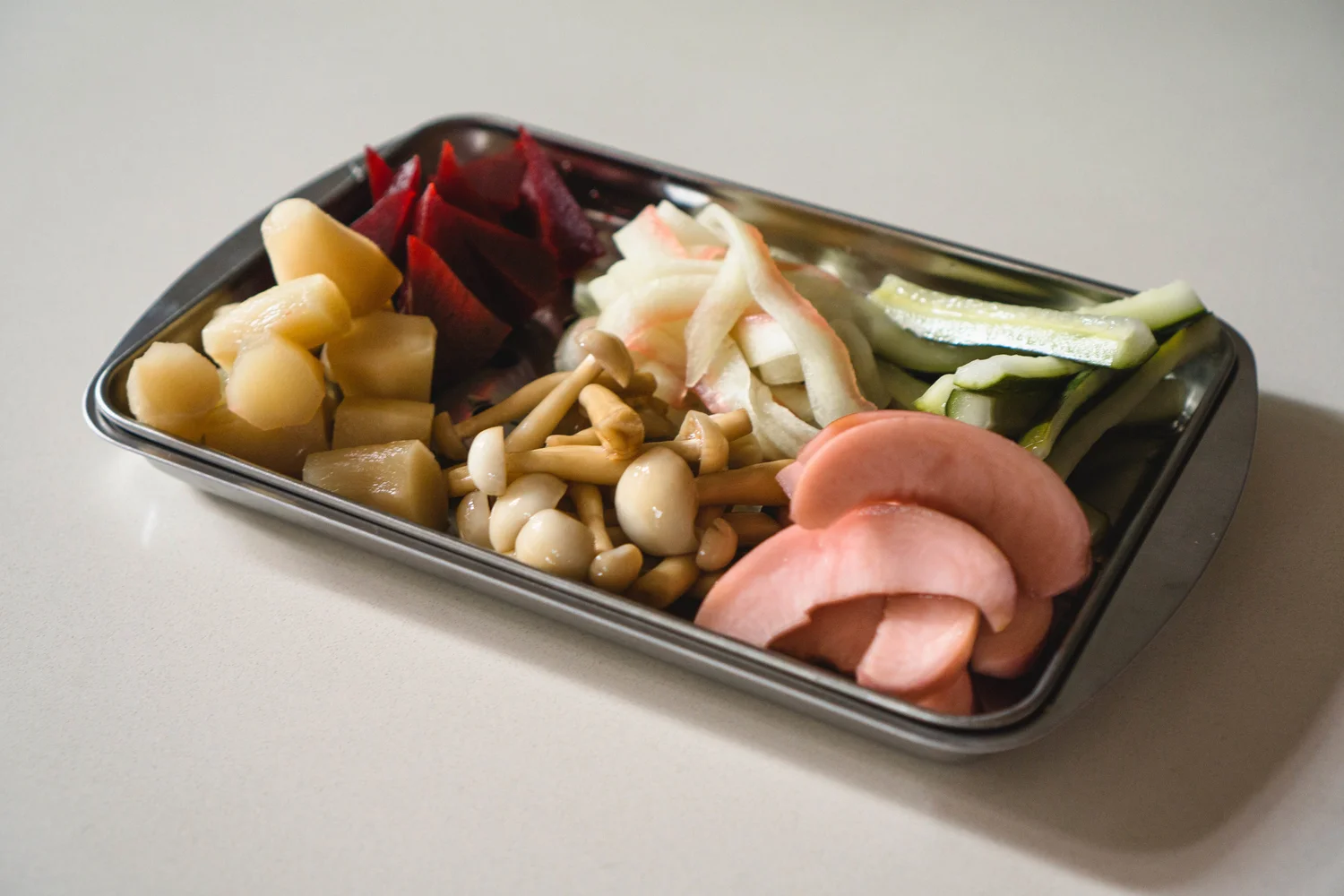
Ginger, cucumber, carrot, nectarine, beetroot, I’ve tried pickling them all, alongside slightly weirder, experimental ones like jackfruit, ferns, mushrooms, and watermelon rind. It’s almost magical really, what a little vinegar, sugar and time can do to most foods. Not only will pickling your produce make them last longer, it also puts an interesting spin on familiar flavours, which is also a go-to technique in many chefs’ arsenal for bringing a little more zing & pop to dishes.
Think of the ever-present tsukemono (Japanese pickles) in Japanese cuisine. They’re those pink slivers of pickled ginger, tart umeboshis, yellow radishes, shiso-dyed cucumbers, or any other pickle that are often served alongside heavier dishes to bring balance to a meal. Or take the simple dill pickle – what starts off as a crisp, refreshing cucumber ends up being briny, punchy and zingy after just a few days in pickling liquid (or better yet, if it was lacto-fermented; but that’s a technique for another time).
Now while the question of “How to Pickle?” is seemingly straightforward to answer, every chef/home cook has their own go-to pickling recipe and technique, which complicates things. Some swear by the 2:1:1 ratio (2 parts vinegar to 1 part water to 1 part sugar). Others use a modified 5:3:2:1 or 9:5:3:1 (vinegar:water:sugar:salt). Some start off the pickling process hot, others will insist on waiting for the pickling liquid to cool down. Some are satisfied with an overnight pickle, others will leave their produce to pickle for weeks before even tasting it.
So while it might seem like we should just all agree on one standardised pickling method, it’s only in the nature of this industry for everyone to have clashing opinions, resulting in a whole spectrum of pickles! Just search for a basic pickling recipe on Google, and you’ll get like 53829 wildly different variations. (This one‘s my favourite. ) It might seem crazy and chaotic, but it’s also why I’m so fond of the whole process and industry of food and cooking!
And if you’re wondering, I too have my own tendencies and habits when it comes to pickling. But I’m also a firm believer in loving any and all pickles, so I’d like to think I’m not that fussy… Still, if you’ve never pickled anything in your life, it might seem like a really daunting task. Now I’m no Sandor Katz, but if you’d allow me to, here’s a small, simple guide to pickling, plus two recipes to get you started on your next obsessive hobby! It’s built upon an experimental, self-discovery approach to cooking that I’m particular fond of, so to the sticklers for proper cooking methods out there, I apologise in advance for any mistakes I made/rules I broke here.
—
When it comes to pickling, there are three, generally-agreed-upon key ingredients – vinegar, sugar and water. Some consider salt a necessary fourth ingredient too. The sugar (and salt) is dissolved (and often heated) in the vinegar and water to make the pickling liquid, which is then poured into a clean jar/container with the produce-to-be-pickled. The pickle is then set aside for a few days (or weeks), absorbing the flavour of the pickling liquid through osmosis.
To start off your next pickling project, try a simple pickling liquid ratio of 2:1:1 (2 parts vinegar to 1 part water and 1 part sugar) and see if you like it. For the vinegar, you can use rice vinegar, white wine vinegar, cider vinegar, or any other vinegar really (though some eschew using dark, sweet vinegars like balsamic and sweet rice vinegar; I’m not fussed). Same goes for the sugar; Try different sugars depending on the flavour profile you’re going for (white for a cleaner flavour, brown/unrefined for a deeper, less-upfront sweetness).
As for additional aromatics, anything is game really! Try adding some spices (cinnamon, star anise, and cloves are my go-to for a sweet pickle) or herbs (dill is always a safe bet), or even some heat (garlic, pepper, ginger, and chili comes to mind). Taste is subjective, so play around with different combinations and discover what you like!
For me, I started off with a safe 5:3:2:1 ratio when I was in the US. But on coming back to Malaysia, I realised that the rice vinegar here was a lot harsher than the one I was used to in the US, so I dropped down the amount of vinegar. Plus, being back home also changed the level I generally season to, so I cut down the amount of salt in my pickling recipe too. So my current recipe is more of a 10:9:5:1, which is a mouthful, I know. But then again, I only use this ratio as a guide, going by taste most of the time, adding a splash of vinegar or a smattering of spices as I see fit.
As you can probably tell, the rules are really loose when it comes to pickling, so let loose, play around with different flavour combinations, and let your experimental-self run riot!

6 thoughts on “Pickle Like a Pro (…ish)”
I love how you’ve detailed the pickling process! The balance of spices in homemade pickles makes all the difference. I recently came across Vatha’s Foods, and they have some amazing varieties of traditional Indian pickles. Have you ever tried their beetroot pickle? Would love to know your thoughts!
Really appreciated this article, as I had 10 different recipes and 60lbs of cucumbers and jalapenos ready to go :). I echo Rosa’s comments, thank you!
I just happened upon one of your recipes on IG today which led me here! I’ve already saved a few recipes and making my grocery list as I type. Really loving your unique spin! Wanted to ask what you use serve most of your pickled items with? Especially the fruit? I always end up with lots of odds and ends after cooking a meal and don’t want to waste anything.
Thank you! For such a clear explanation of all I being searching to find on pickling, I literally feel you wrote this for me. I being so confuse with so many different recipes. But the way you put it into words, cleared my confusion on why so many different opinions. Today is actually my second time pickling red onions and my ratio was 2.1.1.1/2 lol I was happy with my first batch and I can’t wait to try my new one since I added aromatics this time around. You confirm all my thought with how well you explain it , and again very great full. Thank you!!!!!
Jun, I love your blog!. Very refreshing writing and I can’t wait to try out the recipes for pickling 🙌🏼
Keep on writing, exploring, and creating things you are passionate about!
-ingrid
Thank you so much Ingrid! Aw this made me feel all warm and grateful. 😊 Hope your pickling adventures turn out well!