








Ingredients
Yields: 10 pieces
Filling
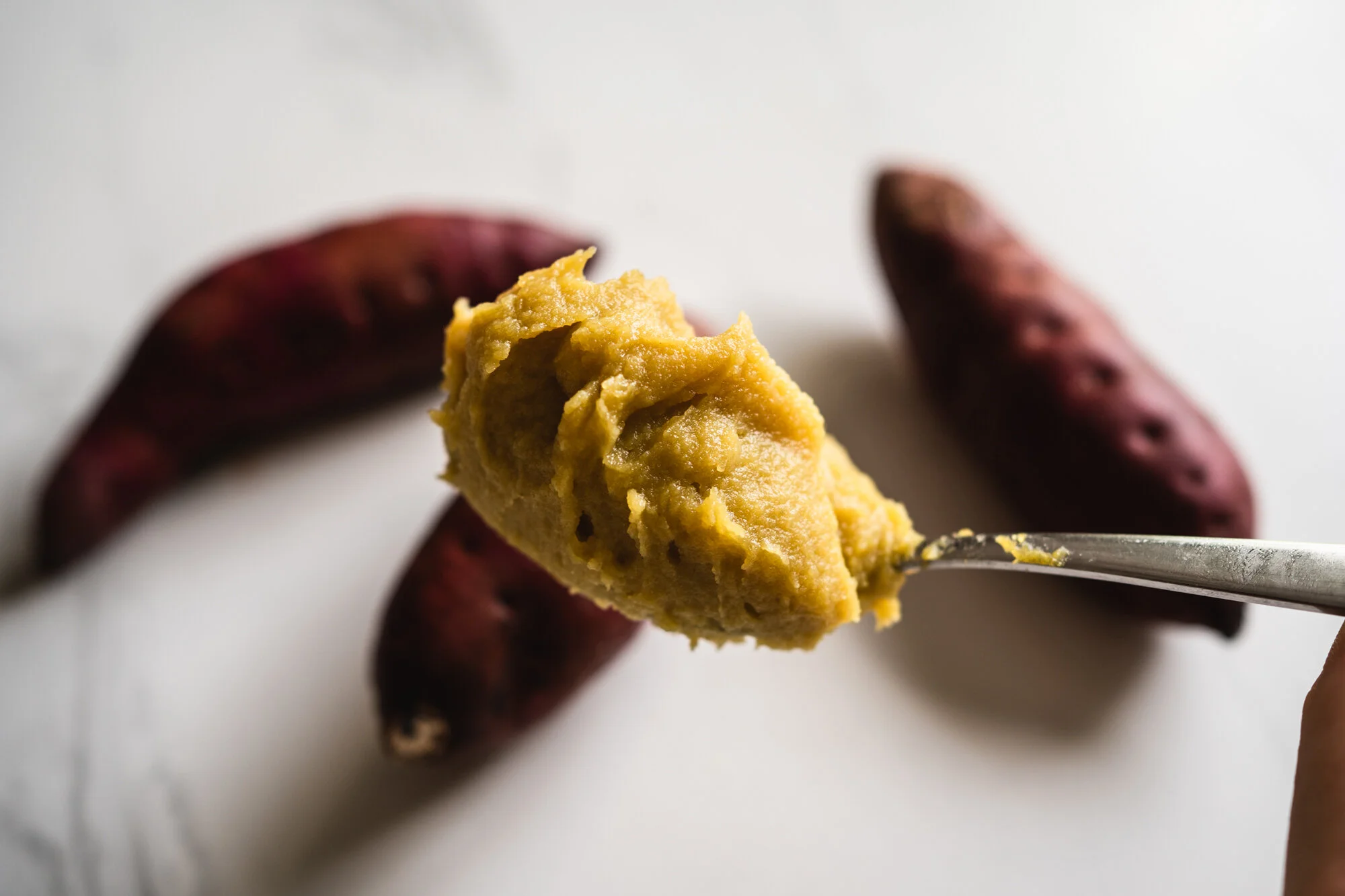
- 450 g sweet potatoes
- 15 g butter
- 30 g honey
- 3 g salt
Dough
- 200 g tapioca starch
- 50 g glutinous rice flour
- 50 g bread flour
- 1 egg
- 5 g salt
- 30 g sugar
- 120 g milk
- 60 g butter
- 50 g purple sweet potato powder
Method
Roast sweet potatoes
- Wrap the sweet potatoes in aluminium foil, then roast them for 35-45 minutes in an oven set to 180°C (350°F, convection), or until a knife poked into it slides in without much resistance.
Make the filling
- When the sweet potatoes are done roasting, peel off the skin (they should come off easily) and mash up the flesh. (Optionally, for silky smooth potato puree, you can pass it through a sieve or a tamis. This helps remove bits of skin as well.) While the mash or puree is still warm, fold in the butter and honey and mix them well. Chill the filling in the refrigerator for at least 1 hour, or overnight up to 24 hours, to thicken it and make it easier to work with.
Make the dough
- The dough can be made by hand in a bowl, or in a stand mixer. Either way, sift the tapioca starch, glutinous rice flour, and bread flour into the bowl, then to this, add the egg, salt, sugar, and milk. Mix it until smooth. (In a stand mixer, this take 1 minute on medium speed.) Then, add in the butter and knead for a further 30 seconds, until the butter is incorporated into the dough. When done, cover the dough with a cloth or kitchen towel and let it rest for 30-45 minutes at room temperature.
Fill the dough
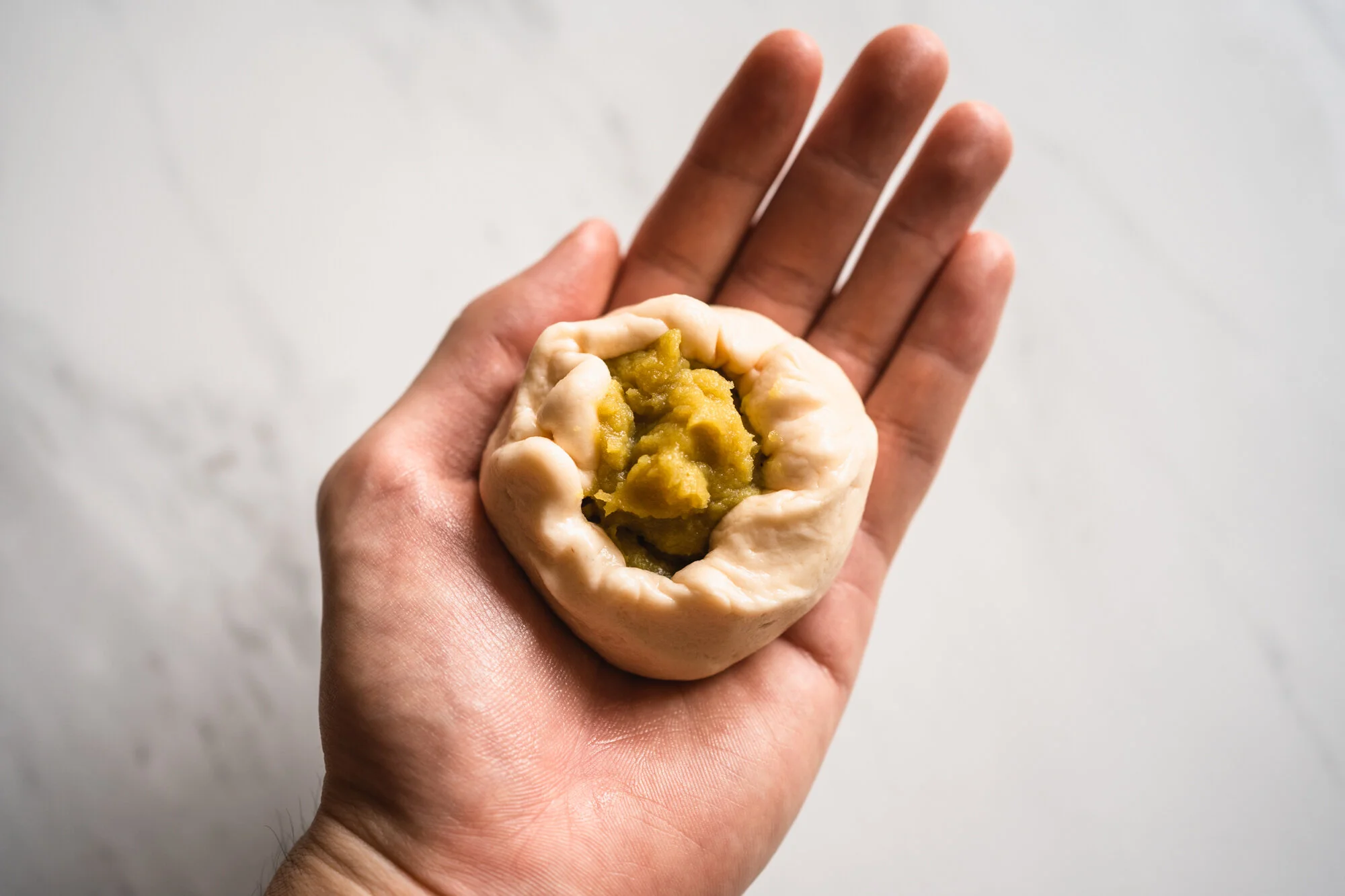
- Split the dough into 60g portions. (You should end up with 10 pieces.) Cover the dough pieces with a cloth so they don’t dry out. Then, working with one piece at a time, flatten it out into a disc that’s roughly 12cm (5 inches) in diameter. Weigh out 45g (2 to 2 1/2 tablespoons) of sweet potato puree, and dollop it onto the middle of the dough disc. Then, pick up the dough disc and gently wrap the dough around the filling, pulling and stretching the sides upwards to fully enclose the filling, making sure they are no holes. (If you’re familiar with wrapping dumplings, this is a very similar process.) Keep the filled dough balls in the fridge while you work on the rest.
Baking prep
- Heat the oven to 160°C, and prepare a baking tray lined with baking paper or a silicon mat.
Colour the dough
- Take the filled dough balls out of the fridge. Roll them out into oblong logs. (I want to say shit-shaped but that’s just unappetising. But then again I just did it.) Dust the purple sweet potato powder onto your work surface, and roll the long dough logs in the powder until it’s thoroughly coated.
Bake
- Lay out the sweet potato bread on the lined baking tray, and bake it for 16-18 minutes, until the breads have expanded a little and starts cracking at parts. When done, take them out of the oven and lay them on a wire rack to cool down for 5-10 minutes.
Eat
- The sweet potato bread is best warm out of the oven! They don’t keep particularly well as they will turn hard over time, but you could improve the texture slightly by warming it up with a quick, 5-minute bake in the oven, but nothing beats fresh!






4 thoughts on “Sweet Potato Bread (고구마 빵)”
The recipe says to put 5g (1 tablespoon) of salt and I realized that might be a typo because, when I made my bread it was very salty.
The tablespoon measurement is off – WAY TO SALTY
It says teaspoon no?
Yep it says tablespoon got me too. I should’ve looked at the grams