This post is sponsored by Le Petit Beret, makers of non-alcoholic wines.
When it comes to post-meal drinks and/or snacks, there’s a perpetual tug-of-war between our adult selves and the inner child that exists in all of us. Sometimes, we yearn for a glass of wine, a drink to end the night on a sweet note. Other times, we want a sweet snack that makes us reminisce about our carefree childhood.
This week, my tug-of-war has been especially strong. Maybe it’s the cabin fever from the third lockdown here in Malaysia, maybe it’s the mini-crisis of realising that the year is nearly half gone, or maybe it’s just general stress snacking. But for consecutive days now, adult me has been hankering for a cold glass (or a bottle) of moscato, and my inner kid has been really amping up his craving for agar-agar, a sweet jelly dessert that I used to go googly-eye over as a kid. So to stave off both cravings, as a peace offering to both sides, I made wine jellies.
About the Dish
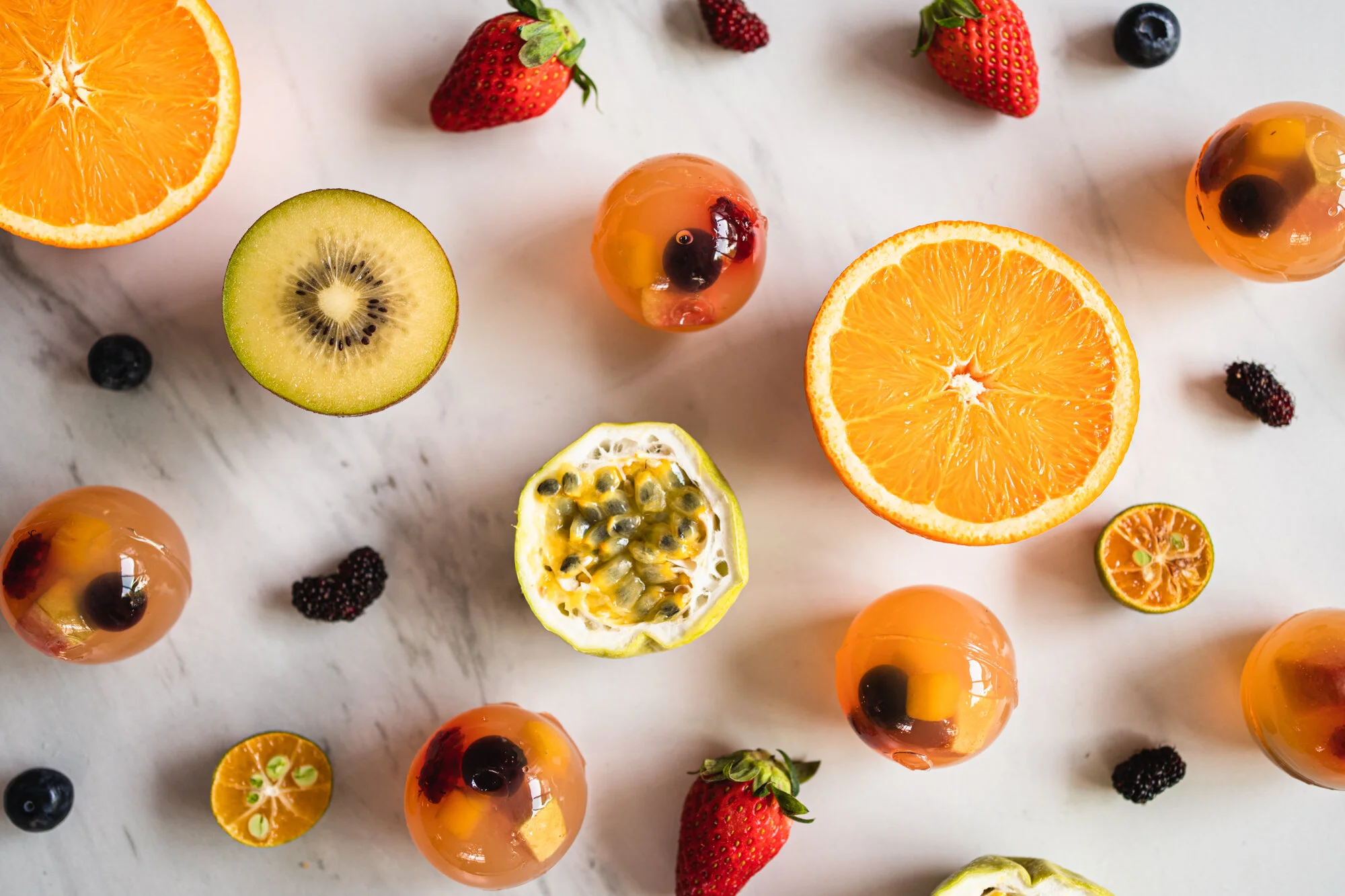
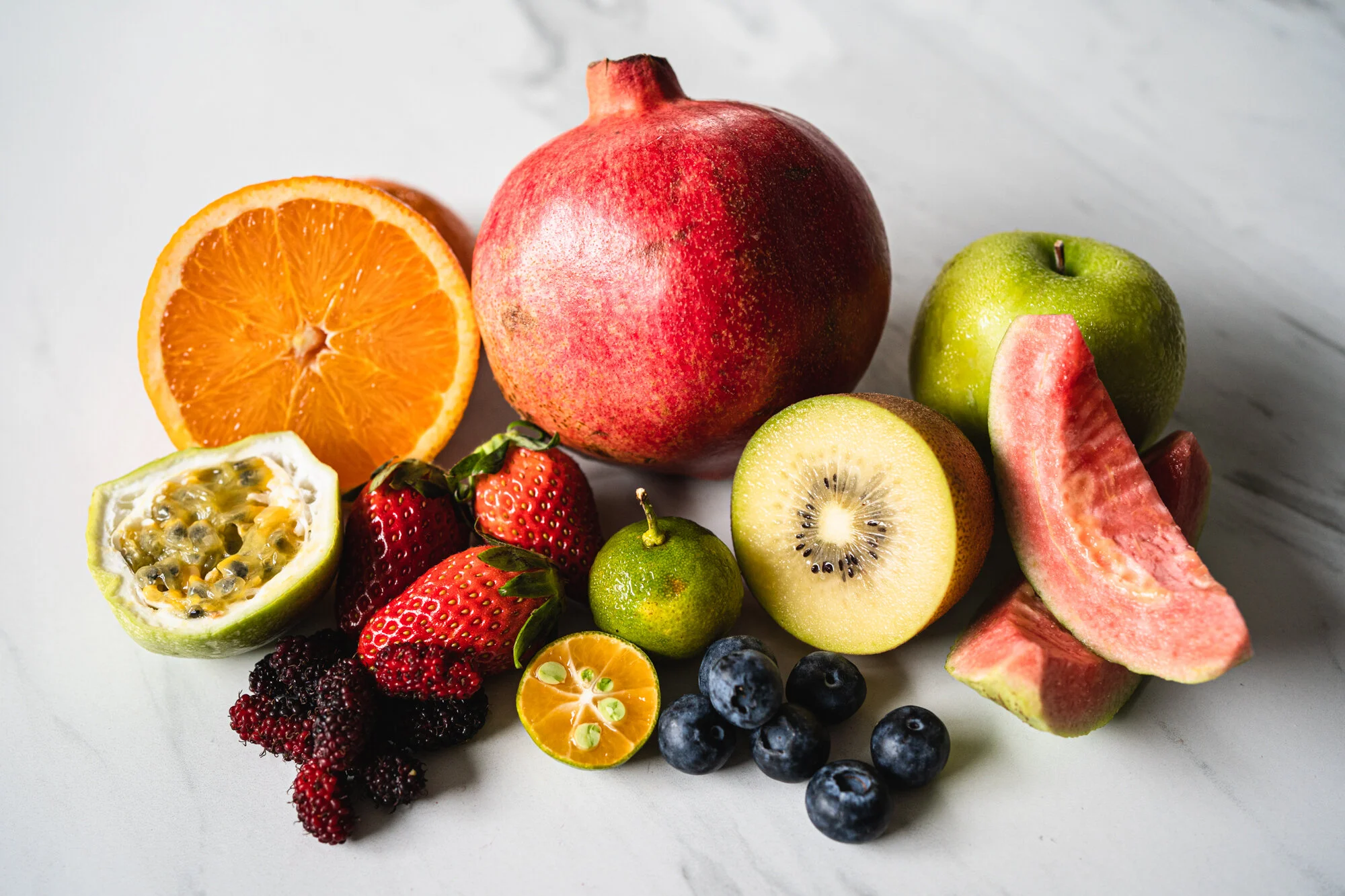
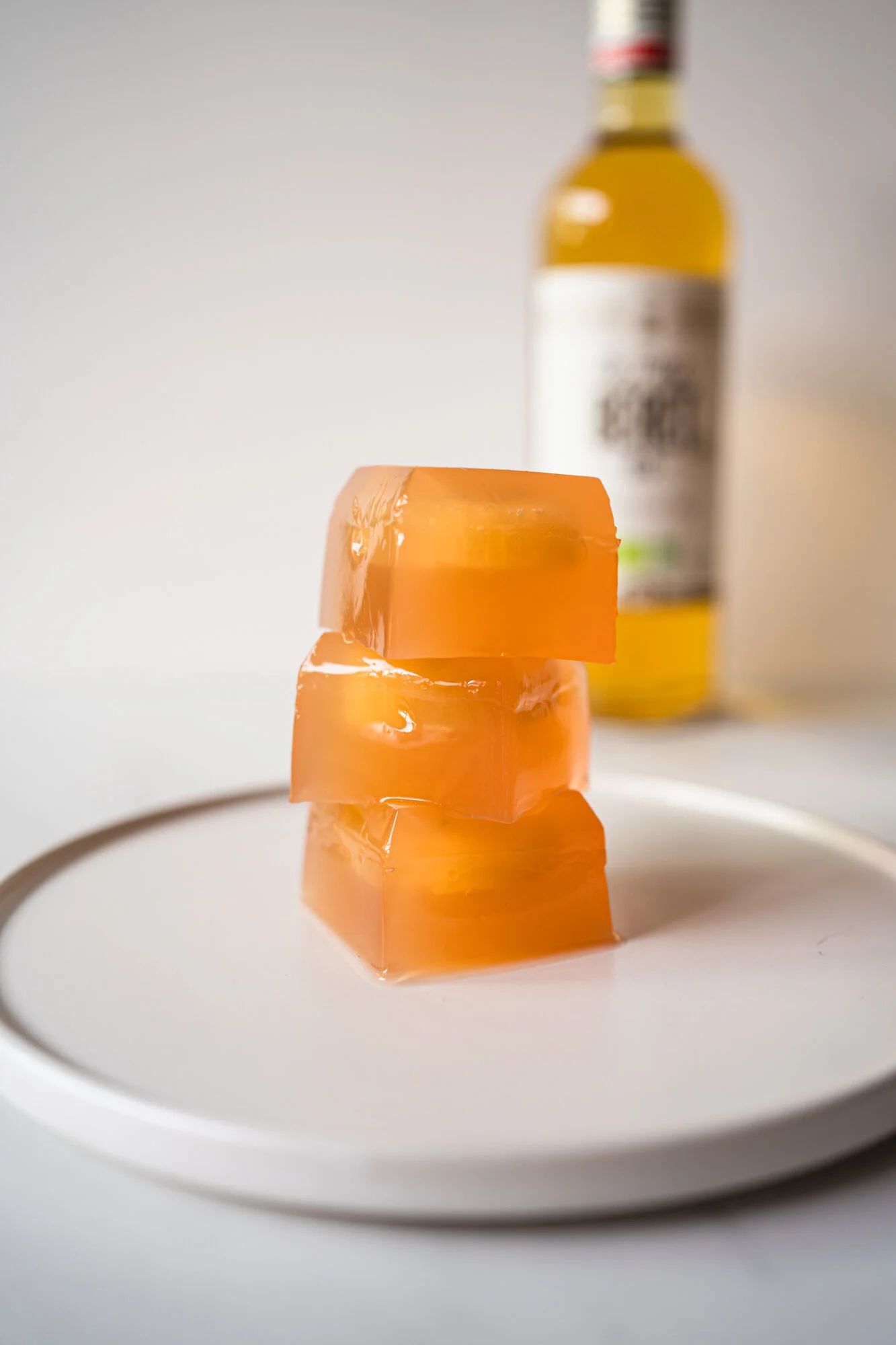
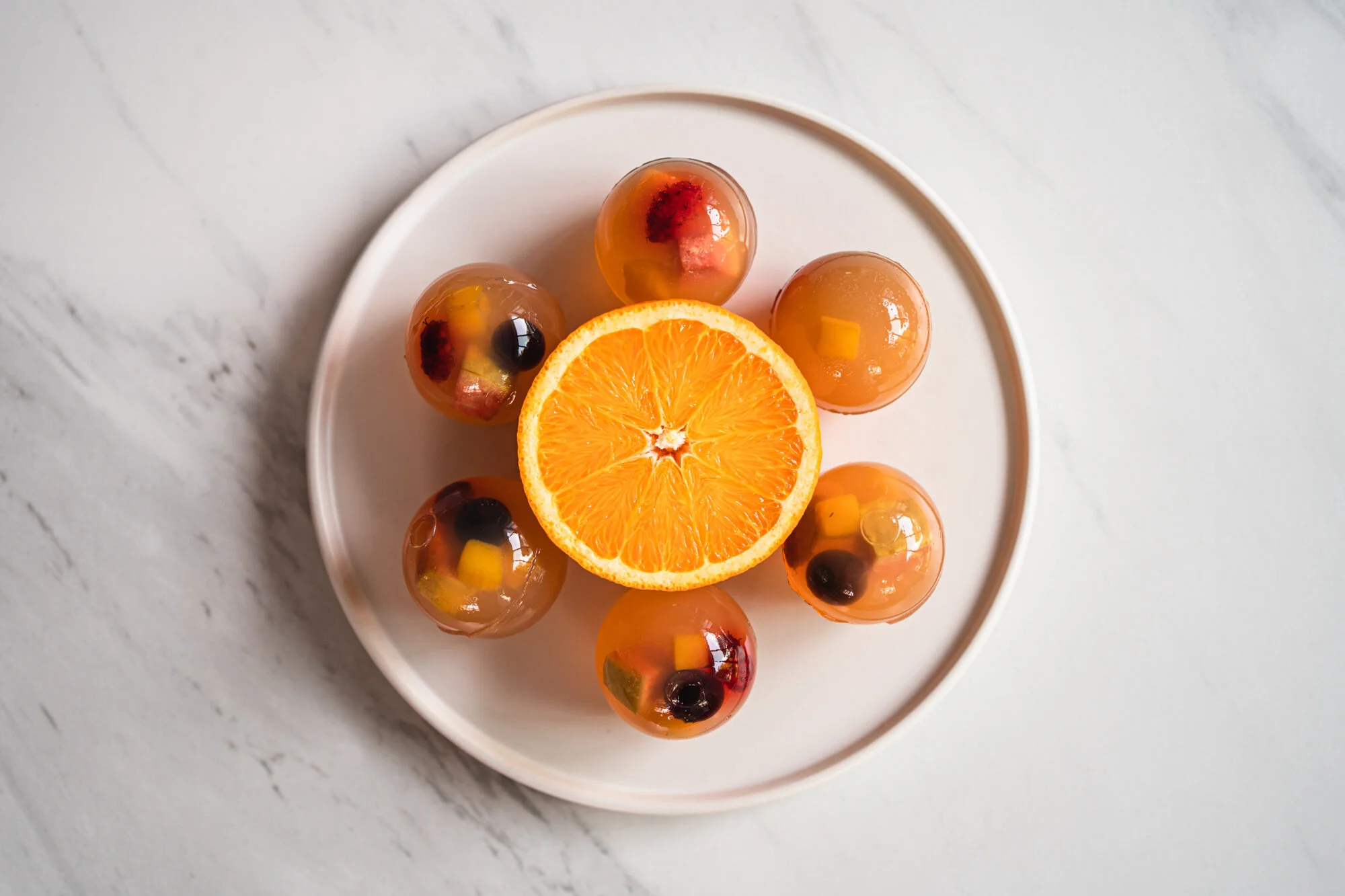
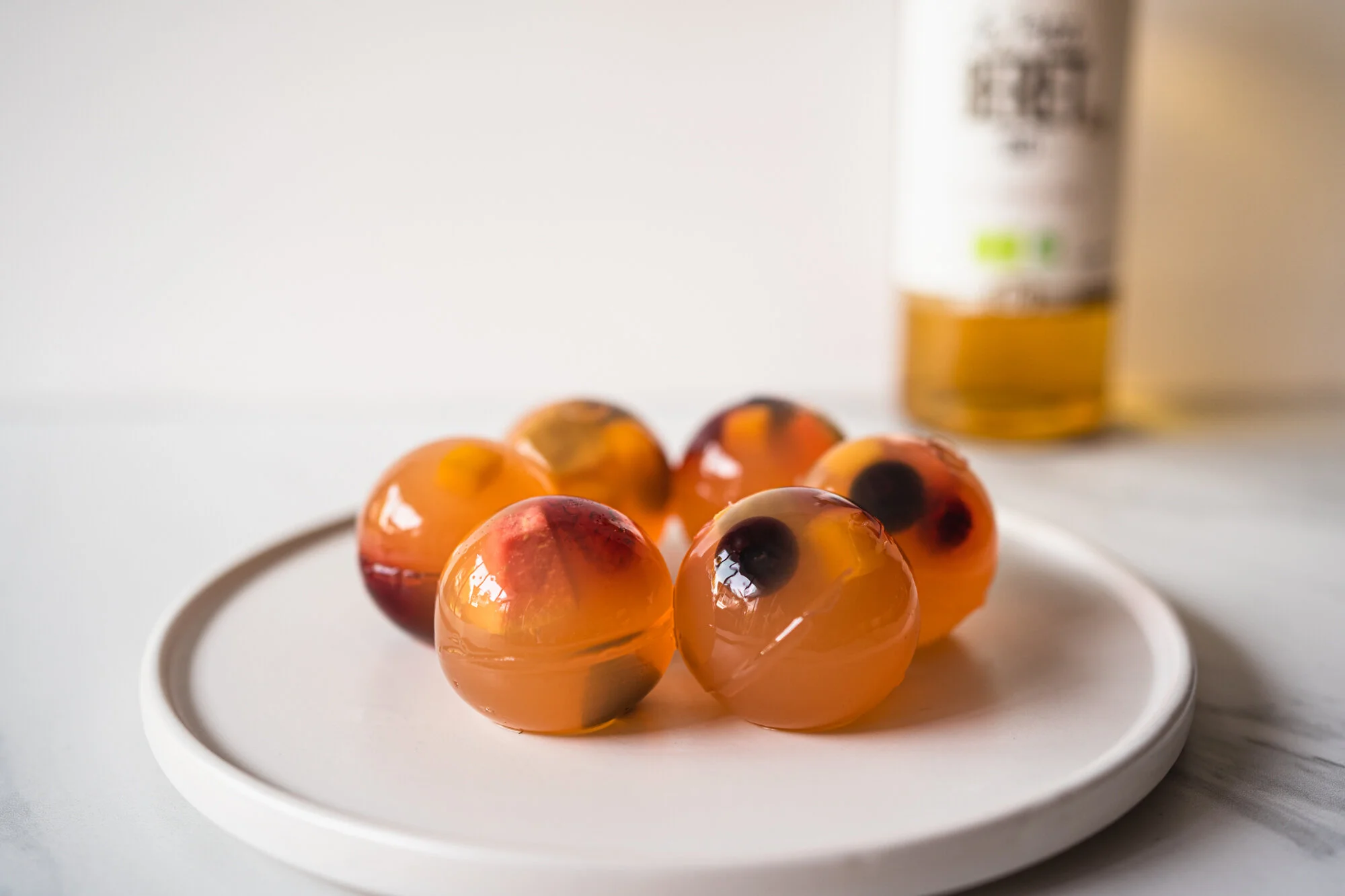
To make these jellies, simply cut up some fruit, heat up some agar-agar powder in a bottle of wine, and pour both into a mould to set (or rather, an ice cube tray in my case). The result is a killer combination of fruit pieces suspended in a jellied supernatant that tastes and smells of grapes, flowers and fruits.
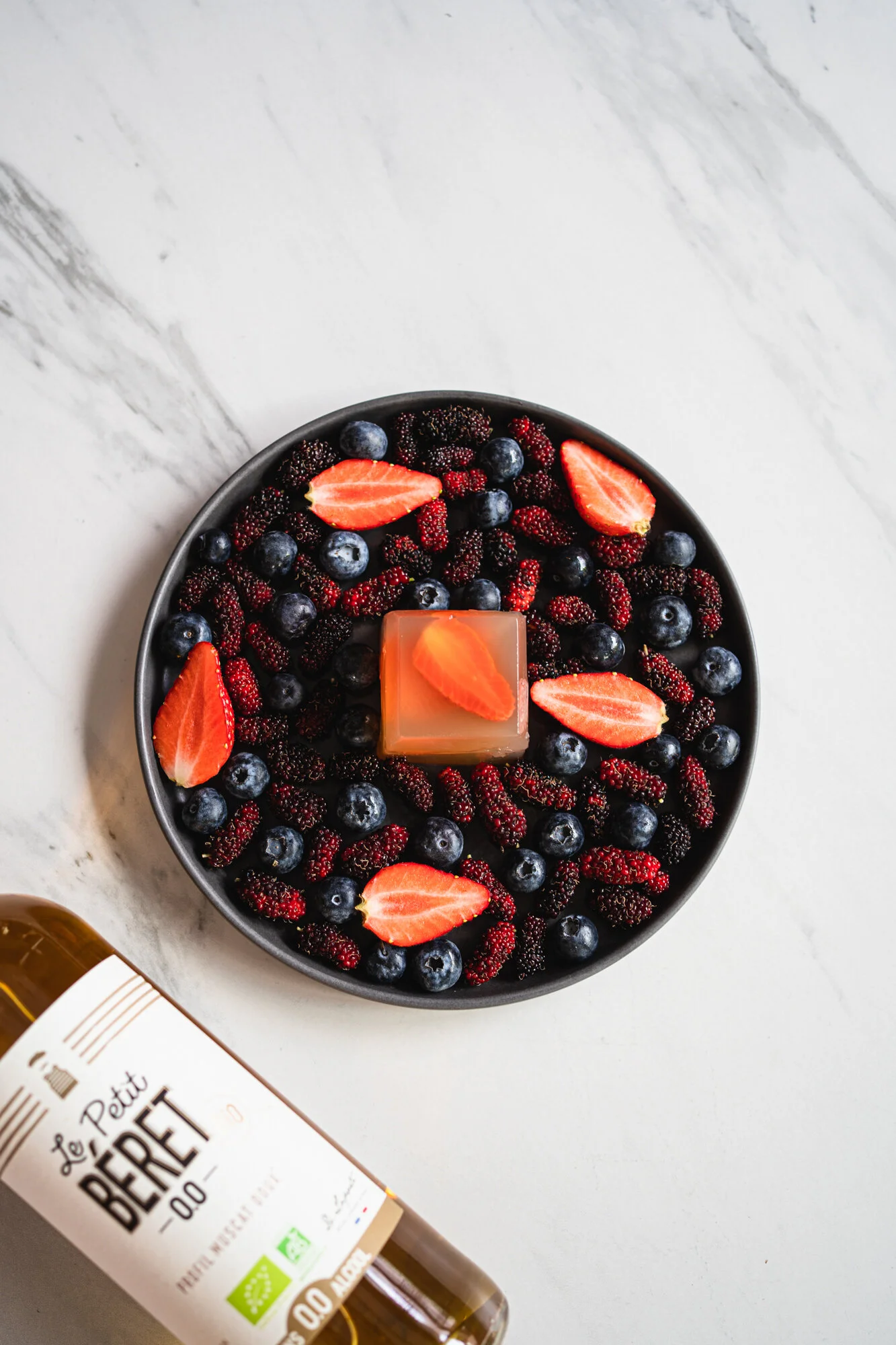
And the cool thing about the ones I made, is that I used non-alcoholic wine for it (Le Petit Beret’s Muscat Doux, to be exact), which makes it pretty perfect to appease my inner child. But besides that, using wine also lends so much more depth than a typical sugar syrup would in a classic agar-agar. I’m not one to drink much wine to begin with, so I can’t say for certain how much these replicated the aroma of alcoholic wines, but I’d argue that the “pineapple, lychee, and rose” notes from this wine actually mingled with the flavour of the kiwis and strawberries I added in surprisingly well. Just like how pairing a sweet muscat wine or moscato with a fruity dessert bolsters its flavour, this did the same, bringing even more charm to an already charming dessert. With this simple swap, the humble agar-agar is truly ameliorated to appease an adult palate.
Plus, using wine has the added benefit of it being an arguably healthier option than just straight up sugar. Since the wine does a lot of heavy lifting in providing some honeyed succulent notes, there’s no need for it to be sickly saccharine to appease our sweet tooth. In fact, I didn’t add any additional sugar to my jellies!
So to stop the post-meal tug-of war, these lip-smacking wine jellies might just be the solution.
Tips for Success
There are a few tricky points to note while making these wine jellies:
- Regular agar-agar requires a 0.5-1% by weight of powder to liquid. But wine jellies need a bit more as the acidity of the wine will naturally inhibit the jellifying power of the agar-agar. So I recommend going with 1.5-2% instead.
- To get your jellies to properly set, you need to boil the agar-agar solution for a few minutes to fully activate it. Yes we’re heating up the wine in this case, which would admittedly affect its flavour, but I promise you the end result will still be spectacular.
- Feel free to use any shape of moulds you like! I used ice cube trays in my case, and I made a variety of cubic and spherical ones, which turned out like geometric amber with pieces of fruit preserved within.
- It’s tempting to pack your jellies full of fruit, but I’ve found that less is more, because there’s a point at which there’s too much fruit that your jelly won’t be able to hold everything together. Also, with all that fruit, you won’t be able to taste much of the wine!
Sponsor’s note: If you’re interested in Le Petit Beret’s non-alcoholic wines, you can get them online here if you’re in Malaysia. All of the wines hail from the Languedoc-Roussillon region in France, and the flavour profiles of their wines are crafted by Dominique Laporte, a master French sommelier. From what I gather, their technique essentially extracts grape juice, much like in wine, then filters and purifies it without any fermentation whatsoever, before mixing them together to create the different blends. So whether you’re allergic to alcohol, looking to cut down on sugars, or just plain searching for a preservative-free, hangover-free alternative to wines, this is a pretty good bet!